A Lukoil deal worth billions has become part of the U.S.-Russia negotiations over Ukraine, The New York Times reported on October 3, according to accounts relayed by Kyiv Post and European Pravda. The buyers described in the report include a consortium led by Todd Boehly, a Trump political donor, and the sale would need sign-off from both Washington and the Kremlin.
Where it stands: No U.S. or Russian official has confirmed the reported transaction. On Friday, October 9, Carlyle Group told Reuters it was no longer actively pursuing Lukoil’s international assets, the earlier buyer stepping aside. Treasury’s current license lets parties negotiate a sale of Lukoil International only until 12:01 a.m. on October 22, and any signed contract still needs a separate green light from the Office of Foreign Assets Control.
Every detail about the talks themselves rests on anonymous sources. The Times, as Kyiv Post summarized it, built its account on “eight individuals familiar with the proceedings.” The paper attached no price to the reported deal, and we found none in any reliable source. The only valuation on record is a separate one: Reuters said the Lukoil portfolio was “initially valued at around $22 billion” when it first went up for sale.
What the New York Times reported about the Lukoil deal
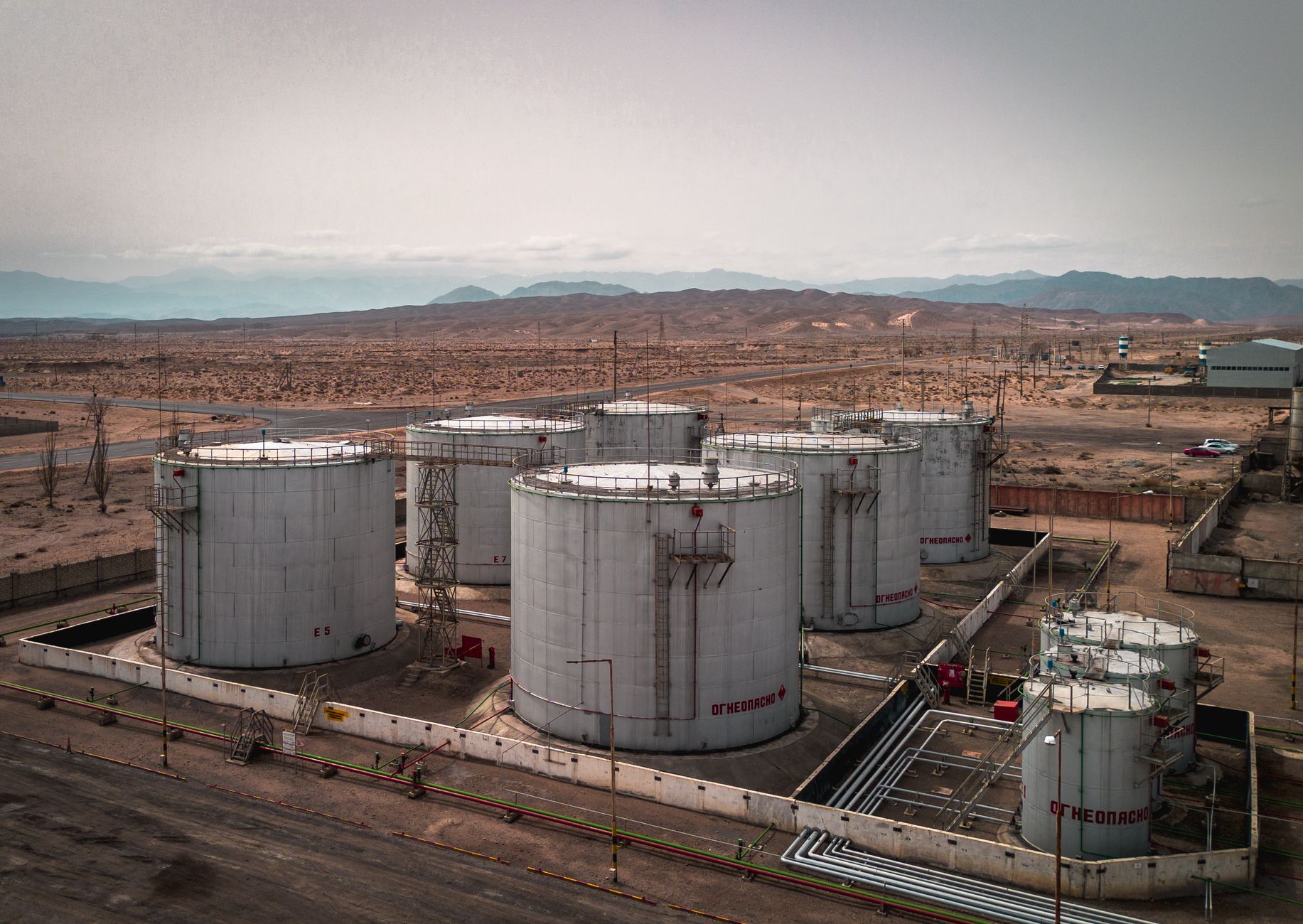
According to the Times, as relayed by Kyiv Post, the transaction under discussion covers Lukoil’s foreign holdings, which Kyiv Post listed as oil concessions in Cameroon and Iraq, refineries in Bulgaria and Romania, and fuel stations across Europe and the U.S., including some in New Jersey. Kyiv Post called Lukoil “Russia’s second-largest oil producer.”
The Times placed the sale inside the diplomacy rather than beside it. Kyiv Post’s opening line put it this way: talks “to resolve the war in Ukraine have expanded to include a multibillion-dollar transaction involving Lukoil’s global oil assets.” The paper reported the negotiations had been underway for several months.
A buyer would gain a great deal from U.S. approval, Kyiv Post noted, because clearing the transaction “would lift US sanctions restrictions on the assets and immediately elevate their market capitalization.”
Who is reportedly at the table
The names come from the Times’ sources, not from any filing or official statement. The table sets out each party as reported.
| Party | Reported role | Reported by |
|---|---|---|
| Todd Boehly | Leads the main buyer consortium; gave $2 million to pro-Trump political groups | NYT via Kyiv Post |
| Two Middle Eastern investment groups | Consortium members with past business ties to Kushner or the Witkoff family | NYT via Kyiv Post |
| A U.S. government-linked entity | Consortium member (not named in the relayed accounts) | NYT via Kyiv Post |
| An unnamed investor | Also a co-owner of World Liberty, the Trump family crypto venture | NYT via European Pravda |
| Vladimir Putin | Raised the sale with Witkoff and Kushner at the Kremlin on Sept. 5 | NYT, three people briefed |
The Putin meeting is the most striking detail. Three people briefed on it told the Times that Putin brought up the sale himself during a closed-door session with Steve Witkoff and Jared Kushner, Trump’s two envoys. European Pravda’s summary adds that, according to one source, Putin wanted to show Russians “they can do business with the US.” Lukoil is formally private, but European Pravda wrote that in Moscow the decision “is widely considered to be up to Putin.”
The World Liberty link is where the conflict-of-interest questions start. European Pravda’s summary says the Times tied the deal to World Liberty Financial, which it described as co-founded by Witkoff, and reported that “One of the investors in the Lukoil asset deal is also a co-owner of World Liberty.” The Times, per Kyiv Post, found no indication that Kushner or Witkoff stood to profit personally. Our earlier look at Witkoff family business deals covers the broader pattern critics point to.
How Lukoil ended up for sale: Treasury’s October 2025 sanctions
Lukoil’s foreign empire is on the market because of Trump’s own Treasury. On October 22, 2025, OFAC designated both Rosneft and Lukoil, which the department called “Russia’s two largest oil companies.” Treasury framed the step as a response to “Russia’s lack of serious commitment to a peace process,” and Secretary Scott Bessent said the companies “fund the Kremlin’s war machine.”
The designation reached deep. Any company owned 50 percent or more by Lukoil or Rosneft is blocked as well, under Treasury’s rule, which caught the foreign refineries and station networks. That is why a buyer needs Washington’s permission.
Gunvor, Carlyle, and now Boehly
The first attempted sale fell apart quickly. Lukoil agreed in October 2025 to sell its international assets to the trader Gunvor, Bloomberg reported, but the deal died after Treasury publicly branded Gunvor a Kremlin puppet.
Carlyle came next. Bloomberg, via World Oil, reported in late January that Lukoil had agreed to sell most of its foreign business to the private equity firm, three months after the sanctions hit. Reuters dates that agreement to January 29 and says it excluded Lukoil’s assets in Kazakhstan. According to people familiar with the matter quoted by Reuters, Carlyle had been talking with Abu Dhabi funds Mubadala, XRG and IHC and with the U.S. Development Finance Corporation about joining in.
📨 Get Free Accountability Coverage Alerts
Free · No spam · Unsubscribe anytime
That arrangement is now off. A Carlyle spokesman told Reuters on October 9 that the firm had stopped actively pursuing the assets; Carlyle offered no further comment. Reuters also recalled a Financial Times report from September that Boehly had won the backing of the U.S. government and of Gulf power brokers “with ties to Donald Trump’s family” for his own bid.
| When | What happened |
|---|---|
| Oct 2025 | Treasury designates Lukoil and Rosneft; Gunvor sale collapses |
| Jan 29, 2026 | Carlyle agrees to buy most foreign assets (Kazakhstan excluded) |
| Aug 20, 2026 | OFAC issues GL 131I for sale talks |
| Sept 5, 2026 | Putin raises the sale with Witkoff and Kushner (per NYT sources) |
| Sept 18, 2026 | GL 131J replaces 131I |
| Oct 3, 2026 | NYT reports the sale is part of the U.S.-Russia talks |
| Oct 9, 2026 | Carlyle drops out; Trump announces the Russian diesel arrangement |
| Oct 22, 2026 | GL 131J authorization ends |
What OFAC’s license actually permits
The governing document is General License 131J, signed by OFAC on September 18. It lets parties negotiate and sign contracts for the sale of Lukoil International GmbH and its majority-owned units, with conditions. The authorization runs “through 12:01 a.m. eastern daylight time, October 22, 2026,” and any contract must be “expressly contingent upon the receipt of separate authorization” from OFAC.
In plain terms, the license allows talking and conditional signing, not closing. Completing a sale still requires a further, specific approval from Treasury. The license also bars sending funds to anyone in Russia. Its final paragraph confirms it replaced GL 131I, dated August 20, part of what European Pravda described as Washington repeatedly extending the sale deadline. A pattern of rolling Russia licenses runs through 2026; we track them in our timeline of Russia sanctions waivers.
How it connects to the diesel deal and the talks
The Lukoil report landed six days before Trump’s October 9 call with Putin, which produced the Russian diesel arrangement explained in our breakdown of the Trump Russian diesel deal. The Kremlin’s readout of that call, from aide Yury Ushakov, said the two presidents “thoroughly discussed the preparation of large‑scale economic initiatives.” Ushakov did not mention Lukoil by name.
Volodymyr Zelensky has objected to exactly this mix. Responding to Secretary of State Marco Rubio on October 8, he said: “You can’t, on the one hand, negotiate with Russia about future economic projects, and on the other, talk about a diplomatic impasse.” Where the wider negotiations stand is covered in our Ukraine peace talks status report.
Whatever is being negotiated, the clock on the current license is short: unless OFAC renews or replaces it, authority to negotiate a Lukoil International sale lapses at 12:01 a.m. Eastern on October 22.
Frequently Asked Questions
What is the Lukoil deal in the U.S.-Russia talks?
The New York Times reported, citing eight people familiar with the talks, that U.S.-Russia negotiations over Ukraine expanded to include a multibillion-dollar sale of Lukoil’s international assets. No U.S. or Russian official has confirmed it, and no price has been reported.
Who is buying Lukoil’s international assets?
No sale has closed. The Times reported that the leading consortium includes Todd Boehly, two Middle Eastern investment groups with past ties to Kushner or the Witkoff family, and a U.S. government-linked entity. Carlyle, which agreed to buy the assets in January, said on October 9 it was no longer actively pursuing them.
Why is Lukoil under U.S. sanctions?
Treasury designated Lukoil and Rosneft in October 2025, citing what it called Russia’s lack of serious commitment to a peace process. Companies owned 50 percent or more by either firm are blocked too, which covers Lukoil’s foreign refineries and stations.
How much is the Lukoil deal worth?
No figure has been reported for the deal described by the Times, which called it multibillion-dollar. Reuters said the Lukoil portfolio was initially valued at around $22 billion when it was first put up for sale.
When does the Lukoil sale license expire?
OFAC General License 131J authorizes sale negotiations and contingent contracts until 12:01 a.m. Eastern on October 22, 2026. Any contract signed under it still needs separate OFAC authorization to be carried out.
Sources
- US-Russia Peace Talks Eye Multibillion Lukoil Oil Deal — Kyiv Post (reporting The New York Times), Oct. 3, 2026, 3:20 pm
- US and Russia are negotiating multibillion-dollar deal on Lukoil assets, says NYT — European Pravda (via Yahoo News), 2026-10-03
- Treasury Sanctions Major Russian Oil Companies, Calls on Moscow to Immediately Agree to Ceasefire — U.S. Department of the Treasury, October 22, 2025
- General License No. 131J: Authorizing Certain Transactions for the Negotiation of and Entry Into Contingent Contracts for the Sale of Lukoil International GmbH and Related Maintenance Activities — U.S. Treasury, Office of Foreign Assets Control, Dated: September 18, 2026
- Carlyle Group in talks to acquire most of Lukoil’s overseas oil assets — Bloomberg (via World Oil), 2026-01-29
- Carlyle drops out of race for Lukoil international assets — Reuters (via Brazil Energy Insight), October 9, 2026
- US, Russia confirm Trump’s latest Ukraine peace push is falling apart — The Kyiv Independent, October 8, 2026
- Comment by Aide to the President Yury Ushakov following Vladimir Putin’s telephone conversation with US President Donald Trump — Office of the President of Russia (kremlin.ru), October 9, 2026 23:55
This article is news reporting and analysis based on the public sources listed above, as they stood on the dates shown. Where officials, lawmakers or analysts disagree, including on whether an action is lawful, their positions are attributed to them; Donald Trump Class Action is not a court and nothing here is legal advice. Facts in a developing story can change.