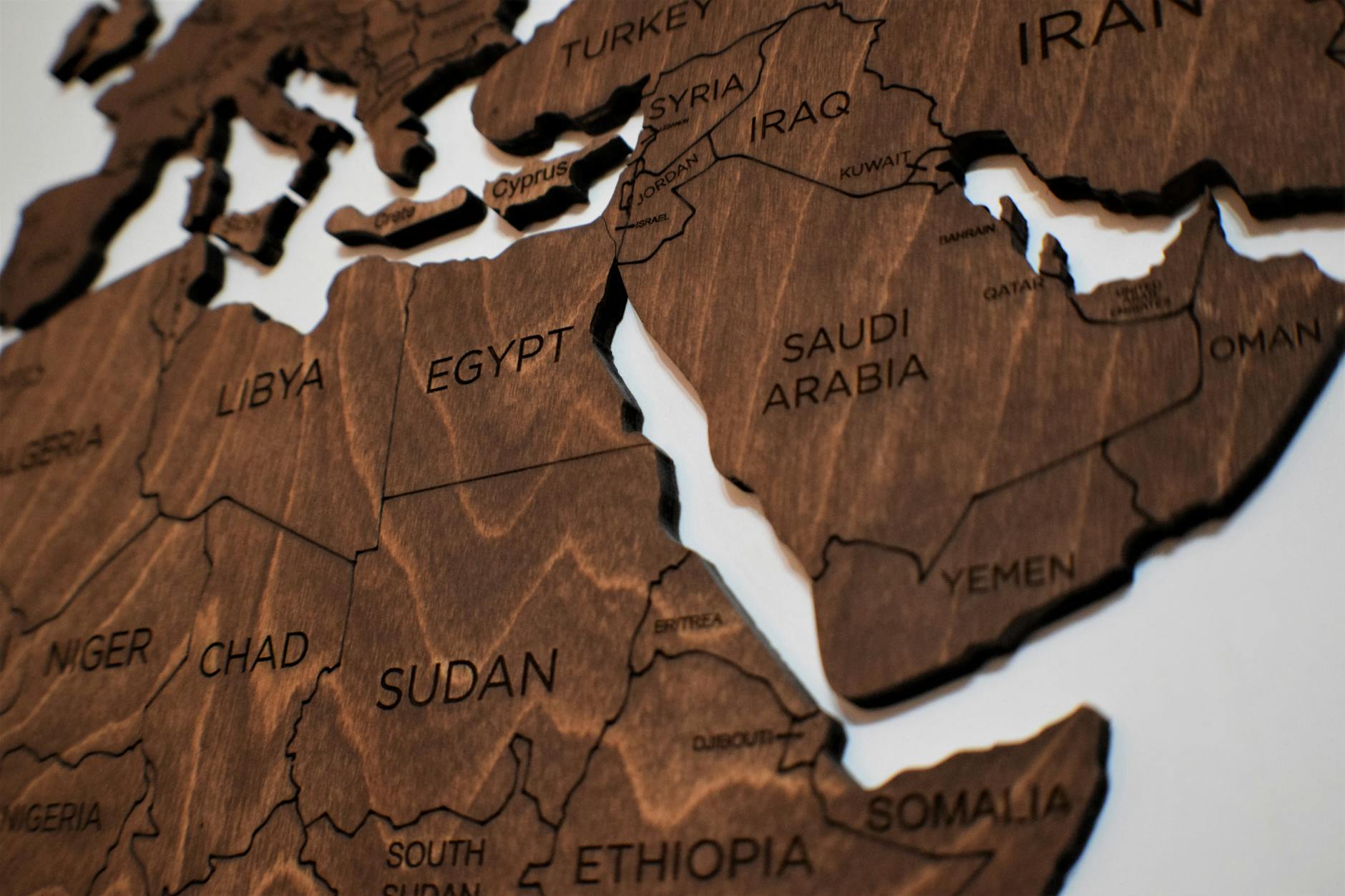
In late February 2026, Iran launched a series of missile and drone strikes against targets in Oman, a Gulf state that had spent months quietly mediating between Tehran and Washington to prevent exactly this kind of escalation. The strikes, which hit areas near the port city of Duqm and a logistics facility used by Western naval forces, killed at least 14 people including three Omani civilians and marked the first direct Iranian military attack on an Arab Gulf neighbor since the Iran-Iraq War era. The bitter irony was not lost on anyone: Oman’s Sultan Haitham bin Tariq had personally hosted back-channel talks between Iranian and American officials as recently as January 2026, continuing his country’s decades-long tradition of quiet diplomacy between adversaries.
The attack shattered what remained of diplomatic efforts to de-escalate tensions that had been building since the Trump administration withdrew from any remaining channels of communication with Iran in late 2025 and expanded sanctions targeting Iranian oil exports to China. Iran claimed the strikes were a response to Oman allegedly allowing the United States to stage surveillance operations from Omani territory, a charge Muscat denied. This article examines what led to the strikes, why Oman was targeted despite its neutral posture, how the Trump administration responded, and what the collapse of Omani mediation means for broader Middle East stability and American interests in the region.
Table of Contents
- Why Did Iran Strike Oman When Oman Was Brokering Peace Talks?
- What Was Oman’s Role in U.S.-Iran Diplomacy Before the Strikes?
- How Did the Trump Administration Respond to the Iran-Oman Attack?
- What Does the Oman Strike Mean for Gulf Security Alliances?
- Is There a Risk of Wider War Between the U.S. and Iran?
- What Happened to Oman’s Civilian Population in the Strikes?
- Can Diplomacy Between the U.S. and Iran Be Restored?
- Conclusion
- Frequently Asked Questions
Why Did Iran Strike Oman When Oman Was Brokering Peace Talks?
iran‘s stated justification was that Oman had violated its neutrality by permitting the U.S. military to use facilities near Duqm for intelligence-gathering operations directed at Iranian nuclear and military sites. Iranian state media released satellite imagery purporting to show American P-8 Poseidon maritime surveillance aircraft operating from an airstrip south of Duqm, though independent analysts noted the images were months old and did not prove active surveillance at the time of the strikes. The Revolutionary Guard’s statement framed the attack as a defensive measure against a country that had become, in their words, “a staging ground for Zionist-American aggression.” The deeper explanation is more complicated. Oman’s mediation role had become a liability in the eyes of Iranian hardliners precisely because it was succeeding in ways that threatened their domestic political position.
The back-channel talks hosted by Muscat had reportedly produced a framework for limited sanctions relief in exchange for Iran capping uranium enrichment at 60 percent, a deal that moderates in Tehran supported but that the Revolutionary Guard opposed because it would have reduced their economic leverage over smuggling networks. By attacking Oman, hardliners in Tehran effectively destroyed the diplomatic channel that threatened their power base while simultaneously sending a message to other Gulf states about the cost of hosting American military assets. The comparison to Russia’s approach in Syria is instructive. Just as Moscow targeted moderate opposition groups more aggressively than extremists because moderates posed a greater political threat, Iran struck the mediator rather than the adversary because successful mediation was more dangerous to hardline interests than continued confrontation. Oman’s Foreign Ministry issued a restrained statement calling the attack “an inexplicable violation of the bonds between our peoples” while recalling its ambassador from Tehran.

What Was Oman’s Role in U.S.-Iran Diplomacy Before the Strikes?
Oman has served as the primary back-channel between the United States and Iran for over a decade. It was Omani mediation that laid the groundwork for the secret talks that produced the 2015 Iran nuclear deal, with meetings held in Muscat between American and iranian officials beginning in 2012. Sultan Qaboos, who ruled Oman until his death in 2020, cultivated personal relationships with leaders in both Washington and Tehran, and his successor Sultan Haitham continued that tradition. When the trump administration took office in January 2025, Oman was one of the first countries to offer its services as an intermediary, recognizing that direct U.S.-Iran communication had effectively ceased. Through 2025, Omani diplomats shuttled between capitals carrying proposals and counter-proposals.
In September 2025, Oman hosted a quiet meeting between a senior U.S. State Department official and an Iranian deputy foreign minister in a resort outside Muscat, the highest-level direct contact between the two governments since Trump took office. However, the talks stalled when the Trump administration imposed a new round of sanctions in November targeting Iranian petrochemical exports, which Tehran interpreted as negotiating in bad faith. The Omanis continued to press for resumed talks through the end of the year, but the political space for diplomacy was narrowing on both sides. The limitation of Omani mediation was always that it depended on both parties genuinely wanting a deal. When the domestic politics in Tehran shifted decisively toward confrontation following the sanctions escalation and several covert operations attributed to Israel against Iranian nuclear scientists, the diplomatic channel became something Iran’s hardliners wanted to close rather than use. Oman, for all its diplomatic skill, could not force parties to negotiate, and its neutrality ultimately could not protect it from becoming collateral damage in a conflict it was trying to prevent.
How Did the Trump Administration Respond to the Iran-Oman Attack?
The Trump administration’s initial response was notably measured compared to its rhetoric on other Iranian provocations, which itself became a point of controversy. President Trump issued a statement calling the attack “very bad” and warning Iran of “serious consequences,” but the administration did not immediately announce military retaliation or new sanctions. National Security Advisor Mike Waltz told reporters that the U.S. was “consulting with allies and partners” and that “all options remain on the table,” language that critics noted was far more restrained than the administration’s typical posture toward Iran. Within 48 hours, however, the administration announced the deployment of an additional carrier strike group to the Gulf of Oman and imposed sanctions on 15 additional Iranian military commanders and entities connected to the Revolutionary Guard’s aerospace division. Secretary of State Marco Rubio gave a press conference in which he blamed Iran’s “terrorist regime” for the attack but notably did not confirm or deny the Iranian allegations about U.S.
surveillance operations from Omani territory, fueling speculation that there was some basis to Iran’s claims. The administration also fast-tracked a $2.1 billion arms sale to Oman including Patriot missile defense batteries, a move that simultaneously supported an ally and locked Oman further into the American security architecture. Congressional reaction split along unusual lines. Several hawkish Republican senators, including Tom Cotton and Lindsey Graham, called for direct military strikes on Iranian military infrastructure, while a bipartisan group including Rand Paul and Chris Murphy argued that the incident demonstrated the failure of the administration’s maximum pressure approach and the need for renewed diplomacy. Democratic leaders accused the administration of having provoked the attack through its sanctions escalation and refusal to engage in meaningful negotiations. No authorization for military force was brought to a vote.
What Does the Oman Strike Mean for Gulf Security Alliances?
The attack forced every Gulf Cooperation Council member to reassess its security calculations in ways that could reshape the region for years. The Gulf states have long balanced between their security relationships with the United States and their economic and diplomatic ties with Iran, but Iran’s willingness to strike the most neutral GCC member sent the message that neutrality itself was no longer a safe position. Within days of the attack, the UAE and Bahrain announced enhanced defense cooperation agreements with Washington, while Qatar, which maintains its own relationship with Tehran, notably delayed making any public statement for 72 hours. Saudi Arabia’s response was particularly significant. Riyadh had been pursuing its own rapprochement with Tehran following the Chinese-brokered normalization agreement in 2023, but the Oman strikes put that process on ice.
Saudi Crown Prince Mohammed bin Salman reportedly told advisors that the attack proved Iran could not be trusted to honor diplomatic frameworks, a conclusion that conveniently aligned with Saudi Arabia’s interest in maintaining its defense relationship with the United States. The Saudis announced they would host an emergency GCC summit to discuss collective defense measures. The tradeoff for the region is now starkly apparent. Deeper security integration with the United States provides a deterrent against Iranian aggression but also makes Gulf states more likely targets for Iranian retaliation and limits their diplomatic flexibility. Kuwait and Oman had traditionally tried to maintain enough distance from Washington to preserve their roles as neutral mediators, but that middle ground has effectively disappeared. The emerging dynamic resembles a more rigid Cold War-style alignment that most Gulf leaders had spent years trying to avoid precisely because it escalates rather than reduces the risk of conflict.
Is There a Risk of Wider War Between the U.S. and Iran?
The risk of escalation to a broader military conflict is real but constrained by factors that neither side fully controls. Iran’s strike on Oman crossed a significant threshold by targeting a sovereign Gulf state rather than proxy forces or maritime shipping, but Tehran calibrated the attack to avoid directly hitting American personnel. The 14 fatalities included Omani civilians, Indian contract workers, and reportedly two British military advisors, but no American service members were killed, a fact that analysts believe was deliberate. Iran understands that killing American troops would likely trigger a direct U.S. military response that could spiral into a wider war that Tehran cannot afford. However, the danger lies in miscalculation rather than deliberate escalation. With the destruction of the Omani mediation channel, there is now no reliable mechanism for the U.S.
and Iran to communicate during a crisis. The Swiss embassy in Tehran, which has historically served as a protecting power for American interests, has limited capacity to manage fast-moving military situations. If an incident occurs in the Strait of Hormuz, where American and Iranian naval vessels operate in close proximity, there is no hotline or deconfliction channel to prevent a skirmish from escalating. Military historians have noted that World War I began not because any power wanted a continental war but because crisis communication mechanisms failed at critical moments. The warning that defense analysts have consistently raised is that both sides may be operating on assumptions about the other’s red lines that are no longer accurate. The Trump administration may assume Iran will not directly target American forces based on historical precedent, while Iran may assume the United States will not respond militarily to strikes that avoid American casualties. Either assumption could prove fatally wrong, and the absence of diplomatic channels means there is no way to test or correct these assumptions short of actual conflict.

What Happened to Oman’s Civilian Population in the Strikes?
The human toll of the strikes extended well beyond the immediate casualties. The attacks near Duqm disrupted operations at one of Oman’s most important economic development projects, the Duqm Special Economic Zone, which represents a $15 billion investment designed to diversify Oman’s economy away from oil dependence. Several international companies operating in the zone, including a South Korean dry dock consortium and an Indian fertilizer plant, temporarily evacuated staff, and new foreign investment inquiries reportedly dropped sharply in the weeks following the attack.
📨 Get Free Accountability Coverage Alerts
Free · No spam · Unsubscribe anytime
For a country with a GDP of roughly $105 billion that was counting on Duqm to anchor its economic future, the economic damage may ultimately be more consequential than the military damage. Oman’s population of approximately 4.6 million, roughly 40 percent of whom are foreign workers, experienced a wave of anxiety that was unprecedented in a country long prized for its stability and safety. Embassies from India, Bangladesh, and the Philippines issued travel advisories for their nationals in Oman, and remittance flows, which are critical to the families of migrant workers, were temporarily disrupted as some workers sought to leave. The Omani government moved quickly to reassure residents and the international community, but the country’s brand as a safe, neutral oasis in a volatile region suffered a blow that diplomatic statements alone cannot repair.
Can Diplomacy Between the U.S. and Iran Be Restored?
The destruction of the Omani channel does not make diplomacy impossible, but it makes it significantly harder and less likely in the near term. Historically, other countries have occasionally served as intermediaries, including Switzerland, Iraq, and even Japan, but none has the depth of relationships and institutional capacity that Oman developed over decades. Any new diplomatic effort would also have to overcome the domestic political obstacles in both Washington and Tehran that have only been reinforced by the crisis. In Washington, supporting diplomacy with Iran after the Oman strikes would be politically toxic for either party, while in Tehran, hardliners have consolidated their position as the faction that was proven right about American and Gulf state intentions.
The more realistic path may be indirect and gradual. Arms control experts have suggested that a narrow, technical agreement on nuclear inspections or maritime safety could serve as a confidence-building measure without requiring the kind of grand diplomatic initiative that neither side can politically afford. The European Union has indicated willingness to host technical talks, and China, which depends on Iranian oil and Gulf stability, has quiet leverage with Tehran. But any progress will take months if not years, and in the interim, the Middle East operates without the safety net of U.S.-Iran communication that Oman spent decades weaving together. The lesson of the Oman strikes may be that destroying a diplomatic channel takes hours while building one takes generations.
Conclusion
Iran’s strikes on Oman represent a turning point in Middle East security that goes beyond the immediate destruction and casualties. By attacking the Gulf’s most committed neutral mediator, Tehran eliminated the primary channel for managing U.S.-Iran tensions and forced every country in the region into a harder strategic alignment. The Trump administration’s response, combining military deployments with arms sales while avoiding direct retaliation, preserved short-term stability but did nothing to address the underlying dynamics driving escalation. The Gulf states now face a region where neutrality has been punished, diplomatic channels have been severed, and the risk of miscalculation between American and Iranian forces has risen sharply.
For Americans watching these events, the practical implications extend beyond foreign policy. Disruptions to Gulf shipping and energy infrastructure have already contributed to oil price increases, and a wider conflict could push prices significantly higher. The defense spending associated with additional deployments and arms sales adds to an already strained federal budget. And the collapse of diplomacy means that the nuclear question, whether Iran will move toward a weapons capability, is now being managed through threats and sanctions alone rather than any negotiated framework. What happened to Oman is a reminder that in international relations, the peacemakers are sometimes the first casualties.
Frequently Asked Questions
Did Iran give any warning before striking Oman?
Iran reportedly provided no advance warning to Omani authorities. Some intelligence officials have indicated that U.S. satellite surveillance detected launch preparations roughly 90 minutes before the strikes, but the warning was insufficient to prevent the attacks. This absence of communication underscored how badly diplomatic channels had deteriorated.
Were American troops present in Oman at the time of the strikes?
The United States maintains a limited military presence in Oman under a bilateral access agreement, primarily at facilities used for logistics and maritime surveillance. The Pentagon confirmed that no American service members were killed or wounded in the strikes, though it declined to specify how close the attacks came to U.S. personnel or assets.
How has the attack affected oil prices?
Brent crude jumped approximately 8 percent in the two days following the strikes, briefly exceeding $95 per barrel before settling around $90. The price spike reflected concerns about potential disruption to shipping through the Strait of Hormuz and the Gulf of Oman rather than any actual supply interruption. Analysts warned that sustained tension could keep prices elevated through mid-2026.
What is the Duqm Special Economic Zone and why does it matter?
Duqm is a massive economic development project on Oman’s southeastern coast designed to create an industrial and logistics hub outside the Strait of Hormuz chokepoint. It includes a deep-water port, dry dock, oil refinery, and industrial zones with investments from China, South Korea, India, and other countries. The zone is central to Oman’s Vision 2040 economic diversification plan, making the nearby strikes particularly damaging to Oman’s long-term economic strategy.
Could Oman retaliate against Iran militarily?
Oman’s military, while professional and well-equipped for its size, is not designed for offensive operations against a country of Iran’s military capacity. Oman’s response has been diplomatic rather than military, recalling its ambassador, demanding reparations, and seeking international support through the United Nations and GCC. This approach is consistent with Oman’s long-standing preference for diplomacy over confrontation.
Has the United Nations taken any action in response to the strikes?
The UN Security Council held an emergency session at Oman’s request, but Russia and China blocked a resolution condemning the attack, with Russia arguing that the resolution failed to acknowledge the broader context of U.S. sanctions and military posture in the region. The General Assembly passed a non-binding resolution expressing concern, and the Secretary-General called for restraint on all sides.
You Might Also Like
- Oman Said a Nuclear “Breakthrough” Was Reached With Iran Just Hours Before Bombs Fell
- Trump Launches Operation Epic Fury — U.S. and Israel Begin Massive Strikes Across Iran
- Trump Warns Iran: Hit Us Again and You’ll Face “A Force That Has Never Been Seen Before”