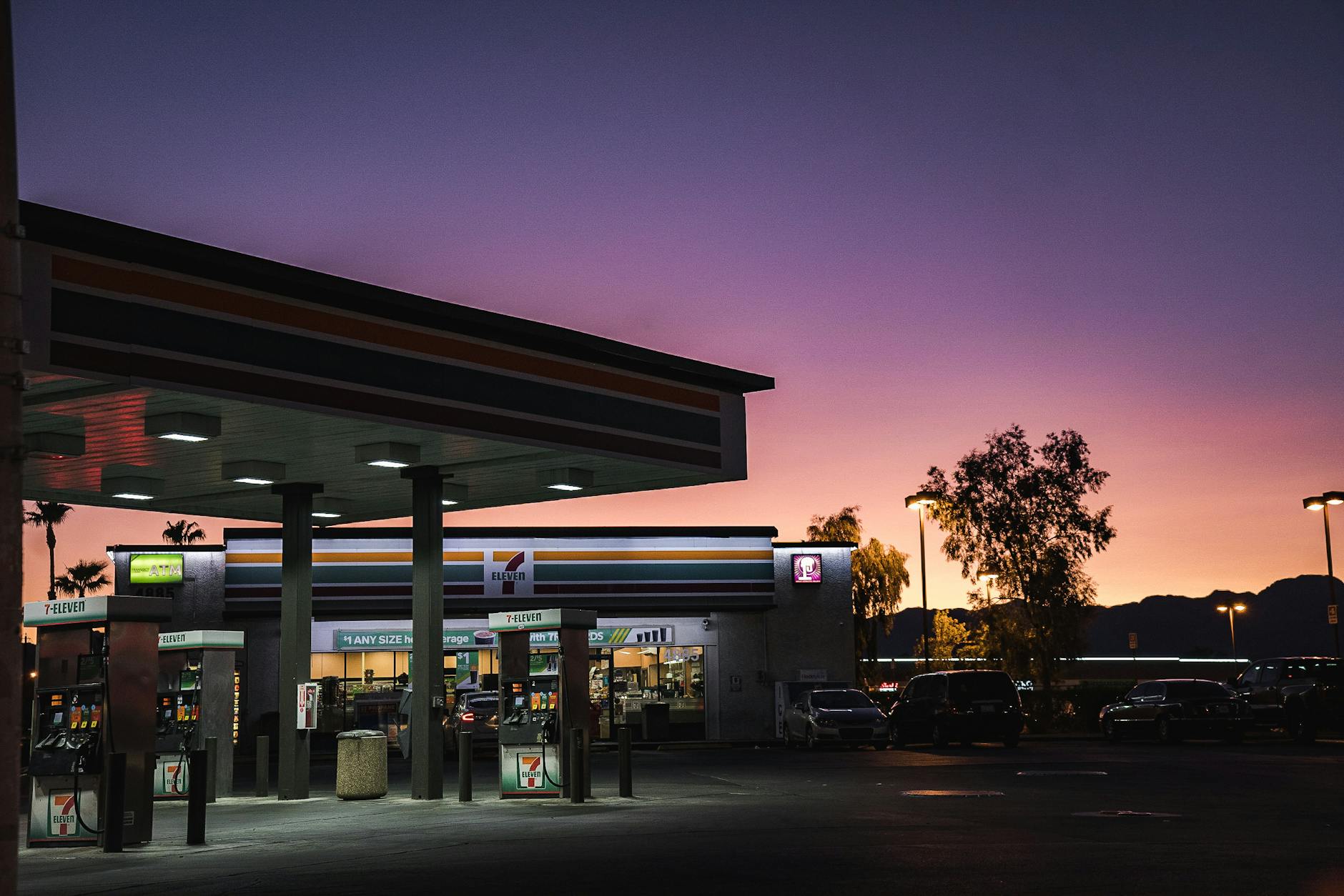
Nevada’s fuel costs continue their upward trajectory, with gas prices in May 2026 reaching levels not seen in years. As of May 18, 2026, Las Vegas residents are paying an average of $5.28 to $5.29 per gallon, while the Nevada statewide average sits at $5.24 to $5.25 per gallon. These prices reflect a persistent trend that has pushed the state firmly into the group of six states where gasoline costs exceed $5 per gallon—a benchmark that affects every consumer from rideshare drivers to families planning summer road trips.
The acceleration is remarkable when measured against 2025. Las Vegas pump prices have jumped $1.39 to $1.37 per gallon year-over-year, representing a 34.9 percent increase in just one year. For a driver filling a 15-gallon tank, this translates to an additional $21 or more per fill-up compared to May 2025. The pressure on fuel costs shows no signs of easing, with prices rising another 11 cents in early May alone, signaling continued upward momentum heading into the summer driving season.
Table of Contents
- What Are Nevada’s Current Gas Prices Compared to the Nation?
- Understanding the Year-Over-Year Price Increases
- Geopolitical Factors and Global Oil Supply Constraints
- Regional Variations Across Nevada and Local Economic Impact
- Diesel Prices and the Commercial Sector Burden
- Nevada Among Six States with Gas Exceeding $5 Per Gallon
- Looking Ahead—What Might Come Next
- Conclusion
What Are Nevada’s Current Gas Prices Compared to the Nation?
Nevada’s fuel prices now substantially exceed the national average. While the U.S. average gasoline price stands at $4.52 per gallon, Nevada’s statewide average of $5.24 to $5.25 sits 72 cents higher—a meaningful gap that compounds quickly for consumers filling up multiple times per month. This disparity is particularly acute in some regions: Reno residents face even steeper prices at $5.42 per gallon, making northern Nevada one of the most expensive fuel markets in the nation.
The comparison extends beyond passenger vehicles. Diesel prices in Nevada have climbed to $6.17 per gallon, a figure that carries significant implications for trucking, agriculture, and commercial operations. This puts diesel nearly a dollar above gasoline prices, a substantial differential that ripples through supply chains and increases operational costs for businesses throughout the state. The 72-cent gap between Nevada and the national average is not a temporary anomaly but reflects structural factors affecting the state’s fuel market.

Understanding the Year-Over-Year Price Increases
The magnitude of price increases becomes clearer when examining the 12-month trajectory. Las Vegas gasoline prices have increased between $1.37 and $1.39 per gallon compared to May 2025, constituting a 34.9 percent year-over-year jump. For diesel, the situation is even more severe: prices have risen $2.46 per gallon, or 66.2 percent, in just 12 months. This means a diesel-dependent business that paid $3.71 per gallon a year ago is now paying $6.17—a burden that translates directly into higher shipping costs, higher food prices at supermarkets, and increased expenses for construction and other diesel-reliant industries.
These increases matter because they’re not abstract statistics—they’re the difference between whether a budget balances or breaks. A small business using 100 gallons of diesel per week has seen its weekly fuel bill jump from approximately $371 to $617, an additional $12,896 annually in fuel costs alone. Without corresponding increases in revenue, these cost increases force difficult decisions: cutting hours, raising prices, or accepting reduced profit margins. For consumers, the visible consequence is higher prices at the pump and, less visibly, higher costs embedded in virtually every delivered good and service.
Geopolitical Factors and Global Oil Supply Constraints
The Iran-Israel war has disrupted global oil supply chains, contributing to elevated fuel prices not just in Nevada but across the United States. Geopolitical tensions in the Middle East have reduced the volume of crude oil available on international markets, pushing up the price of petroleum at the source. This global supply constraint filters down through refineries and distribution networks to eventually reach Nevada pump prices, meaning factors entirely outside the state’s control are driving a significant portion of the price increases. The mechanics are straightforward: when oil-producing regions experience conflict or instability, global oil production declines or becomes uncertain.
Refineries and fuel traders, uncertain about future supply, pay premium prices for available crude. These premiums are passed along through the supply chain, ultimately showing up as higher prices for consumers. Nevada, reliant on fuel transported from refineries in California and the Southwest, has less ability to insulate itself from global supply shocks than states with in-state refining capacity. The result is that Nevada consumers effectively bear the cost of Middle East geopolitical instability at their local pumps.

Regional Variations Across Nevada and Local Economic Impact
Nevada’s fuel prices vary notably by region, with Reno’s $5.42 per gallon significantly outpacing Las Vegas’s $5.28 to $5.29. These regional differences reflect variations in transportation costs, local demand, and proximity to distribution centers. Reno’s higher prices are partly attributable to distance from major refining centers and smaller market size, which reduce the efficiency of fuel distribution. For residents, this means the location where you fill up directly affects your household budget—residents of rural Nevada often face prices even higher than both Reno and Las Vegas.
The economic impact extends beyond individual consumer pain at the pump. Tourism, Nevada’s dominant industry, becomes more expensive for visitors considering the cost of rental cars and road trips. Transportation-dependent sectors like agriculture, construction, and logistics face compressed margins. Rural communities, already economically challenged, face disproportionate impacts because residents typically drive longer distances and have fewer options for carpooling or transit alternatives. These regional price variations underscore that Nevada is not a single fuel market but rather several distinct markets, each responding differently to supply constraints and demand pressures.
📨 Get Free Accountability Coverage Alerts
Free · No spam · Unsubscribe anytime
Diesel Prices and the Commercial Sector Burden
Diesel’s 66.2 percent year-over-year increase has proven particularly punishing for Nevada’s commercial and industrial sectors. At $6.17 per gallon, diesel prices have fundamentally altered the economics of trucking, farming, equipment operation, and distribution. A construction company operating heavy equipment and a long-haul trucking firm both face dramatically higher operational costs that cannot always be quickly passed to customers through price increases.
The limitation here is important to understand: unlike consumer gasoline, where individuals can reduce consumption by driving less, many businesses cannot simply cut diesel use without curtailing operations. A Nevada farm cannot reduce irrigation equipment usage during peak growing season because fuel costs are high. A delivery company cannot reduce routes proportionally when fuel costs rise by two-thirds. This inflexibility means that the 66.2 percent diesel price increase represents an unavoidable cost shock to essential sectors, potentially squeezing already-thin profit margins in agriculture and logistics.
Nevada Among Six States with Gas Exceeding $5 Per Gallon
Nevada’s inclusion in the group of six U.S. states where average gasoline prices exceed $5 per gallon marks a significant inflection point. The only other states in this category are Alaska, Hawaii, Illinois, Oregon, and Washington—a geographically and demographically diverse group that nevertheless shares the experience of expensive fuel. Alaska and Hawaii’s high prices are partly explained by geographic isolation and shipping costs.
Illinois’s position reflects urban demand and Midwest refining constraints. Oregon and Washington, like Nevada, face their own supply chain dynamics and regional demand pressures. This company is telling: Nevada has joined a relatively exclusive club of expensive fuel markets. It means Nevada consumers pay prices comparable to Pacific Northwest states and island markets, despite being located in the continental United States near major refineries. The distinction underscores that Nevada’s fuel cost problem is not entirely attributable to unavoidable geographic factors but also reflects market conditions and supply constraints specific to the state.
Looking Ahead—What Might Come Next
The trajectory of Nevada fuel prices depends on multiple interconnected variables: global oil supply, geopolitical stability, refinery capacity, demand from summer driving season, and potential policy interventions. Summer typically brings peak gasoline demand in Nevada due to tourism and travel, historically putting upward pressure on prices. Whether the current price momentum continues at the same rate or accelerates depends largely on factors beyond state control—global crude oil prices, refinery operations, and international oil market conditions.
For consumers and businesses, the practical reality is that prices are unlikely to decline substantially in the near term. Summer driving season approaches, seasonal demand will rise, and geopolitical risks remain elevated. Planning around these fuel costs—whether that means maintaining transportation budgets, adjusting business operations, or evaluating travel decisions—has become a necessary part of Nevada household and business economics.
Conclusion
Nevada’s gas prices continue rising in May 2026, with Las Vegas and statewide averages now exceeding $5 per gallon and climbing further. The 34.9 percent year-over-year increase in gasoline prices and the staggering 66.2 percent jump in diesel prices represent a substantial economic burden for individual consumers, families, and businesses across the state.
These prices are driven by global factors—particularly the Iran-Israel conflict reducing worldwide oil supply—combined with Nevada-specific market conditions that limit the state’s ability to escape premium fuel pricing. The practical impact is immediate and ongoing: families are spending significantly more to drive to work, businesses are contending with compressed margins, and the cumulative effect ripples through the state’s economy. As consumers prepare for summer travel season, understanding these price dynamics—and their likely persistence in the months ahead—is essential for household planning and budgeting decisions.
You Might Also Like
- Gas Prices Today: Georgia Drivers Face Rising Fuel Costs
- Gas Prices Today: Why Fuel Costs Jump Before Holiday Weekends
- Gas Prices Today: What Analysts Are Saying About Summer Fuel Costs