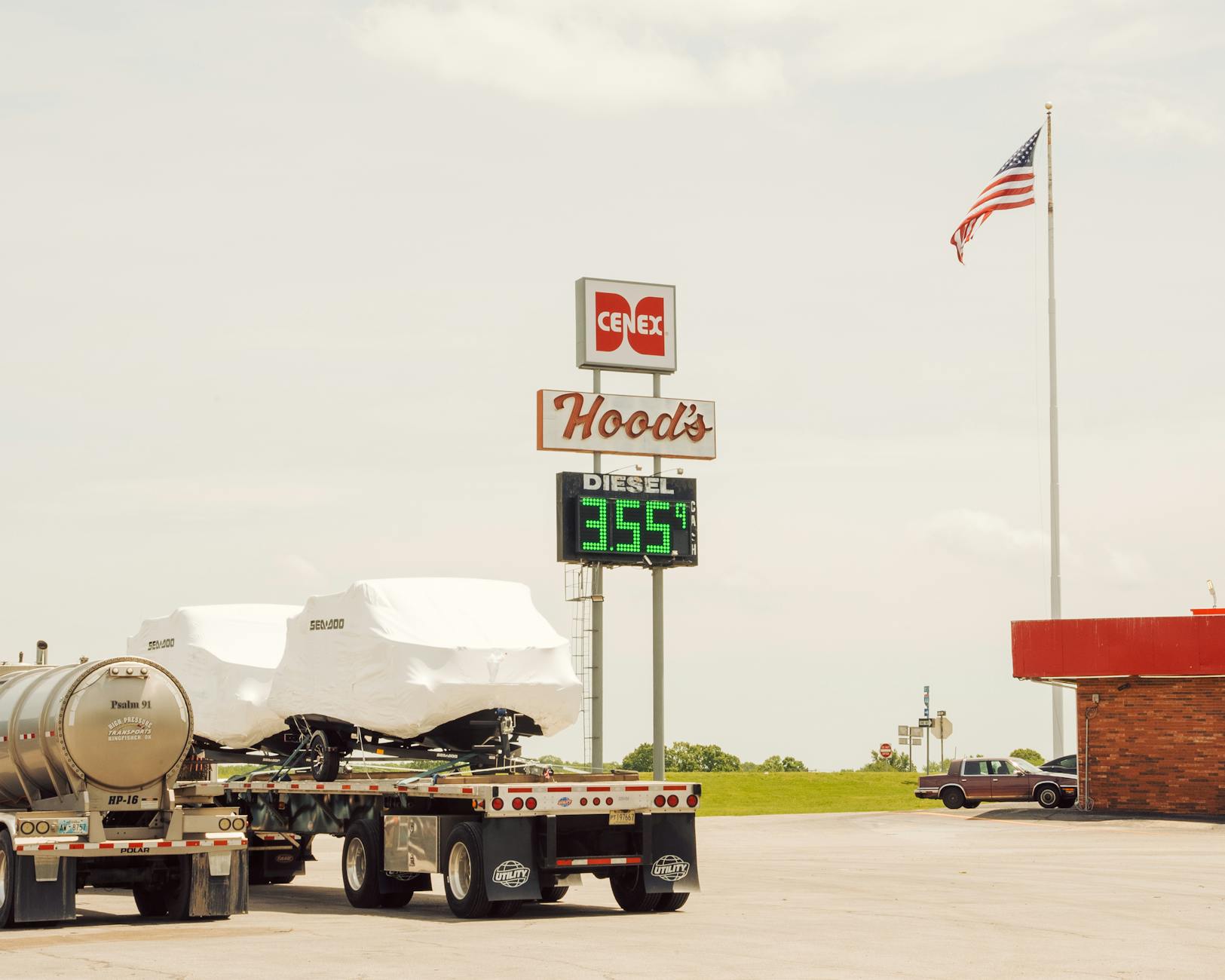
This Memorial Day weekend, travelers planning road trips should brace for shock at the pump. The national average gas price sits at $4.53 per gallon as of May 2026, marking a staggering 42 percent year-over-year jump from last Memorial Day’s $3.17 average—a $1.33 increase that translates to serious money for families hitting the road. For a household filling a 15-gallon tank twice during a long weekend, that adds roughly $40 in extra fuel costs compared to last year, money that many middle and lower-income families simply don’t have in their vacation budgets. Despite these record prices, AAA forecasts that 45 million Americans will travel over Memorial Day weekend, with 39.1 million driving to their destinations.
The paradox is stark: fuel costs have never been higher for this holiday period, yet people are still planning to travel. However, the financial burden is already reshaping vacation plans for millions. Nearly 40 percent of households earning $66,000 or less annually have scrapped their summer travel plans entirely due to fuel and transportation costs. For those determined to drive anyway, every mile comes with a visible price tag on the fuel gauge.
Table of Contents
- Why Are Gas Prices Surging Ahead of Memorial Day 2026?
- How the Cost of Holiday Travel Has Shifted the Economics for Millions
- Who Gets Hit Hardest by Memorial Day Gas Price Shocks?
- What Are Your Options When Gas Prices Are This High?
- What Dangers Do High Gas Prices Create for Travelers?
- How Are Fuel-Efficient Vehicles Gaining Ground During This Period?
- Looking Forward—What Will Memorial Day 2027 Look Like?
- Conclusion
- Frequently Asked Questions
Why Are Gas Prices Surging Ahead of Memorial Day 2026?
The 42 percent year-over-year spike in gas prices reflects a combination of factors that began well before the holiday season approached. Refinery capacity constraints, global crude oil market dynamics, and domestic demand have all contributed to pushing prices to levels that haven’t been seen during a Memorial Day weekend in recent history. When crude oil prices spike globally—whether due to geopolitical tensions, production slowdowns, or seasonal demand patterns—those increases flow directly to the pump within weeks. Regional variation tells an important story about which Americans are being hit hardest. North Carolina drivers face an average of $4.19 per gallon, while Texas sits at a comparatively lower $4.01 per gallon. These differences matter enormously for families in high-price states.
A family in North Carolina driving 600 miles round-trip will spend roughly $160 more on fuel than the same trip would have cost last Memorial Day, assuming their vehicle gets 25 miles per gallon. That’s real money that gets subtracted from vacation budgets, meals, and activities at the destination. The diesel price situation adds another layer of concern. Diesel prices have exceeded $5 per gallon nationally, putting pressure on trucking costs and commercial transportation. When diesel hits $5 per gallon, those costs get passed to consumers through higher prices on virtually everything transported by truck—including the groceries and goods people buy during and after their vacations. Small business owners and independent truckers operating on tight margins face particularly acute challenges during this period.

How the Cost of Holiday Travel Has Shifted the Economics for Millions
The financial calculus of a Memorial Day trip has fundamentally changed for working families. A household with two vehicles, each needing a fill-up before a long weekend drive, now faces $135 in fuel costs instead of the $95 they paid last year for the same trip. For families earning $66,000 annually or less—which represents roughly 40 million American households—that $40 difference often determines whether a vacation happens at all. It’s the difference between a long weekend away and staying home, between creating family memories and managing household finances. This cost shock has real limitations and downsides that extend beyond the individual family budget. When lower-income households cut back on travel, local economies at popular destinations lose revenue.
Beach towns, mountain resorts, and amusement parks that depend on holiday weekend traffic see thinner margins and sometimes have to reduce staff hours or close attractions early. The ripple effect harms workers in hospitality, service, and tourism industries who depend on steady holiday season income. Additionally, families who stretch their budgets or max out credit cards to afford trips they feel obligated to take are creating long-term financial damage—exactly the kind of consumer debt burden that leaves households vulnerable to unexpected emergencies. There’s also a hidden behavioral risk that AAA has flagged: when drivers feel financial pressure about fuel costs, they sometimes make dangerous decisions. Cutting back on vehicle maintenance, driving tired rather than paying for hotel stops, or pushing vehicles beyond safe limits in pursuit of reaching destinations without stopping for gas creates accident risks. The warning here is clear—if you can’t comfortably afford a road trip at these prices, that’s legitimate financial wisdom, not a failure to commit to family traditions.
Who Gets Hit Hardest by Memorial Day Gas Price Shocks?
The burden of high gas prices falls disproportionately on specific segments of American households. Families living in rural areas or small towns face the toughest situation because they have no public transit alternatives—a road trip isn’t optional for visiting family or taking a vacation, it’s the only available option. A family in rural Montana or Arkansas can’t choose to take a bus or train; they drive or they don’t go. When gas prices spike 42 percent, these families absorb the full cost with no workaround available. Single-income households and those with irregular work schedules are hit particularly hard by the timing.
A Memorial Day weekend in may means families often have to book time off work weeks in advance, making it harder to cancel plans even when gas prices spike unexpectedly. Additionally, single parents managing household budgets on one income have less flexibility to absorb a surprise $40 or $50 increase in transportation costs. A parent earning $45,000 annually who had budgeted $100 for gas now finds that budget blown to $150—which might mean cutting restaurant meals, reducing shopping for the trip, or skipping activities that cost money. Workers in essential service industries—healthcare workers, service workers, retail employees—often face the worst situation because they have the least control over their schedules. A nurse who scheduled three days off for Memorial Day can’t suddenly shift her trip dates if gas prices spike on her exact travel days. These workers face take-it-or-leave-it pricing at the worst possible moment, with no flexibility to shop around or wait for better conditions.

What Are Your Options When Gas Prices Are This High?
For drivers committed to taking a Memorial Day trip despite high fuel costs, several practical strategies can reduce the financial blow. Trip consolidation is the most effective approach—if you’re heading to a destination, run all your errands while you’re there rather than making separate local drives. Carpool with friends or family heading to similar destinations to split fuel costs. A family of four sharing one vehicle instead of driving two cars cuts fuel costs nearly in half. Hotels and rental properties near the destination sometimes offer slightly discounted rates during high-traffic periods if you book directly rather than through discount sites, and you can apply those savings to cover extra fuel costs. However, each of these strategies has tradeoffs worth considering. Carpooling requires coordinating schedules and agreeing on departure times, which reduces independence.
Consolidating trips means longer time in a single car and less flexibility if family dynamics shift. Booking directly with hotels instead of through Kayak or Expedia sometimes saves money but other times costs more—you have to research case-by-case rather than getting a fast answer. The comparison that matters: a family driving a fuel-efficient sedan will spend roughly $80-100 on gas for a 500-mile round trip at current prices, while an SUV or truck will spend $140-180 for the same distance. If your vehicle choice is flexible, downsizing temporarily to a more efficient model—renting a sedan instead of taking the family SUV—can save $60 or more over a long weekend. The most honest option is also the simplest: if high gas prices would create financial strain, staying home or taking a local trip is legitimate economic decision-making. Staycations have become increasingly viable with more activities available locally, and your family relationship survives perfectly well without a holiday road trip. That’s not failure—that’s financial responsibility.
What Dangers Do High Gas Prices Create for Travelers?
Record gas prices create subtle but real safety risks that deserve attention. When drivers feel intense pressure about fuel costs, they make different—often worse—decisions behind the wheel. Some drivers push their vehicles to maximum capacity between fill-ups rather than stopping for rest or breaks, increasing fatigue and crash risk. Others defer maintenance they know their vehicles need because they’re stretching their budgets. A driver who skips a $200 brake service to save money for gas is creating a potential safety catastrophe that will cost far more than the maintenance would have. The pressure also affects family vacation dynamics in ways that compound risk.
A parent stressed about fuel costs might drive aggressively, skip night stops that would be safer for tired kids, or push onward when they’re exhausted. The warning AAA has issued is explicit: high fuel prices correlate with increased accident rates during major travel periods because drivers make less safe choices. Additionally, some budget-conscious drivers reduce their use of air conditioning while driving, which can impair alertness on long drives, or avoid rest stops because they’re trying to limit their vehicle operation to save gas—exactly the behavior pattern that increases accident risk. The limitation here is that safe driving and economic driving sometimes conflict. The safest approach—taking breaks, maintaining your vehicle properly, driving at moderate speeds, using air conditioning as needed—costs more in fuel than pushing hard between rest stops and skipping maintenance. If you can’t afford to drive safely and comfortably, that’s a genuine indicator that your budget doesn’t support the trip you’re planning.

How Are Fuel-Efficient Vehicles Gaining Ground During This Period?
The demand for fuel-efficient vehicles typically increases during periods of high gas prices, and 2026 is no exception. Drivers are paying premium prices for used hybrids and efficient sedans, recognizing that a $2,000-$4,000 upgrade to a more efficient vehicle could save them thousands in fuel costs annually. A driver trading in an 18 mpg SUV for a 40 mpg sedan cuts their annual fuel costs roughly in half—savings that matter enormously when gas prices sit at $4.53 per gallon.
📨 Get Free Accountability Coverage Alerts
Free · No spam · Unsubscribe anytime
This shift illustrates an important truth: for American households making medium-to-high incomes, high gas prices create an incentive to invest in efficiency that ultimately reduces their long-term costs. For lower-income households, this same shift is unavailable—they can’t access the $15,000-$25,000 needed to upgrade to a hybrid, and they’re stuck with whatever vehicle they currently own. The economic divide widens as fuel prices rise, because wealthy families can engineer their way out of the problem through purchases that less-affluent families simply cannot make.
Looking Forward—What Will Memorial Day 2027 Look Like?
Predicting fuel prices is notoriously difficult, and AAA itself declines to make confident predictions about whether 2027 will bring relief or further increases. Oil futures markets suggest some hope for moderation in crude prices, but geopolitical instability, refinery maintenance schedules, and global demand patterns remain in constant flux. The Memorial Day 2026 record-high prices will likely become a reference point—if prices are lower next year, there will be relief and reporting on the decrease, and if prices are similar or higher, the shock will be less surprising because travelers will have already experienced this worst-case scenario.
What remains predictable is that working and lower-income families will continue absorbing whatever fuel prices the market delivers, with limited ability to adjust their circumstances. Carpooling, trip consolidation, and vehicle efficiency choices all matter at the margins, but they don’t solve the fundamental equation: when gas prices are high, the poor spend a larger percentage of their income on fuel than wealthy households do. Memorial Day 2026 illustrated this divide in concrete terms—millions of families sat out the holiday because the fuel costs were too much to bear.
Conclusion
Memorial Day 2026 arrives with gas prices at $4.53 per gallon nationally, representing a shocking 42 percent year-over-year increase that will reshape vacation plans for millions of American families. The numbers are stark: nearly 40 percent of households earning $66,000 or less have canceled summer travel due to fuel costs, while the 45 million Americans still traveling face fuel expenses 40 percent higher than last year. Regional variations mean that drivers in North Carolina pay $4.19 per gallon while Texans face $4.01, and diesel prices have exceeded $5 nationally, affecting the cost of everything transported by truck.
If you’re planning a Memorial Day road trip, the practical guidance is straightforward: consolidate trips, consider carpooling, and honestly assess whether your budget can accommodate safe, comfortable travel at these prices without creating financial strain. If high gas prices would cause you to make less safe driving choices or create financial stress for your household, staying home is the responsible decision. For those proceeding with travel plans, remember that fuel efficiency, proper vehicle maintenance, and taking breaks for rest aren’t optional luxuries—they’re essential safety investments during high-cost periods when budget pressure tempts drivers to make dangerous compromises.
Frequently Asked Questions
Is $4.53 per gallon the highest gas price has ever been for Memorial Day?
The May 2026 average of $4.53 per gallon represents the highest gas prices on record specifically for a Memorial Day weekend period, according to AAA data. While individual states and regions have experienced higher prices at other times, this marks the most expensive Memorial Day weekend in American history.
Should I delay my Memorial Day trip until prices drop?
Fuel prices don’t follow predictable patterns, and delaying your trip doesn’t guarantee lower prices. Memorial Day falls on a fixed date, and prices after the holiday may be higher or lower. If your trip timing is flexible, monitoring prices for a few days might reveal small savings, but waiting weeks won’t reliably produce lower prices.
How much will high gas prices cost my family for a typical Memorial Day road trip?
A typical 500-mile round trip in an average sedan at current prices costs roughly $80-100 in fuel. The same trip in an SUV or truck costs $140-180. A family with two vehicles spending 600 miles for a weekend trip will spend approximately $200-300 total on fuel at current prices.
Are there tax credits or assistance programs for high fuel costs?
There are no federal fuel assistance programs specifically triggered by high gas prices for individual drivers. Some states offer utility assistance for low-income households during winter, but fuel cost assistance is not widely available. The primary strategies remain reducing consumption, improving efficiency, or adjusting your travel plans.
Will diesel prices affect the cost of goods I buy during my vacation?
Yes, indirectly. Diesel prices above $5 per gallon increase the transportation costs for goods delivered to retail businesses, which eventually get passed to consumers through higher prices. This effect is most visible in food and beverage costs at tourist destinations, which tend to be marked up significantly higher than home prices anyway.
What’s the safest way to manage a long drive when I’m concerned about fuel costs?
Prioritize safety over fuel savings. Take breaks every 2 hours to rest, maintain your vehicle properly before the trip, and don’t sacrifice comfort or rest for marginal fuel savings. Fatigue and poor vehicle maintenance cause accidents far more expensive and dangerous than the fuel costs you’re trying to save.
You Might Also Like
- Gas Prices Today: Why Fuel Costs Jump Before Holiday Weekends
- Gas Prices Today: What Analysts Are Saying About Summer Fuel Costs
- Gas Prices Today: Southern States See Fuel Costs Climb