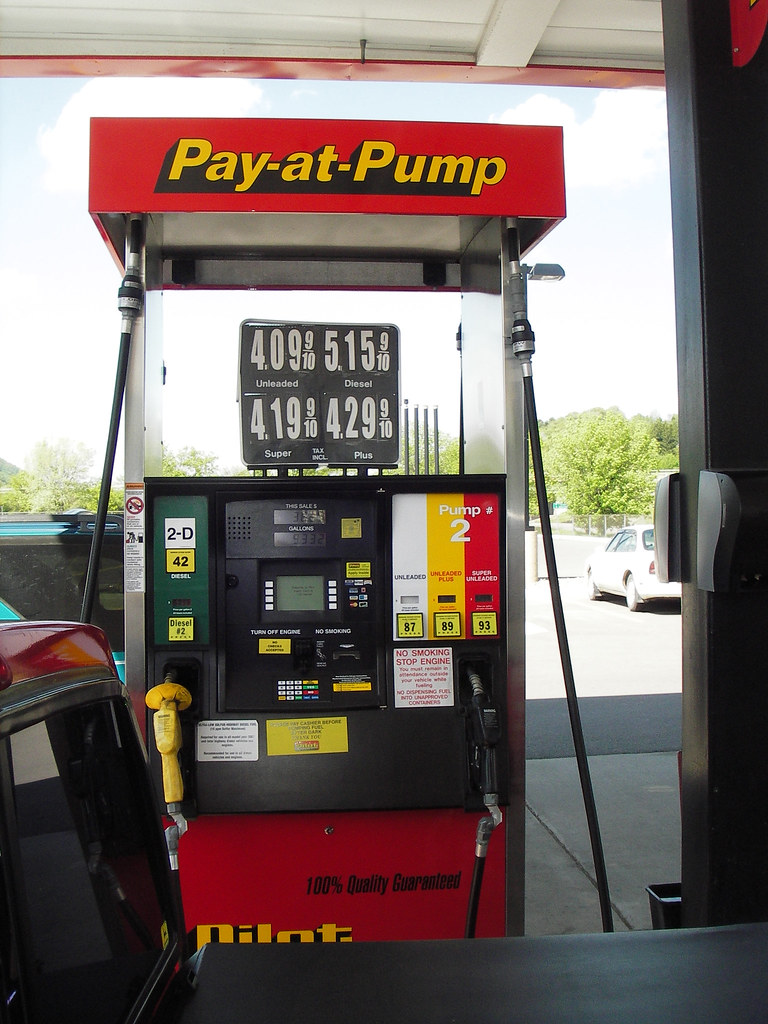
Yes, drivers are getting relief this month — at least for now. The AAA national average for regular gasoline stands at $4.13 per gallon as of June 11, 2026, down from $4.28 just one week earlier. That’s a drop of about 30 cents, or 6.5%, since prices peaked on May 21.
After a brutal spring that saw the national average jump roughly a dollar in a single month, June has brought the first sustained decline drivers have seen since the Strait of Hormuz crisis began. But there’s a serious catch. Energy analysts warn this relief could be temporary, and possibly very temporary. GasBuddy cautioned on June 3 that the current “plunging” prices “may be short lived” as long as the Strait of Hormuz remains closed, and one of its petroleum analysts went further: “It’s still possible later this summer, even ahead of July 4, we could see the national average pass $5 a gallon.” For a family filling a 15-gallon tank twice a month, the difference between $4.13 and $5.00 gas is roughly $26 a month — real money, and money that could swing in either direction within weeks.
Table of Contents
- Why Are Gas Prices Falling Right Now — and Will Relief Last This Month?
- The Strait of Hormuz Problem That Could Reverse Everything
- How Forecasters Got 2026 So Wrong — and What That Means for You
- What Drivers Can Actually Do While Prices Are Down
- The $5 Gas Scenario: How Real Is the Risk?
- Regional Differences: Your Relief May Not Match the National Average
- How Government Forecasts Like the EIA’s Actually Work
Why Are Gas Prices Falling Right Now — and Will Relief Last This Month?
Two forces are pushing pump prices down in June. The first is the oil market’s reaction to diplomatic progress. U.S. crude fell to about $86 per barrel — a roughly 20% drop over a 10-day stretch in late May — on optimism over a U.S.-Iran ceasefire and a potential reopening of the Strait of Hormuz, according to CNBC. Gasoline prices typically lag crude by a few weeks, so the discounts drivers are seeing in mid-June largely reflect that late-May crude selloff. The second force is plain old weak demand.
Demand slumped after Memorial Day weekend, ABC News reported, which contributed directly to the recent price decline. That pattern is unusual — Memorial Day normally kicks off the summer driving season and pushes demand up, not down. The drop suggests drivers cut back after months of elevated prices, a behavior economists saw in 2022 when prices last crossed $4 nationally. The comparison worth keeping in mind: prices are falling, but from a crisis peak. A $4.13 average is still far above the $2.97 annual average GasBuddy projected for 2026 before the crisis hit. Drivers are getting relief relative to May — not relative to where 2026 was supposed to be.
The Strait of Hormuz Problem That Could Reverse Everything
Here is the limitation buried under the good news: the physical oil supply problem has not actually been solved. While markets rallied on ceasefire optimism, the U.S. Energy Information Administration’s June Short-Term Energy Outlook assumes the Strait of Hormuz remains effectively closed in the near term, with shipments resuming only in the third quarter of 2026 — and taking months after that to fully normalize. That assumption has hard numbers attached. EIA forecasts Brent crude will average $105 per barrel in June and July, well above the $86 level U.S. crude touched during the late-May selloff.
In other words, the federal government’s own forecasters believe the market may have gotten ahead of itself. If Brent climbs back toward $105, pump prices will follow within weeks. For context, Brent averaged $117 per barrel in April 2026 at the height of the crisis — and that was when the national average surged a dollar in a month. The one stabilizing factor EIA cites: global oil demand is dropping, which the agency says will limit price increases from Hormuz disruptions. Weak demand is doing some of the work that diplomacy hasn’t finished. But a demand cushion is not a supply fix, and any setback in ceasefire negotiations could erase June’s gains quickly.
How Forecasters Got 2026 So Wrong — and What That Means for You
GasBuddy’s original 2026 Fuel Price Outlook, published before the crisis, projected a $2.97 per gallon annual average — the lowest since 2020 — with prices falling after June and December averaging just $2.83. Newsweek covered the forecast under headlines predicting a five-year low. Six months later, the national average sits more than a dollar above that projection, and the same firm is warning about $5 gas by July 4. This isn’t a knock on the forecasters; it’s a lesson in what forecasts can and cannot capture.
GasBuddy’s model reflected normal market dynamics — refinery capacity, seasonal demand, expected crude prices. It could not price in a geopolitical shock that closed the world’s most important oil chokehold. Roughly a fifth of global oil flows through the Strait of Hormuz, and no demand model survives that disruption intact. The practical takeaway for household budgeting: treat any 2026 gas price forecast as a scenario, not a promise. Yahoo Finance reports analysts are calling this potentially the “most volatile summer” for gas prices in years. A budget built on $3 gas was wrong in April; a budget built on $4.13 gas could be wrong by July.
What Drivers Can Actually Do While Prices Are Down
The most concrete move available right now is simple: if prices in your area are still falling, the cheapest fill-up of the summer may be in the next few weeks. With the national average down 15 cents in a single week, waiting a few days before topping off has been paying off — but that calculus flips the moment crude reverses. Drivers who locked in fuel-heavy plans (road trips, moves, towing jobs) at May prices overpaid by 30 cents a gallon compared to today. There’s a tradeoff between optimizing and overthinking.
📨 Get Free Accountability Coverage Alerts
Free · No spam · Unsubscribe anytime
Driving 10 miles out of your way to save 5 cents a gallon burns more in fuel than it saves on a typical fill-up. The better savings levers are boring ones: price-comparison apps to find the cheapest station on routes you already drive, grocery and warehouse-club fuel discounts (often 5 to 25 cents off per gallon), and paying cash at stations that charge credit-card surcharges of 10 cents or more. For bigger-ticket decisions — like whether to buy a more efficient vehicle — the volatility cuts both ways. A driver covering 15,000 miles a year in a 25-mpg vehicle spends about $2,478 annually at $4.13 gas, versus roughly $1,770 at GasBuddy’s original $2.95-area forecast. Whether efficiency upgrades pay off depends on which of those worlds materializes, and right now nobody — including the EIA — can tell you with confidence.
The $5 Gas Scenario: How Real Is the Risk?
The warning deserves to be taken seriously because it comes from the same analysts watching the decline. GasBuddy’s petroleum analyst flagged the possibility of the national average passing $5 a gallon “even ahead of July 4” — a date less than a month away. The mechanism would be straightforward: a breakdown in U.S.-Iran ceasefire talks, continued Hormuz closure into peak summer driving season, and Brent moving back toward (or past) its April average of $117. The reason this scenario is plausible rather than alarmist is the gap between market pricing and physical reality. Crude fell 20% on optimism — on the expectation that the strait would reopen.
The EIA’s baseline, by contrast, assumes shipments don’t resume until Q3 and take months to normalize afterward. If the EIA is right and the market is wrong, the late-May rally was premature, and the correction would land at the pump in July, exactly when seasonal demand peaks. The limitation drivers should internalize: there is no version of this summer where prices are predictable. The spread between the plausible outcomes — a continued slide toward the pre-crisis trend versus a spike past $5 — is wider than at any point in recent memory. Plans that depend on gas staying at one specific price are plans built on sand.
Regional Differences: Your Relief May Not Match the National Average
The $4.13 national average masks enormous regional variation. West Coast states typically run $1 or more above the national figure due to fuel blend requirements, taxes, and limited pipeline access, while Gulf Coast states — close to refining capacity — often sit 30 to 50 cents below it.
During the spring spike, when the national average jumped a dollar in a month, high-cost states saw even sharper moves in absolute terms. The practical effect: a driver in Texas may already be seeing prices in the mid-$3 range and feel genuine relief, while a California driver looking at well over $5 sees this month’s 30-cent decline as a rounding error. National headlines about falling prices describe an average that almost nobody pays exactly.
How Government Forecasts Like the EIA’s Actually Work
The EIA’s Short-Term Energy Outlook, the source of the $105 Brent forecast, is published monthly by a statistical agency within the Department of Energy — it is data analysis, not administration policy or messaging. Its June 9 release laid out the agency’s core assumptions explicitly: Hormuz effectively closed near-term, shipments resuming in Q3 2026, months of normalization afterward, and falling global demand limiting the upside.
That transparency matters for accountability. When officials of any administration claim credit for falling gas prices or blame others for rising ones, the EIA’s published assumptions provide a neutral benchmark. In June 2026, that benchmark says the recent decline owes more to ceasefire optimism and post-Memorial Day demand weakness than to any single policy action — and that the agency’s own price forecast sits above today’s market.
You Might Also Like
- Oil Prices Today: Why Gas Prices May Stay High This Month
- New York Gas Prices Today: Drivers Paying More Than the U.S. Average
- NYC Gas Prices Today: May 2026 Update for Local Drivers