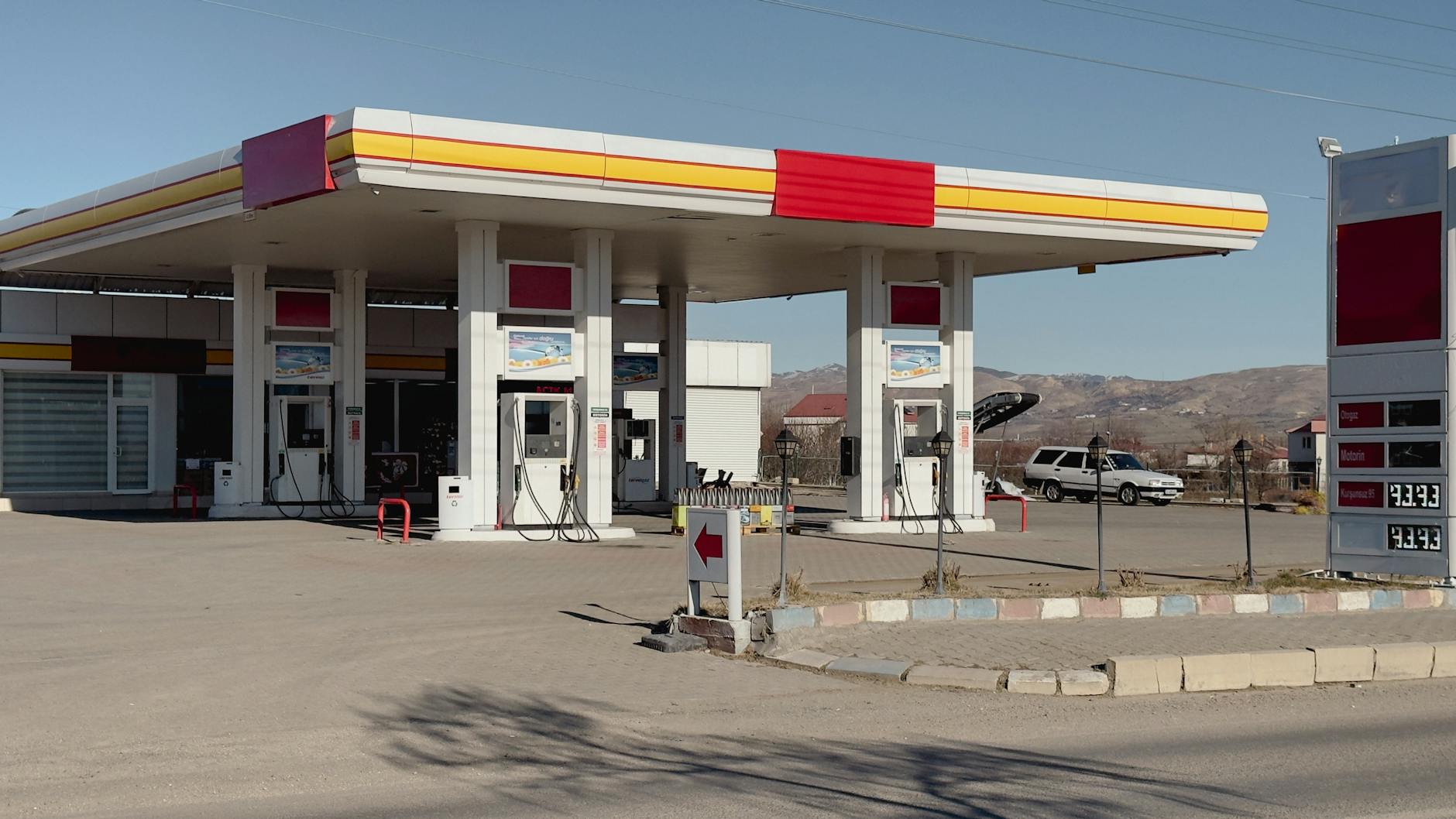
Energy experts are sounding the alarm about gas prices this summer, with forecasts ranging from continued pain at the pump to potentially historic highs. As of early May 2026, the national average gasoline price stands at $4.30 per gallon, and industry analysts predict that drivers could see prices spiking to $5 or even $6 per gallon by late summer, depending on how global energy markets unfold. The root cause: a significant supply disruption in the Middle East that has effectively closed the Strait of Hormuz, one of the world’s most critical oil chokepoints, creating uncertainty that could persist throughout the driving season. The range of expert predictions underscores the volatility ahead. Patrick De Haan at GasBuddy forecasts prices could fluctuate between $3.35 and $3.95 per gallon through summer, with potential spikes to $5 by Memorial Day weekend and as high as $6 later in the season.
Treasury Secretary Scott Bessent has suggested prices could drop to $3.00 per gallon sometime between late June and September, though such relief appears unlikely without a swift resolution to Middle East tensions. Meanwhile, the U.S. Energy Information Administration expects an average of $3.88 per gallon for the full year 2026, still substantially higher than what many households budgeted for, particularly those already stretched by inflation. For American drivers, this summer represents a critical period of financial pressure. Families planning road trips, commuters dependent on daily fuel purchases, and small business owners relying on transportation all face months of uncertain and elevated energy costs. Understanding what experts predict, what’s driving these prices, and how long this trend might last can help consumers make informed decisions about travel, finances, and budgeting through the peak driving months ahead.
Table of Contents
- How High Could Gas Prices Go This Summer?
- The Middle East Supply Crisis Behind Rising Energy Costs
- Expert Forecasts: A Wide Range of Predictions for 2026
- What 2026 Gas Prices Mean for Your Summer Budget
- Geopolitical Risks and Supply Uncertainty
- How Refineries and Fuel Distributors Are Responding
- What Comes After Summer? The Outlook for Fall and Beyond
- Conclusion
How High Could Gas Prices Go This Summer?
The headlines about $5 and $6 per gallon gas are not speculation—they’re grounded in real market conditions and expert analysis. Patrick De Haan of GasBuddy, one of the most visible industry watchers, has publicly stated that prices could reach $5 per gallon by Memorial Day weekend and potentially climb as high as $6 by midsummer if supply disruptions persist. These figures are not doomsday predictions but rather worst-case scenarios in a volatile commodity market. For context, the last time the U.S. saw sustained $4-plus prices was in 2022, but prices approaching $6 would represent territory unseen since the 2008 energy crisis that helped trigger the Great Recession. The New York Harbor gasoline futures market, which signals where retail prices are headed, is trading above $3.50 per gallon—near four-year highs as of mid-May 2026.
This is a leading indicator that refineries and major fuel distributors are pricing in continued scarcity and elevated demand. Even the more optimistic forecasts from Treasury Secretary Bessent acknowledge that prices will remain elevated well above historical averages, with his prediction of $3.00 per gallon representing the floor, not the ceiling. The reality for most households is that even the “good news” scenario still means paying significantly more at the pump than they did in 2024 or early 2025. What makes this particularly punishing is the timing. Summer is peak driving season, when families take vacations, agricultural operations ramp up hauling, and construction companies move materials. A single family road trip that cost $200 in gas money a few years ago could easily run $350 to $450 this summer. Trucking companies, which operate on thin margins, immediately pass fuel surcharges to consumers, making everything from groceries to home deliveries more expensive in the process.
The Middle East Supply Crisis Behind Rising Energy Costs
The primary culprit behind summer’s expected pain is the supply disruption centered on the Strait of Hormuz, the world’s most important oil chokepoint through which roughly one-third of all global maritime oil trade passes. According to the U.S. Energy Information Administration, this critical waterway is expected to remain “effectively closed through late May, with flows slowly resuming in late May or early June.” When one of the world’s energy highways effectively shuts down, even temporarily, the ripple effects spread instantly through global markets and, within weeks, appear on gas station signs across America. What distinguishes this crisis from previous price spikes is the uncertainty surrounding how long it will last. Previous supply disruptions—whether from hurricanes that temporarily closed refineries or geopolitical events—typically resolved within days or weeks. The current situation in the middle east lacks a clear timeline for resolution, which means energy traders, refineries, and fuel distributors are hedging their bets by stockpiling, which drives up prices further.
This is not pure speculation; it’s rational behavior in the face of genuine supply risk. The limitation of this analysis, however, is that geopolitical situations can shift rapidly. A sudden peace agreement or diplomatic breakthrough could unlock supply quickly, potentially causing prices to fall sharply within days—but no one can predict that timing with certainty. The disconnect between the Trump administration’s optimistic statements about gas prices and expert forecasts reflects this underlying geopolitical unpredictability. Treasury Secretary Bessent’s prediction of a possible $3.00 per gallon assumes that supply issues will be substantially resolved by mid-summer. However, the EIA’s more conservative estimates and GasBuddy’s spike scenarios assume continued disruption. For drivers, this means budgeting for the worst case while hoping for the best case—a frustrating but necessary stance given the current global energy environment.
Expert Forecasts: A Wide Range of Predictions for 2026
The expert predictions for summer 2026 prices span a surprisingly wide range, reflecting genuine disagreement about how supply issues will resolve. GasBuddy’s Patrick De Haan, operating on real-time fuel distribution data, sees a volatile summer with prices swinging between $3.35 and $3.95 per gallon, with potential spikes beyond these bounds. In contrast, CIBC Private Wealth analyst Rebecca Babin simply expects prices to remain above $3.00 per gallon for the entirety of 2026, even if the Middle East supply situation improves. Moody’s Analytics estimates a $3.50 per gallon average by the end of the year, while the U.S. Energy Information Administration’s official forecast is $3.88 per gallon for the full 2026 year. The divergence in these predictions matters because it affects household budgeting and consumer confidence. A family that budgets assuming $3.50 per gallon but sees $5.00 prices will face a significant financial shock.
Conversely, a household that prepares for $5.00 prices and benefits from the $3.35 forecast experiences welcome relief. The EIA’s $3.88 average is important context: it suggests that if spikes to $5 or $6 occur, they would need to be offset by periods below $3.88 to maintain that annual average, indicating that relief, even if temporary, is expected at some point in the year. However, this average masks the uneven pain—spike periods hit hardest, and averages offer little comfort to someone trying to fill a tank on a specific Tuesday in July. One critical limitation of all these forecasts is that they depend entirely on assumptions about Middle East supply, refinery capacity, and demand. If supply comes online faster than expected, prices could drop rapidly. Conversely, if a hurricane hits the Gulf Coast, closes additional refineries, or if Middle East tensions escalate further, prices could exceed all current forecasts. Experts update their predictions frequently as new data emerges, so any forecast published today could be obsolete within weeks.

What 2026 Gas Prices Mean for Your Summer Budget
Understanding the year-over-year comparison provides some context, even if it offers little comfort. The EIA expects 2026 prices to be approximately 6% lower than 2025 prices on average, which sounds positive until you realize that 2025 was itself a year of elevated energy costs. If 2025 averaged around $4.15 per gallon, then a 6% reduction to $3.88 means only marginal relief—certainly not a return to the $2.50-$3.00 range that many drivers remember from 2020 and 2021. For a household filling a 15-gallon tank three times weekly, the difference between a $3.50 average and a $4.30 current price is roughly $50 more per month, or $600 per year. Multiply that across 130 million American households, and the cumulative economic drag becomes enormous. The practical implication is that families must adjust spending in other categories to accommodate higher fuel costs.
Some households will reduce vacation travel—the AAA estimates that fuel represents roughly 30% of a road trip’s total cost, so $2 per gallon swings translate directly to vacation budgets. Others will shift to remote work arrangements when possible or consolidate trips to save fuel. Delivery costs for e-commerce and groceries will rise due to fuel surcharges, making goods more expensive across the board. The tradeoff is unavoidable: money spent on gasoline is money not spent on other goods and services, which historically dampens consumer spending and economic growth. This is particularly concerning for lower-income households, where fuel and transportation costs represent a much larger share of overall budget compared to higher earners. The practical wisdom for summer 2026 is to lock in fuel purchases when prices dip, use fuel price apps to find the cheapest stations, consider consolidating trips, and adjust vacation timing if possible to avoid peak-price weeks. However, these individual actions cannot overcome systematic price increases driven by global supply disruptions—they merely help families absorb the costs more efficiently.
📨 Get Free Accountability Coverage Alerts
Free · No spam · Unsubscribe anytime
Geopolitical Risks and Supply Uncertainty
The Strait of Hormuz closure is not an isolated incident but rather a symptom of broader Middle East tensions that could worsen or improve with little warning. The EIA’s assumption that flows will slowly resume by late May or early June is optimistic in context of recent history. Previous closures or slowdowns in this region have occasionally lasted longer than initially expected, and each day of additional closure costs the global economy hundreds of millions of dollars in additional fuel expenses. For American households, this means that even if prices are expected to decline in June, any delay in supply resumption extends the summer pain deeper into the season. There’s also a distinction between supply disruption and complete supply loss. The Strait isn’t absolutely closed to all tankers—it’s effectively closed in the sense that shipping there is restricted, dangerous, or economically irrational due to insurance costs and geopolitical risks.
A single maritime incident, a renewed escalation, or even a miscalculation by a military actor could cause the strait to physically close, with no tankers moving through at all. Such an event would trigger an immediate, severe price spike that could easily push gasoline to $6 or beyond within days, before the energy market could adjust through conservation or alternative sourcing. The warning here is that current forecasts assume things do not substantially worsen; if they do, prices could move faster and higher than any expert currently predicts. Additionally, the global energy market is interconnected, meaning that disruptions elsewhere could compound the Middle East problem. A hurricane that damages Gulf Coast refineries, a production decline in Russia or the North Sea, or any other supply shock would hit at the worst possible time, given existing tightness. Conversely, a rapid improvement in the Middle East coupled with sustained recession or demand destruction could cause prices to collapse unexpectedly, benefiting consumers in the short term but potentially signaling deeper economic problems.

How Refineries and Fuel Distributors Are Responding
Behind the price numbers are real operational decisions by refineries and fuel companies. When the Strait of Hormuz is effectively closed, refineries in the U.S. and globally face a choice: continue normal operations with existing supplies and watch their inventory decline, or reduce production to stretch supplies longer and maintain higher prices. History shows that companies typically reduce production in this scenario, which is rational from a business perspective but devastating for consumers. The result is that gasoline supplies tighten, wholesale prices climb, and within two to three weeks, these higher wholesale costs appear at retail pumps across the country.
Major fuel distributors are hedging their supply by purchasing futures contracts and spot supplies at elevated prices, locking in higher cost structures that they immediately pass to gas stations and ultimately to consumers. A distributor who normally buys a month’s supply at steady prices must now buy smaller quantities more frequently, because suppliers are rationing output. This adds transaction costs and reduces efficiency, further driving up retail prices. For example, a large fuel distributor in Texas might have normally placed three large orders per month from their supplier; now they place nine smaller orders and pay higher prices for each due to scarcity. These increased costs appear directly on the pump price customers see.
What Comes After Summer? The Outlook for Fall and Beyond
Looking past summer into fall and winter, the picture becomes somewhat less dire, though uncertainty remains. The EIA’s full-year 2026 forecast of $3.88 per gallon implies that prices will trend downward from summer peaks as supply disruptions are resolved. Historically, gasoline prices are lower in fall and winter because demand declines—fewer road trips, less industrial activity in some sectors—and refineries have completed seasonal maintenance that was delayed during summer. However, the assumption that supply will be substantially restored by fall is critical; if Middle East tensions remain unresolved, this assumption breaks down.
The broader context is that 2026 is still expected to see prices about 6% lower than 2025 on average, and substantially lower than the $5.00-$6.00 peaks that summer could bring. This suggests a pattern of spike followed by partial recovery, with the recovery still leaving prices elevated relative to recent historical norms. For consumers, the takeaway is that summer represents the worst case, with some relief expected by September, but without a return to the $2.50-$3.00 prices that characterized 2020-2021. Understanding this arc helps families plan their finances across the year, knowing that summer represents a temporary but acute period of pain rather than an indefinite crisis.
Conclusion
Gas prices this summer face genuine upward pressure from Middle East supply disruptions, and expert forecasts unanimously predict sustained elevation with potential spikes to $5 or $6 per gallon under adverse conditions. The national average of $4.30 per gallon as of early May already strains household budgets, and the range of expert predictions—from GasBuddy’s volatile forecast to Treasury Secretary Bessent’s optimistic $3.00 scenario to the EIA’s $3.88 full-year estimate—reflects real uncertainty about how long supply issues will persist. Families should budget conservatively, plan summer travel strategically, and understand that individual actions alone cannot offset systematic price increases driven by global geopolitical events.
For drivers navigating the road ahead, the best strategy is preparation: lock in fuel purchases when prices dip below $4.50, use fuel-finding apps to identify cheaper stations, consolidate trips to reduce driving, and adjust vacation plans if necessary to lower overall transportation costs. While summer 2026 will be painful at the pump, prices are expected to ease somewhat by fall, and 2026 overall should see prices modestly lower than 2025. Staying informed through official sources like the EIA and avoiding speculation-driven panic is equally important—the last thing households need is to overspend on fuel purchases based on worst-case scenarios that may not materialize.
You Might Also Like
- Gas Prices Today: What Experts Predict for June Fuel Prices
- Gas Prices Today: Phoenix Drivers Brace for Higher Summer Costs
- Gas Prices Today: Analysts Predict Volatile Summer Fuel Costs