Gas prices across America have surged to levels not seen in years, with the national average reaching $4.55 per gallon as of May 7, 2026—a stunning 53 percent jump from just $2.96 on February 26. This rapid spike, occurring in less than three months, reflects a fundamental disruption in global oil supplies tied directly to escalating geopolitical tensions. For most American drivers, the impact is immediate and unavoidable: a fill-up that once cost $45 now costs nearly $70 for the same vehicle, straining household budgets and rippling through the broader economy.
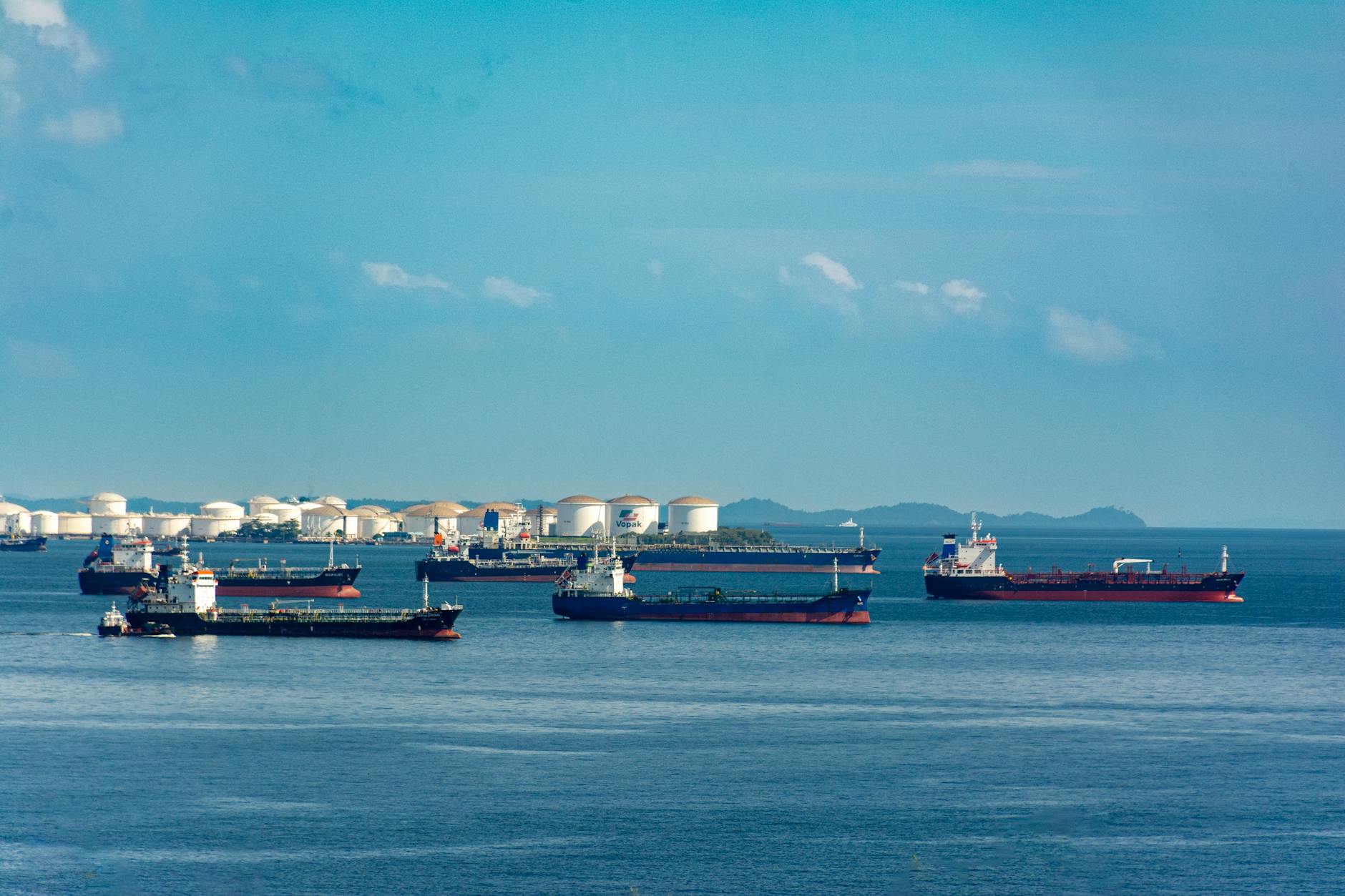
The driver behind this sharp price increase is the closure of the Strait of Hormuz, one of the world’s most critical oil chokepoints. Since the last week of February 2026, when military conflict disrupted the waterway, roughly 10 to 12 million barrels per day have been choked off from global markets. Ordinarily, the Strait carries approximately 20 percent of the world’s daily oil and gas supply, meaning the blockade has effectively removed one-fifth of global oil commerce from circulation. This supply crunch has cascading effects: crude oil benchmarks have climbed, refineries have faced tighter margins, and consumers have felt the pain at the pump in nearly every state.
Table of Contents
- How Fast Are Gas Prices Rising Across America?
- Understanding the Global Oil Supply Disruption and Its Real Impact
- What Are Crude Oil Prices Telling Us About Future Pump Prices?
- Regional Impact: Why Some States Suffer More Than Others
- The Trump Administration’s Negotiations and Uncertainty
- Impact on Household Budgets and Economic Activity
- When Could Prices Begin to Decline?
- Conclusion
How Fast Are Gas Prices Rising Across America?
The national average of $4.55 per gallon masks significant regional variation. In California, drivers face the most punishing prices in the nation at $6.16 per gallon—nearly $1.61 more than the national average. Washington state and Hawaii follow closely, with prices at $5.76 and $5.66 respectively, reflecting both distance from refineries and state-specific fuel requirements that limit supply flexibility. Meanwhile, Oklahoma and Mississippi have managed to keep prices under $4.00 per gallon, a difference of more than $2 per gallon from the worst-hit states.
For a driver in California filling a 15-gallon tank, the cost difference compared to Oklahoma represents nearly $30 in additional fuel spending per fill-up—expenses that add up quickly for those who commute regularly. The speed of the increase has also been striking. In the first week of may 2026 alone, the national average jumped noticeably as crude oil concerns deepened. What makes this different from past price cycles is the international nature of the disruption; this is not a domestic supply shortage or refinery problem, but a geopolitical event that has had nearly immediate market consequences. Drivers accustomed to price fluctuations measured in cents per week are now watching double-digit increases within days.

Understanding the Global Oil Supply Disruption and Its Real Impact
The blockade of the Strait of Hormuz is not a minor logistical issue—it is a global-scale crisis. The International Energy Agency has estimated that approximately 14 million barrels per day of global oil supply have been disrupted by the ongoing conflict. This figure underscores the severity: the world consumes roughly 100 million barrels of oil daily, meaning this disruption removes roughly 14 percent of global supply from normal channels. No amount of domestic drilling or strategic petroleum reserve releases can fully compensate for a disruption of this magnitude in the timeframe consumers need relief.
The practical limitation of this situation is that there is no quick technical fix. Unlike a hurricane that damages a refinery—which can be repaired in weeks or months—a geopolitical blockade persists until the underlying political situation changes. Industry experts like Andy Lipow, President of Lipow Oil Associates, have warned that prices could reach $5 per gallon if the Strait remains closed, a scenario that would push total fuel costs to levels not seen since 2008. The warning is not speculative; it is based on supply-and-demand calculations that show just how thin the margin between current prices and crisis pricing has become.
What Are Crude Oil Prices Telling Us About Future Pump Prices?
crude oil benchmarks provide insight into where retail gas prices may be headed. West Texas Intermediate (WTI), the U.S. crude oil benchmark, stood at $104.20 per barrel on May 8, 2026, having moderated slightly from $106.42 the previous week. Brent crude, the global benchmark, was at $112.90 per barrel, down marginally from $114.40. However, these seemingly modest prices mask underlying volatility: during the first week of May, June WTI futures swung between $88.66 and $107.46, a range of nearly $19 per barrel in a single week.
This volatility indicates that markets are uncertain about the path forward and are pricing in both potential resolution of the Hormuz blockade and the risk of further escalation. The relationship between crude oil prices and retail gasoline is not one-to-one, but it is direct and substantial. Crude typically comprises 40 to 50 percent of the final retail price of gasoline, with refining, distribution, taxes, and retailer margins making up the rest. At current crude levels, if Brent crude were to spike to $120 or $130 per barrel due to a worsening conflict, refiners would pass much of that cost directly to consumers. A $10 increase in crude prices typically translates to a 25 to 30 cent jump in retail gasoline prices within 1 to 2 weeks. This means that small moves in crude markets have outsized effects on the family budget.

Regional Impact: Why Some States Suffer More Than Others
Geography matters enormously in fuel pricing. California’s reliance on specialized fuel blends designed to meet state environmental standards limits its ability to quickly source fuel from other regions. When supply tightens, California cannot easily import cheaper gasoline from other states, meaning it bears the full weight of supply disruptions. Hawaii faces a similar constraint, but compounded by shipping costs; virtually all fuel must be imported, making it vulnerable to both crude oil price shocks and freight rate changes.
Washington state, while more connected to West Coast refineries, also lacks the supply flexibility of states in the Midwest or Gulf Coast region. In contrast, states like Oklahoma and Mississippi benefit from proximity to the Gulf Coast refining corridor and access to a more diverse supply of crude sources. These states can source oil from domestic production, Canada, and—when prices justify it—from alternative sources that do not require transit through the Strait of Hormuz. However, even this regional advantage is not guaranteed to hold if the global supply crisis deepens. A tradeoff exists: states with lower current prices have less margin for error, and if the situation worsens, they may see faster price increases to catch up to current levels in California.
📨 Get Free Accountability Coverage Alerts
Free · No spam · Unsubscribe anytime
The Trump Administration’s Negotiations and Uncertainty
As of May 7 and 8, 2026, the Trump administration has been negotiating with Iran in an effort to reopen the Strait of Hormuz and end the approximately 10-week-old conflict. These negotiations represent the primary path to near-term relief at the pump. However, a critical warning must be stated plainly: the outcome of diplomatic efforts is uncertain, and markets are not confident in a quick resolution. This uncertainty is precisely why crude oil markets have remained elevated and volatile.
Any positive news regarding negotiations would likely trigger a rapid decline in crude prices and a corresponding drop in gasoline prices within days. Conversely, a breakdown in negotiations or an escalation of the conflict could push prices substantially higher. Traders are pricing in multiple scenarios: a resolution within weeks, a prolonged blockade, and even the possibility of further supply disruptions if other critical infrastructure becomes a target. This landscape of uncertainty is uniquely difficult for consumers and businesses that need to make spending and investment decisions based on fuel costs. The limitation of forward guidance is that no official timeline exists, and previous estimates of resolution have been overly optimistic.

Impact on Household Budgets and Economic Activity
For American households, elevated fuel prices mean less discretionary spending. A family that previously spent $400 per month on gasoline at $2.96 per gallon may now spend more than $600 at $4.55 per gallon—a $200 per month increase, or $2,400 per year. This reduction in disposable income flows directly into the broader economy: less spending at restaurants, retail stores, and entertainment venues. Small businesses dependent on fuel-intensive operations—delivery services, construction companies, agricultural operations—face margin compression and must choose between absorbing costs or raising prices to consumers.
Public transportation agencies also face pressure. Bus systems, school districts, and ride-sharing services all depend on fuel, and elevated prices increase operational costs. Many services had already tightened budgets post-pandemic, leaving little room to absorb additional fuel costs without service cuts or fare increases. An example: a mid-sized school district might spend $2 million annually on fuel for bus fleets; a sustained spike from $2.96 to $4.55 per gallon represents approximately $1 million in additional annual costs—often requiring budget reallocations that cut other programs.
When Could Prices Begin to Decline?
Relief at the pump depends almost entirely on geopolitical resolution. Industry analysts have indicated that even a tentative agreement to reopen the Strait of Hormuz could trigger crude prices to decline $5 to $10 per barrel within hours of announcement. A full normalization of supply would likely drive prices significantly lower—potentially back toward $80 to $90 per barrel, a level that would bring gasoline prices closer to $3.50 to $3.75 nationally. However, such scenarios remain conditional on diplomatic progress that has not yet occurred.
Looking ahead to the summer of 2026, seasonal factors will also play a role. Refineries typically conduct maintenance during spring, reducing production temporarily but also consuming less crude. As summer approaches and driving season accelerates, demand pressure on an already-constrained supply will intensify. Historically, summer gasoline prices are typically 10 to 30 cents higher than spring prices due to increased driving and the switch to more expensive summer fuel blends. This means that even if the Hormuz situation stabilizes, consumers should not expect rapid declines to pre-February levels in the short term.
Conclusion
Gas prices at $4.55 per gallon reflect a genuine global supply crisis driven by geopolitical conflict, not speculative trading or domestic market failures. The blockade of the Strait of Hormuz removes roughly 14 million barrels per day from global commerce, and current prices already embed a substantial premium for this disruption. Consumers across America are experiencing the brunt of this crisis unevenly: California drivers pay $6.16 per gallon while Mississippi drivers pay under $4.00, a disparity rooted in state regulations, refining access, and supply chains.
The path forward depends on diplomatic resolution of the underlying conflict and a reopening of critical sea lanes. Until that occurs, elevated prices will persist, household budgets will tighten, and businesses dependent on fuel will continue to absorb margin pressure. Monitoring developments from the Trump administration’s negotiations should be a priority for anyone concerned about how long this cost shock will last.
You Might Also Like
- Gas Prices Today: Why Drivers Are Watching Oil Markets Closely
- Gas Prices Today: Why AAA Says Drivers Should Prepare for Volatility
- Gas Prices Today: What a Strong Dollar Means for Oil Prices