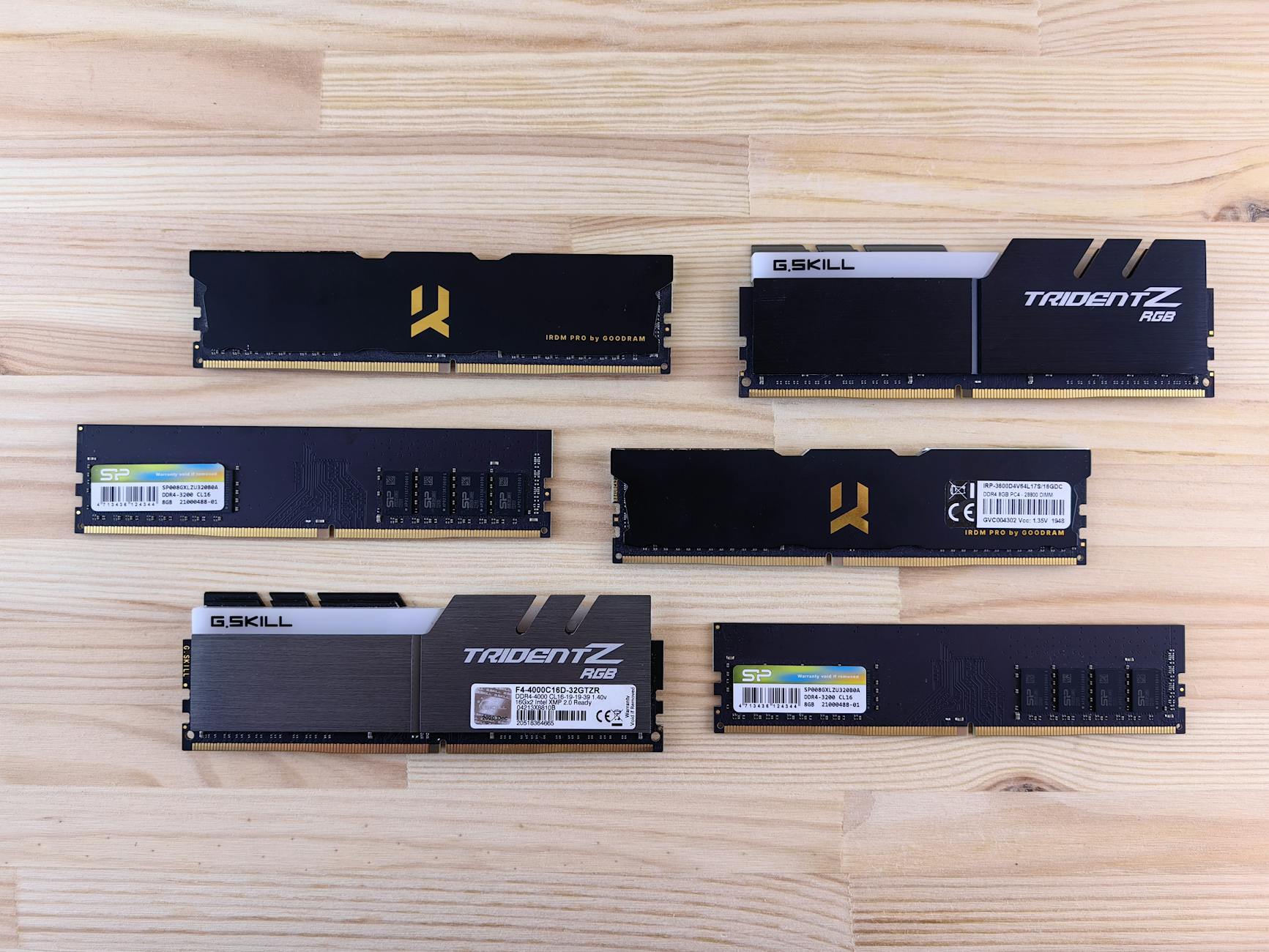
If you bought G.Skill desktop RAM any time between January 2018 and January 2026, you may be entitled to a cash payout from a $2.4 million class action settlement — and you do not need a receipt to file a claim. The case, *Hurd, et al. v. G.Skill International Enterprise Co., Ltd., et al.* (Case No. 2:22-cv-00685-SSS-MAR, U.S. District Court, Central District of California), alleges that G.Skill deceptively marketed the speeds of its DDR4 and DDR5 memory kits by advertising clock rates that users could only achieve by manually enabling overclocking profiles in their motherboard BIOS.
Without that step, a stick of RAM advertised at, say, 6000 MHz actually runs at just 4800 MHz out of the box. G.Skill denies all wrongdoing, but agreed to settle rather than continue litigating. Claims are now open at the official settlement website, gskilldramsettlement.com, and the deadline to file is April 7, 2026. PCWorld has reported that individual payouts could reach up to $150 depending on how many people file, though the actual amount will be determined pro rata from roughly $1.3 million in remaining funds after attorneys’ fees and administrative costs. No proof of purchase is required for up to five products per household. Below, we break down who qualifies, how to file, what G.Skill is actually being accused of, and what this settlement means for RAM marketing going forward.
Table of Contents
- Who Qualifies for the G.Skill RAM Class Action Settlement and How Much Is the $2.4 Million Payout?
- What Did G.Skill Actually Do Wrong With Its RAM Speed Advertising?
- How to File Your Claim Before the April 2026 Deadline
- What Happens After You File — Timeline, Final Approval, and Expected Payment
- The Broader Problem With RAM Speed Marketing and What This Settlement Changes
- Why “No Proof of Purchase” Settlements Matter for Consumers
- What This Means for PC Hardware Accountability Going Forward
- Conclusion
- Frequently Asked Questions
Who Qualifies for the G.Skill RAM Class Action Settlement and How Much Is the $2.4 Million Payout?
The settlement class includes any U.S. resident who purchased G.Skill DDR4 desktop RAM rated above 2133 MHz or DDR5 desktop RAM rated above 4800 MHz between January 31, 2018 and January 7, 2026. Laptop memory is excluded — this covers desktop sticks only. If you built or upgraded a PC during that nearly eight-year window and used G.Skill memory, there is a reasonable chance you fall within the class. G.Skill is one of the most popular aftermarket RAM brands among PC builders, so the eligible pool here is potentially very large. The $2.4 million settlement fund is non-reversionary, meaning G.Skill does not get the leftover money back if fewer people claim. However, more claimants means smaller individual checks.
Approximately $800,000 is earmarked for attorneys’ fees, roughly $295,000 goes to settlement administration costs handled by Angeion Group, and up to $5,000 per class representative goes to service awards. That leaves an estimated $1.3 million to be split pro rata among all valid claimants. If relatively few people file, checks could approach the reported $150 ceiling. If the settlement goes viral and hundreds of thousands of people submit claims, each person may end up with a modest single-digit payout. For context, compare this to other recent tech settlements. The $2.4 million pool here is relatively small, which is common in cases where the company denies wrongdoing and settles to avoid the cost and risk of trial. The practical takeaway: file early, file accurately, and understand that your check will depend on participation volume.

What Did G.Skill Actually Do Wrong With Its RAM Speed Advertising?
The core allegation is straightforward: G.Skill printed high clock speeds on its packaging and product listings — numbers like DDR4-3200 or DDR5-6000 — without clearly disclosing that those speeds require users to enter their motherboard BIOS and manually enable Intel XMP (Extreme Memory Profile) or AMD EXPO (Extended Profiles for Overclocking) settings. Without toggling those profiles, DDR4 RAM defaults to the JEDEC-standard baseline of 2133 MHz, and DDR5 defaults to 4800 MHz. The plaintiffs argued this amounts to false advertising because a consumer buying a 6000 MHz kit has no reason to assume it will not actually run at that speed when installed. This is a well-known quirk in the PC hardware world, and experienced builders generally know to enable XMP or EXPO as part of their setup routine. However, the legal argument rests on the idea that the average consumer — not the enthusiast who reads Tom’s Hardware — should not need specialized knowledge to get what was advertised on the box. It is a reasonable point. If you buy a TV marketed as 120Hz, you expect it to display at 120Hz when you plug it in.
You should not need to dig through a hidden settings menu to unlock the feature that was the primary selling point. That said, there is an important limitation. G.Skill denies all wrongdoing and denies violating any law. The company’s position is that XMP and EXPO are industry-standard features widely understood by their customer base. Settlement is not an admission of liability — it is a business calculation. If you were someone who knowingly purchased XMP-rated RAM, understood the overclocking requirement, and got exactly the performance you expected after enabling it, you might find the lawsuit’s premise a bit thin. But the law does not require that every class member was personally deceived, only that the marketing practices were materially misleading to a reasonable consumer.
How to File Your Claim Before the April 2026 Deadline
Filing a claim is simple and can be done online at gskilldramsettlement.com. The process requires basic information: your name, address, and a declaration that you purchased qualifying G.Skill RAM during the class period. For up to five products per household, no proof of purchase is needed. This is a significant convenience — most people do not keep receipts for individual PC components bought years ago, and the settlement administrators at Angeion Group clearly recognized that requiring documentation for every claim would suppress legitimate participation. If you purchased more than five qualifying products, you will need to provide proof of purchase for the additional units beyond the first five.
This could include order confirmations from retailers like Amazon, Newegg, or Micro Center, credit card statements, or any other documentation showing the purchase. The five-product, no-proof threshold is generous by class action standards and reflects the reality that many PC builders have purchased multiple G.Skill kits over an eight-year span for different builds, upgrades, or systems built for family members. One practical example: say you built a gaming PC in 2019 with a DDR4-3600 G.Skill Trident Z kit, then upgraded to a DDR5-6000 kit in 2023, and also put together a home office machine with DDR4-3200 in 2021. That is three qualifying products you can claim without a single receipt. Just fill out the form honestly and submit before April 7, 2026.

What Happens After You File — Timeline, Final Approval, and Expected Payment
After submitting your claim, the settlement still needs to clear one major hurdle: final court approval. The final approval hearing is scheduled for June 5, 2026 at 2:00 PM Pacific Time in Riverside, California. At this hearing, the judge will evaluate whether the settlement is fair, reasonable, and adequate for the class. Objections or disputes from class members, if any, will also be considered. Assuming the court grants final approval — and there is no unusual reason to expect otherwise, as settlements of this type are routinely approved — payments should follow roughly 45 days later. That puts the expected payout window around late July or August 2026. There is a comparison worth drawing here between filing a claim and doing nothing.
If you do nothing, you remain in the settlement class by default, you release your legal claims against G.Skill, and you receive zero dollars. Filing takes about five minutes and costs you nothing. The only tradeoff is handing over your contact information to the settlement administrator. There is no scenario in which filing makes you worse off than not filing. The rational move, if you are eligible, is to submit a claim and wait. One thing to keep in mind: the 45-day post-approval timeline is an estimate, not a guarantee. Settlement administration can encounter delays, including appeals, processing backlogs, or court scheduling issues. Do not plan your budget around receiving a check on a specific date.
The Broader Problem With RAM Speed Marketing and What This Settlement Changes
This case highlights a deceptive marketing practice that extends well beyond G.Skill. Virtually every major RAM manufacturer — Corsair, Kingston, Crucial, TeamGroup — advertises overclocked speeds on packaging without prominently disclosing the XMP or EXPO requirement. G.Skill was the company that got sued, but the practice is industry-wide. If this settlement forces labeling changes, it could have ripple effects across the entire memory market. As part of the settlement terms, G.Skill is required to take “commercially reasonable efforts” to update its packaging and product pages so that rated speeds are listed as “up to” speeds with an accompanying disclaimer: “Requires overclocking/BIOS adjustments.” This is a meaningful consumer-facing change.
It means future G.Skill products should make it clear on the box that 6000 MHz or whatever the rated speed is represents a ceiling that requires user intervention, not a default. Whether this language will be prominent enough to actually inform casual buyers remains to be seen — “commercially reasonable efforts” is a flexible legal standard that gives G.Skill some discretion in implementation. The warning here is for anyone who assumes this settlement will dramatically change how RAM is sold. Packaging disclaimers are easy to overlook, especially when they appear in fine print below a giant “DDR5-7200” logo. The real fix would be for the industry to either ship RAM running at advertised speeds by default or adopt clearer standards. Neither outcome is guaranteed by this lawsuit, and other manufacturers have no legal obligation to follow G.Skill’s lead until they face their own litigation.

Why “No Proof of Purchase” Settlements Matter for Consumers
The no-proof-of-purchase threshold in this settlement is worth appreciating because it is not universal. Many class action settlements require receipts, order numbers, or other documentation that most consumers simply do not retain for routine purchases. When proof is required, claim rates drop dramatically — often to low single-digit percentages of the eligible class — which benefits the defendant by reducing total payouts while technically offering a remedy.
📨 Get Free Accountability Coverage Alerts
Free · No spam · Unsubscribe anytime
By allowing up to five products per household without proof, the G.Skill settlement makes it feasible for the vast majority of eligible buyers to participate. This design choice increases the expected claim volume, which dilutes individual payouts but better serves the compensatory purpose of the settlement. If you bought one or two G.Skill kits over the past eight years, you are in and out of the claims process in minutes with nothing to dig up from your email archives.
What This Means for PC Hardware Accountability Going Forward
The G.Skill RAM settlement is a small but notable data point in a broader trend of holding hardware companies accountable for the gap between marketing claims and real-world performance. We have seen similar actions targeting GPU manufacturers over VRAM specifications, laptop makers over battery life claims, and storage companies over SSD endurance ratings. The common thread is a growing legal willingness to scrutinize whether the numbers on the box match what consumers actually experience.
Looking ahead, the packaging changes required of G.Skill could become a de facto industry template if other RAM manufacturers decide the legal risk of maintaining current labeling practices is not worth it. More importantly, this case signals to hardware companies that “everyone does it” is not a viable defense when consumers start lawyering up. If the final approval hearing on June 5, 2026 goes as expected, expect consumer attorneys to use this settlement as a roadmap for similar actions against other memory brands — and possibly against other categories of PC hardware where advertised specs require hidden steps to unlock.
Conclusion
The G.Skill RAM class action settlement offers a straightforward opportunity for millions of PC builders to claim a share of $2.4 million with minimal effort and no receipt required. The case centers on a real and widespread issue in hardware marketing — advertising speeds that consumers cannot achieve without specialized knowledge — and the settlement forces at least some corrective action in how G.Skill labels its products going forward. Whether you think the underlying complaint is legitimate or think anyone buying enthusiast RAM should know about XMP, the money is there and filing takes five minutes.
If you purchased any G.Skill DDR4 desktop RAM rated above 2133 MHz or DDR5 desktop RAM rated above 4800 MHz between January 31, 2018 and January 7, 2026, visit gskilldramsettlement.com before April 7, 2026 to submit your claim. Final court approval is expected at the June 5, 2026 hearing, with payments arriving approximately 45 days later. Do not sit on this one. The deadline is firm, the process is painless, and doing nothing only means you waive your claims for zero dollars in return.
Frequently Asked Questions
Do I need a receipt to file a claim in the G.Skill RAM settlement?
No. You can claim up to five products per household without any proof of purchase. Proof is only required if you are claiming more than five qualifying products.
What G.Skill RAM products qualify for this settlement?
U.S. residents who purchased G.Skill DDR4 desktop RAM rated above 2133 MHz or DDR5 desktop RAM rated above 4800 MHz between January 31, 2018 and January 7, 2026 are eligible. Laptop RAM is not included.
How much money will I get from the G.Skill settlement?
Individual payouts could be up to $150, but the actual amount depends on how many people file claims. Roughly $1.3 million of the $2.4 million fund will be divided pro rata among all valid claimants after attorneys’ fees and administration costs.
When is the deadline to file a claim?
The claim deadline is April 7, 2026. Claims can be submitted online at gskilldramsettlement.com.
When will I receive my payment?
The final approval hearing is scheduled for June 5, 2026. If approved, payments are expected approximately 45 days later, placing the likely payout window in late July or August 2026.
Does G.Skill admit that it did anything wrong?
No. G.Skill explicitly denies all wrongdoing and denies violating any law. The settlement is not an admission of liability.
You Might Also Like
- Class Action Against xAI Alleges Grok Published Millions of Deepfakes Without Consent
- Class Action Against Elon Musk’s xAI — Grok Published Millions of Sexualized Deepfakes Online
- RevitaLash or RevitaBrow $4.17 Million Settlement — No Proof Needed