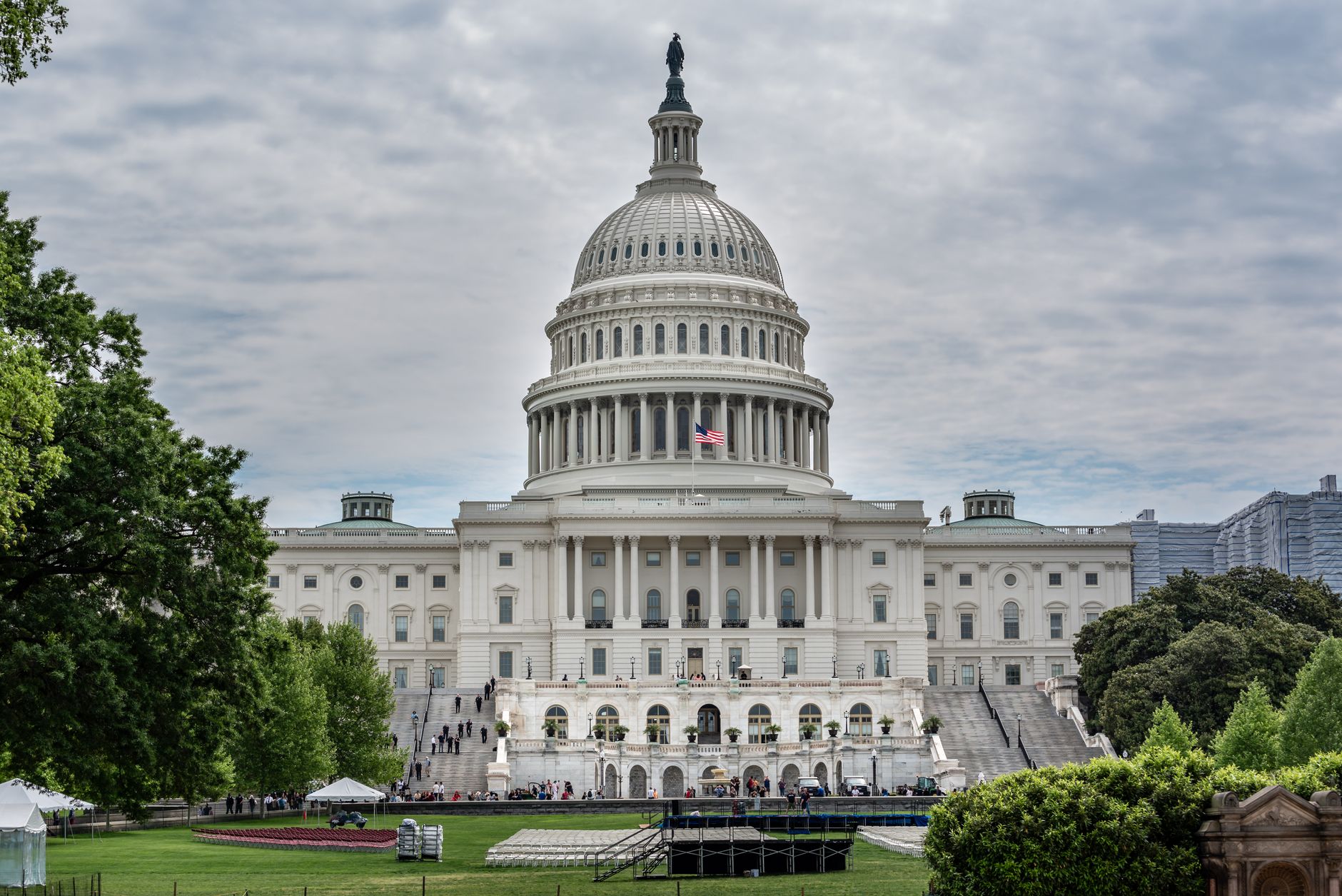
Yes: the Trump IRS settlement announced on May 18, 2026 created a $1.776 billion “Anti-Weaponization Fund,” and a later addendum shielded Trump, his sons and his company from IRS audits. But several popular claims about it are wrong, starting with the idea that Trump pocketed the money. The Justice Department says the plaintiffs got an apology and no cash, the fund was formally rescinded on Aug. 2 before paying anyone, and a federal judge has found the lawsuit behind it was collusive, a finding the department rejects.
Where it stands: On Sept. 29, a three-judge panel of the 11th U.S. Circuit Court of Appeals refused to pause the judge’s sanctions while Trump appeals. Scripps News reported that “the underlying appeal in the IRS settlement case remains pending,” and Bloomberg News reported that “The immunity protection order from Blanche is also still in effect.”
The officials involved have answered on the record. A Justice Department spokesperson said of the judge’s ruling: “There was no collusion in this case, and the partisan judge who speculated otherwise has disregarded decades of precedent.” Trump’s legal team said he “is entering into this settlement squarely for the benefit of the American people, and he will continue his fight to hold those who wrong America and Americans accountable.” Trump himself told CBS News, “I didn’t do this deal. It was told to me yesterday,” adding, “I do believe there has to be compensation for people that were destroyed.” Then-acting Attorney General Todd Blanche said in the department’s announcement, “As part of this settlement, we are setting up a lawful process for victims of lawfare and weaponization to be heard and seek redress.” After the fund was dropped, a DOJ spokesperson told Scripps the fund was “dead” but that “any claimant is free to pursue remedies through the courts as the law allows.”
Trump IRS settlement claims at a glance
| Claim | Verdict | What the record shows |
|---|---|---|
| DOJ settled Trump’s own $10B IRS suit with a $1.776B fund and an audit bar (tracker headline) | Accurate as reported | DOJ release; ABC on the addendum |
| Trump was paid $1.8 billion | Not supported by the record | DOJ: no payment to plaintiffs; Blanche: no claims paid |
| The money was taxpayer money | Accurate as reported | DOJ: drawn from the Judgment Fund |
| Jan. 6 rioters would be paid | Disputed | Blanche would not rule it out; nobody was paid |
| The Trump family is immune from audits forever | Partly accurate | Addendum said “forever”; DOJ later said past returns only |
| A judge found the suit collusive | Accurate as reported | Williams order; DOJ denies collusion; on appeal |
| The fund is dead | Partly accurate | Rescinded in writing; Trump has not signed changes |
This item also appears on our Trump corruption tracker.
What the deal actually said
Trump, Donald Trump Jr., Eric Trump and the Trump Organization sued the IRS and Treasury over the leak of their tax returns. CBS News reported that the suit, “initially seeking $10 billion, was filed in Miami federal court in January in Mr. Trump’s personal capacity.” The defendants were agencies Trump oversees as president.
The department’s own release set out the terms. “Per the settlement, plaintiffs will receive a formal apology but no monetary payment or damages of any kind,” it said, and “The Fund will receive $1.776 billion and will come from the judgment fund, which is a perpetual appropriation allowing DOJ to settle and pay cases.” A five-member commission picked by the attorney general would decide claims and could issue apologies and money.
The deadline differs by source. The release says “The Fund shall cease processing claims no later than December 1, 2028,” while CBS wrote that the department said the fund would stop on Dec. 15, 2028.
Did Trump get paid?
No record shows it. The plaintiffs received no cash under the settlement’s written terms, and in exchange they dropped the suit and, per ABC News, “two civil claims for $230 million related to the Russia collusion investigation he faced during his first term in office and the 2022 search of his Mar-a-Lago estate.” Those separate claims are the subject of our fact check of Trump’s $230 million demand.
The fund itself never paid out. When he rescinded it, NPR reported, Blanche “said that no members were appointed to direct the fund, no funds were transferred and no claims were paid.” Claims that Trump paid himself the $1.8 billion have no support in the record.
Who would have been paid is the disputed part. CNBC reported that Blanche, testifying to senators, “would not rule out” awarding money to people charged with assaulting police during the Jan. 6, 2021, riot. Trump wrote on Truth Social that “I will always feel that these victims of government abuse should be paid back for what they were forced to endure, their lives have been ruined!” Ninety-three Democratic members of Congress argued in a court filing that the deal would “siphon billions of taxpayer dollars into the pockets of the President, his family, and his allies.” Because the fund never operated, no list of recipients exists to test that argument.
The audit shield: forever, or past returns only?
A day after the settlement, ABC News reported, Blanche signed an addendum barring the IRS from “prosecuting or pursuing” examinations or reviews of Trump or “related or affiliated individuals” and businesses, using the words “forever barred and precluded.”
During Blanche’s confirmation fight, Sen. John Cornyn said, according to the AP, “Todd Blanche said it was limited to the parties to the litigation,” and asked for that in writing. On Aug. 2 the department issued an unsigned statement that, NPR reported, said “those protections only apply retroactively” and covered only Trump, two sons and the company.
“These assurances are not worth the paper they’re written on,” Brandon DeBot of NYU Law’s Tax Law Center told NPR, which noted the statements were not signed by all parties, including Trump. Hence the partly accurate rating: the addendum said “forever,” the department now says otherwise, and the order still stands.
📨 Get Free Accountability Coverage Alerts
Free · No spam · Unsubscribe anytime
What the courts have found
In late May, a federal judge in Virginia “temporarily blocked the creation of the anti-weaponization fund after a lawsuit from Democracy Forward and others,” NPR reported. Bloomberg News reported in late September that this challenge to the fund and the audit immunity was still pending.
In Miami, U.S. District Judge Kathleen Williams ruled on July 13 that the suit was brought to supply “judicial legitimacy for a ‘settlement’ that had no viable basis in law or fact.” CNBC reported that she found the plaintiffs sought “access to taxpayer funds and exemption from audits and other investigations,” and she referred Trump lawyer Alejandro Brito to the Florida Bar. Her order did not void the private agreement. Trump appealed on July 31.
The appeals panel declined to lift her sanctions in the meantime. “The order came from Judges Adalberto Jordan, Robin Rosenbaum and Kevin Newsom,” Bloomberg reported; Newsom is a Trump appointee. The panel wrote that Trump’s side and the department “did not submit or offer any evidence to explain their litigation conduct or demonstrate that the lawsuit and the settlement were not collusive.”
Is the fund really dead?
On paper, yes. Blanche told a House appropriations panel in early June, “We are not moving forward with the fund, period.” On Aug. 2 he gave senators an order saying the fund “is rescinded and shall have no force or effect.” Cornyn and Sen. Thom Tillis said, “We are pleased that the Department of Justice has issued a formal order terminating the anti-weaponization fund.” The Senate confirmed him 50-49 on Aug. 8.
The president’s own words keep the question open. “The fund is dead, but, you know, I wish it weren’t,” Trump said on July 31, and later, “I view that fund as a positive, and a lot of Republicans do too.” After leaving the department in August, former DOJ official Ed Martin told a podcaster, per Scripps, that “Nobody from the top all the way down in DOJ and at the White House has given up on the idea of reimbursing people for the costs of being targeted by political weaponization.”
Bloomberg added: “Although Blanche walked back the $1.8 billion fund plan after facing pushback from Republicans in Congress, Trump hasn’t signed off on changing the terms of the original settlement agreement.” For more on the judge’s earlier ruling, see our report on how the judge sanctioned Trump’s lawyer and criticized DOJ.
Frequently Asked Questions
Did Trump get money from the IRS settlement?
No record shows any payment to Trump. The Justice Department said the plaintiffs would receive a formal apology and no money, and Todd Blanche later said no claims were paid and no funds were transferred from the Anti-Weaponization Fund before it was rescinded.
What was the Anti-Weaponization Fund?
It was a $1.776 billion fund, to be drawn from the federal Judgment Fund, that the Justice Department created in May 2026 as part of settling Trump’s lawsuit against the IRS. A five-member commission appointed by the attorney general was to pay people who said the government had been used against them.
Is Trump still protected from IRS audits?
Bloomberg News reported in late September 2026 that Blanche’s audit immunity order was still in effect. The Justice Department said on Aug. 2 that it covers only past returns of Trump, two of his sons and the Trump Organization, but critics say that statement may not bind the parties.
What did the judge rule about Trump’s IRS lawsuit?
Judge Kathleen Williams found in July 2026 that the suit was used to provide legal cover for a settlement with no viable basis and imposed non-monetary sanctions, including a Florida Bar referral of a Trump lawyer. The Justice Department denies any collusion, and Trump has appealed to the 11th Circuit, which declined to pause the sanctions on Sept. 29.
Could the fund come back?
The fund order was formally rescinded on Aug. 2, 2026, and the Justice Department told Scripps News the fund is dead. Trump has said he wishes it were not, and some legal experts have said a new order could revive the idea.
Sources
- Justice Department Announces Anti-Weaponization Fund — U.S. Department of Justice, May 18, 2026
- Trump settles $10 billion lawsuit against IRS over tax returns, sets up $1.7 billion fund for claims of “weaponization” — CBS News, May 18, 2026
- DOJ addendum to Trump settlement bars IRS from auditing him and his family — ABC News via WDBO, May 19, 2026
- Blanche says DOJ has nixed the ‘anti-weaponization’ fund — NPR via HPPR, June 1, 2026
- Trump appeals order slamming IRS lawsuit, referring lawyer to bar — CNBC, July 31, 2026
- Trump’s settlement fund threat injects uncertainty into AG talks — The Associated Press via CNBC, August 1, 2026
- Senate Judiciary Committee advances Blanche nomination, setting up a final vote — NPR, August 3, 2026
- Senate votes to confirm Todd Blanche as attorney general — NPR, August 8, 2026
- Appeals court rejects bid to block sanctions tied to Trump’s $1.8B IRS deal — Scripps News, September 2026
- Trump loses bid to pause judge’s sanctions in IRS case fight — Bloomberg News via Accounting Today, September 30, 2026
This article is news reporting and analysis based on the public sources listed above, as they stood on the dates shown. Where officials, lawmakers or analysts disagree, including on whether an action is lawful, their positions are attributed to them; Donald Trump Class Action is not a court and nothing here is legal advice. Facts in a developing story can change.