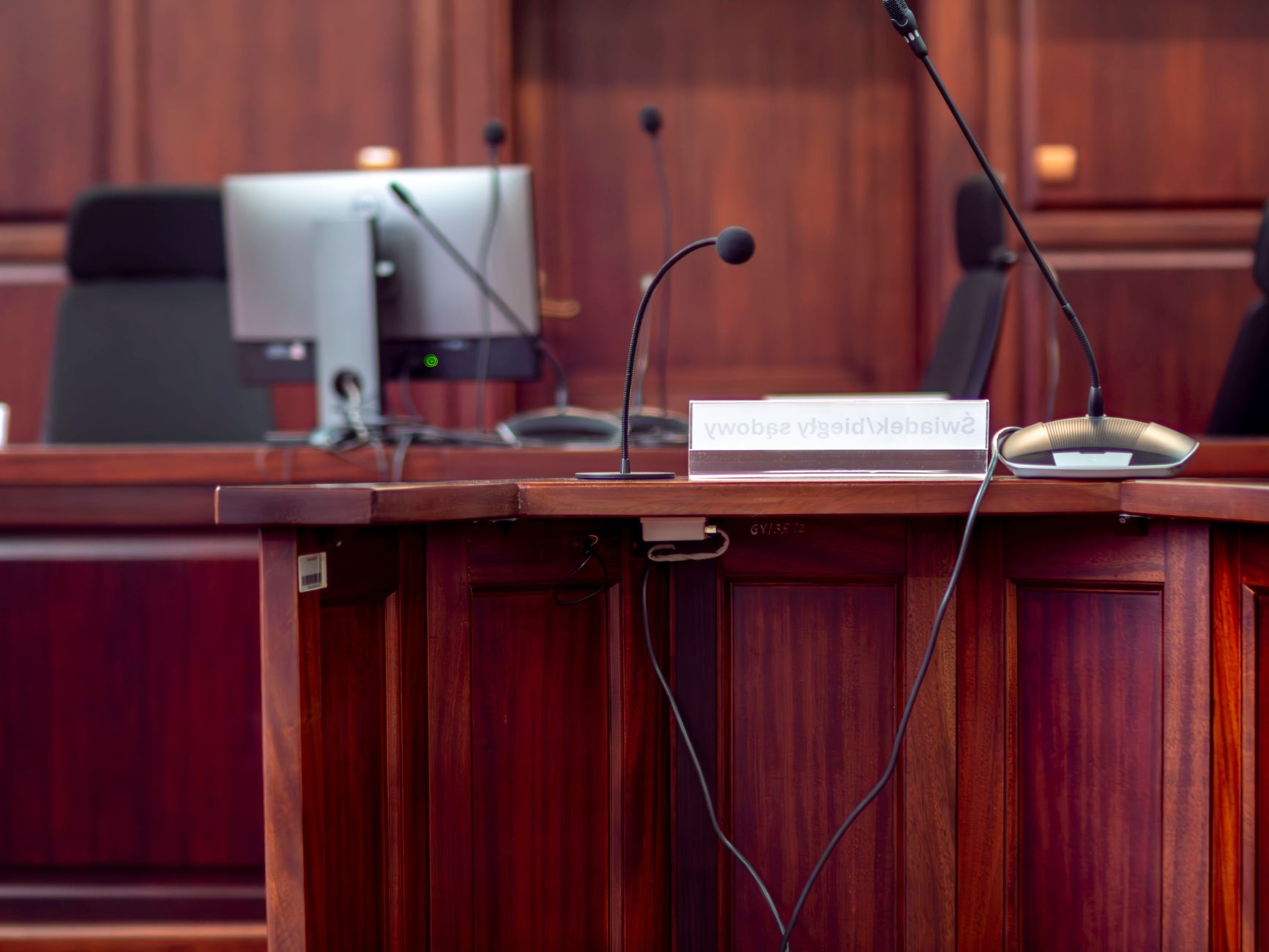
Contempt of Congress is a federal crime, but Congress cannot prosecute it on its own: a House or Senate vote only sends the case to a U.S. attorney, and the Justice Department decides whether to bring charges. When DOJ says no, Congress has two other routes, a civil lawsuit to enforce the subpoena or its own “inherent contempt” power, which neither chamber has used since 1935. That gap is central to any plan by a new Democratic majority to enforce subpoenas against the Trump administration.
Where it stands: On April 6 this year, the justices wiped out the appellate decision affirming Steve Bannon’s contempt-of-Congress conviction, returning the case for “further consideration in light of the pending motion to dismiss the indictment,” after the Justice Department asked to drop the case “with prejudice.” We found no report of a final dismissal as of Oct. 26. In September, the House voted unanimously to hold investor Leon Black in contempt for defying an Oversight Committee subpoena, The Hill reported.
What is contempt of Congress?
Contempt of Congress is refusing to comply with a congressional subpoena or to answer pertinent questions. The Supreme Court has treated enforcement as part of Congress’s job. In McGrain v. Daugherty (1927), it wrote that “the power of inquiry-with process to enforce it-is an essential and appropriate auxiliary to the legislative function.”
The criminal version is in 2 U.S.C. §192. A person convicted “shall be deemed guilty of a misdemeanor, punishable by a fine of not more than $1,000 nor less than $100 and imprisonment in a common jail for not less than one month nor more than twelve months.”
A 2017 CRS report sorts subpoena enforcement into three routes. None is airtight.
| Route | Who acts | Weak point |
|---|---|---|
| Criminal contempt (2 U.S.C. §192, §194) | House or Senate certifies; a U.S. attorney presents to a grand jury | Needs a prosecutor who works for the executive branch |
| Civil enforcement | The chamber or committee sues; a federal court orders compliance | Slow; appeals can outlast a two-year Congress |
| Inherent contempt | The chamber itself tries and detains the witness | Unused since 1935 |
Does the Justice Department have to prosecute contempt of Congress?
The statute says yes; DOJ’s legal opinions say not always. Section 194 directs the certification to “the appropriate United States attorney, whose duty it shall be to bring the matter before the grand jury for its action.”
But CRS reports that, under a 1984 Office of Legal Counsel opinion, “a U.S. Attorney is not required to refer a contempt citation to a grand jury or otherwise to prosecute an executive branch official who is carrying out the President’s direction to assert executive privilege.” In plain terms, if the president tells an official to withhold documents on privilege grounds, the department that official works in has said it need not prosecute.
That matters now. The Christian Science Monitor reported that in August 2026 the Justice Department “issued a legal opinion saying executive privilege can cover some conversations the president has with advisers outside the executive branch.” The White House has said publicly it will engage: an official told Reuters the administration is “prepared to respond to oversight requests, no matter who is in the House or Senate.”
Can Congress sue to enforce a subpoena instead?
Yes, and federal appeals judges in Washington have said so. In the fight over former White House counsel Don McGahn’s testimony, the full D.C. Circuit ruled for the House in 2020. The Washington Post reported: “In a 7-2 decision, the full U.S. Court of Appeals for the D.C. Circuit affirmed Congress’s oversight powers and said the House has a long-standing right to compel government officials to testify and produce documents.”
The drawback is time. A subpoena fight can run through a district court, a panel, the full appeals court and possibly the Supreme Court, and a House majority lasts two years. Privilege law is also thin: the Constitution Annotated notes that in congressional fights over executive privilege, “the Court has never issued an opinion addressing such a dispute.”
Democrats have proposed a fix. H.R. 8831, the House version of the Protecting Our Democracy Act led by Raskin, would in its Title XXI create an express cause of action: either chamber or a committee “may bring a civil action against the recipient of a subpoena,” and courts would be told “to expedite to the greatest possible extent the disposition of any such action and appeal.” It has not passed. The bill’s other titles are walked through in our Protecting Our Democracy Act explainer.
What is inherent contempt, and could the House use it?
Inherent contempt is Congress acting as its own enforcer, with no court or prosecutor involved. CRS calls it “the long dormant inherent contempt power,” which lets a chamber “detain and imprison a contemnor until the individual complies with congressional demands.”
The procedure is old-fashioned. “In an inherent contempt proceeding, the offender is tried at the bar of the House or Senate and can be held in custody until such time as the contemnor provides the testimony or documents sought, or until the end of the session.” CRS adds that, because of practical drawbacks, “the inherent contempt process has not been used by either body since 1935.” No Democratic leader quoted in the sources we reviewed has proposed reviving it.
📨 Get Free Accountability Coverage Alerts
Free · No spam · Unsubscribe anytime
What do the Bannon and Navarro cases show?
They show criminal contempt working, and then the executive branch reversing course. Bannon was convicted for refusing a Jan. 6 committee subpoena, and in 2024 the AP reported that an appeals panel “upheld the criminal conviction of Donald Trump’s longtime ally Steve Bannon for defying a subpoena from the House committee investigating the attack on the U.S. Capitol.” Peter Navarro “was also convicted of contempt of Congress” and served a four-month sentence.
Under the current administration, DOJ moved to drop Bannon’s case. The Gazette quoted the government’s filing: “the government has determined in its prosecutorial discretion that dismissal of this criminal case is in the interests of justice.” The justices then set aside the appellate decision. Navarro, the Gazette reported, “has also appealed his conviction in a bid to wipe it from his record.” Neither case, as reported, involved a pardon for contempt.
Can a president pardon contempt of Congress?
Nobody knows for certain. The Constitution Annotated lists it among questions that “have been the subject of debate but have not been addressed by the Supreme Court.”
The closest precedent is about courts, not Congress. In Ex parte Grossman (1925), the Supreme Court held that criminal contempt of court can be pardoned, while for civil contempt “the punishment is remedial and for the benefit of the complainant, and a pardon cannot stop it.” No court has applied that line to contempt of Congress. More on the pardon power’s edges appears in our rundown of Democratic pardon bills and the Trump pardon tracker.
For 2027, House Democrats say they intend to press. “We are going to enforce our subpoenas,” Rep. Suhas Subramanyam (D-Va.) said, according to The Hill. “We are going to issue subpoenas to people who have evaded our questions.” On the Black matter, Rep. Robert Garcia, the Oversight Committee’s top Democrat, said: “He did not produce what’s been asked for by the subpoena.” The Hill’s report carried no response from Black.
Frequently Asked Questions
How much jail time can contempt of Congress bring?
The federal statute sets one to twelve months in a common jail plus a fine of at least $100 and up to $1,000, but only after the Justice Department prosecutes and wins a conviction.
What happens if the Justice Department refuses to prosecute contempt of Congress?
Congress can sue in federal court to enforce the subpoena, as the House did against Don McGahn, or use its inherent contempt power to try and detain a witness itself. Inherent contempt has not been used since 1935.
What happened to Steve Bannon’s contempt of Congress conviction?
An appeals panel upheld it in May 2024 and he served four months. In April 2026 the Supreme Court vacated that ruling and sent the case back after the Justice Department moved to dismiss it with prejudice.
Can the president pardon someone for contempt of Congress?
It is an open question. The Supreme Court has held that criminal contempt of court can be pardoned but civil contempt cannot, and it has never ruled on contempt of Congress.
Can Congress arrest someone for contempt?
In theory, under its inherent contempt power a chamber can try a witness and hold them until they comply or the session ends. Neither chamber has used that power since 1935.
Sources
- Chapter 6 – Congressional and Committee Procedure; Investigations (Title 2, U.S. Code) — U.S. Government Publishing Office, 2023 edition
- Congress’s Contempt Power and the Enforcement of Congressional Subpoenas (RL34097) — Congressional Research Service, via EveryCRSReport, May 12, 2017
- McGrain v. Daugherty, 273 U.S. 135 (1927) — Legal Information Institute, Cornell Law School, January 17, 1927
- House can sue to force former White House counsel McGahn to comply with subpoena, court rules — The Washington Post, via Anchorage Daily News, August 7, 2020
- Congress’s Investigatory Powers and the President — Constitution Annotated (CRS), via LII, accessed October 26, 2026
- Steve Bannon’s contempt of Congress conviction upheld by appeals court — Associated Press, via PBS NewsHour, May 10, 2024
- Supreme Court order paves way to toss Steve Bannon contempt of Congress conviction — The National News Desk, via KMPH, April 6, 2026
- Supreme Court sets up dismissal of Steve Bannon’s contempt conviction — The Gazette (Colorado Springs), April 6, 2026
- ArtII.S2.C1.3.1 Overview of Pardon Power — Constitution Annotated (CRS), via LII, accessed October 26, 2026
- Ex parte Grossman, 267 U.S. 87 (1925) — Legal Information Institute, Cornell Law School, March 2, 1925
- Inside Democrats’ oversight playbook for Trump’s final 2 years — The Hill, October 21, 2026
- Dems plan Trump investigations instead of impeachment: Reuters — Reuters, via CNBC, August 8, 2026
- Democrats plan investigations, affordability efforts if they reclaim Congress — Christian Science Monitor, October 15, 2026
- H.R. 8831, Protecting Our Democracy Act (Introduced in House) — U.S. Government Publishing Office, May 14, 2026
This article is news reporting and analysis based on the public sources listed above, as they stood on the dates shown. Where officials, lawmakers or analysts disagree, including on whether an action is lawful, their positions are attributed to them; Donald Trump Class Action is not a court and nothing here is legal advice. Facts in a developing story can change.