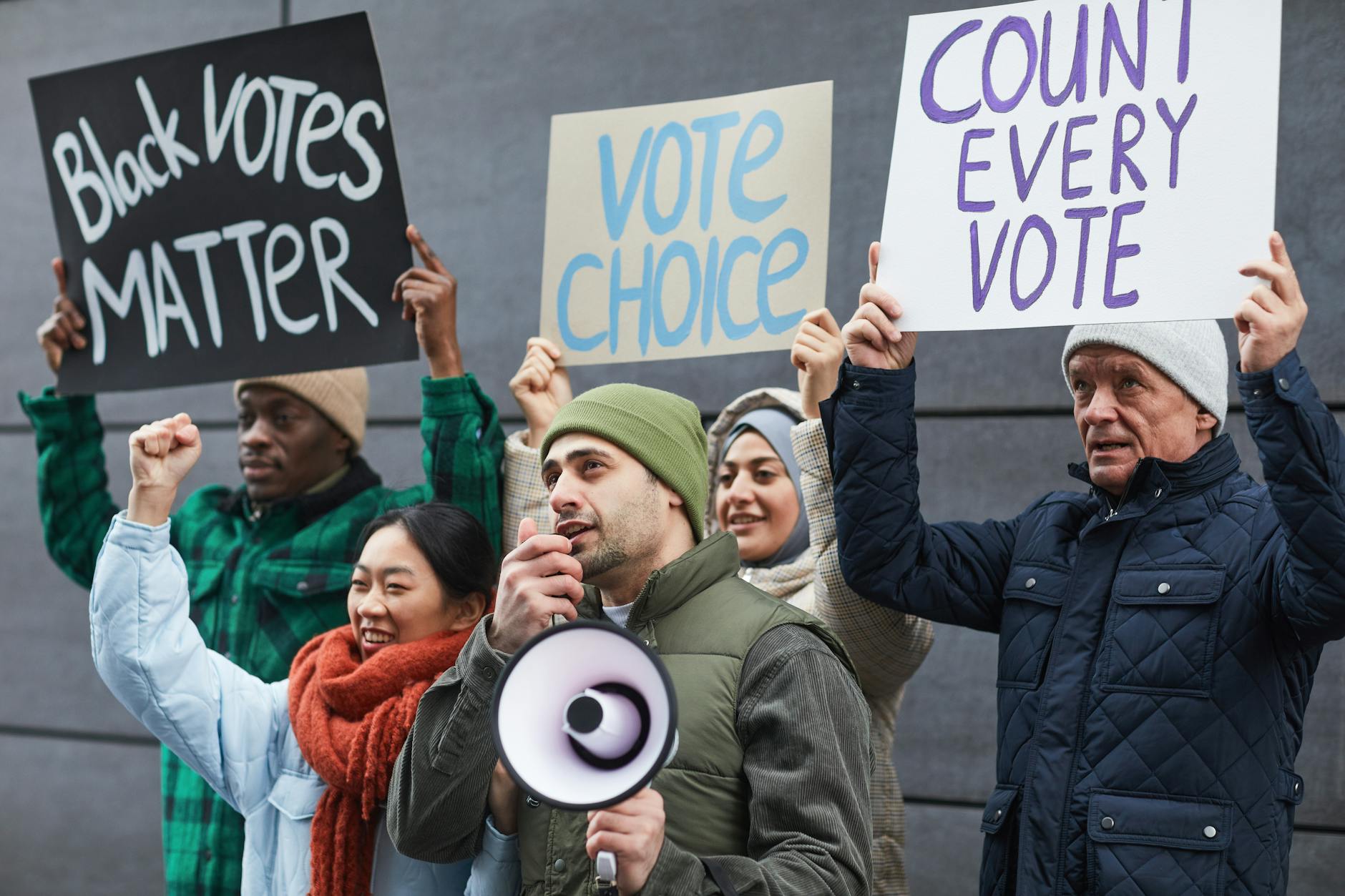
The short answer is no—not directly. Stanford experts remain skeptical that a funny image macro or viral video will meaningfully shift someone’s vote from one candidate to another. Research studying the 2024 election found that drawing a direct line between a political meme and actual voting behavior is extremely difficult, if not impossible. Yet the fuller answer is more unsettling: memes may not flip votes, but they reshape the information landscape where voting decisions happen.
The 2024 election offers a real-world test case. When pro-Harris supporters shared the “coconut tree” meme—often in reference to a line from her stump speeches—sentiment analysis showed a 973 percent spike in positive mentions and an 18 percent jump in social media conversations about the candidate. That’s substantial engagement. But did those coconut tree memes actually convince undecided voters to choose Harris? The research suggests probably not. What they did was activate existing supporters and create a sense of cultural momentum that real voters can feel, even if they can’t point to a single post that changed their mind.
Table of Contents
- Do Memes Actually Persuade Voters to Switch Sides?
- The Engagement Paradox—Why Viral Doesn’t Mean Persuasive
- The 2024 Election and AI-Generated Meme Reality
- Memes and Political Polarization—The Real Danger
- The Information Ecosystem Damage Beyond Direct Persuasion
- Who Gets Influenced by Political Memes Anyway?
- What Elections Learned About Memes
- Conclusion
Do Memes Actually Persuade Voters to Switch Sides?
The evidence here is straightforward: the direct persuasive power of memes is minimal. Stanford researchers quoted in October 2024 expressed skepticism that memes shift someone’s fundamental voting choice, and studies measuring the actual mechanism struggle to prove causality. It’s the difference between a meme going viral and a meme actually changing someone’s behavior at the ballot box. This doesn’t mean memes are harmless noise.
The research reveals a crucial distinction between two types of content: humorous posts versus knowledge-based posts. Highly humorous memes significantly boost people’s intention to engage politically—they share it, they talk about it, their friends see it. But that same humor has a negative direct effect on whether people actually change their attitudes about a candidate or policy. By contrast, memes with higher knowledge quality—ones that include actual policy claims or factual arguments—do promote genuine attitude change. This is an important trade-off: the memes most likely to go viral are the ones least likely to persuade, while persuasive memes often fail to achieve mass distribution.

The Engagement Paradox—Why Viral Doesn’t Mean Persuasive
Here’s where the story gets complicated for political campaigns and the information ecosystem more broadly. A meme doesn’t need to change your vote to matter; it just needs to change your behavior. If a meme makes you more likely to talk about politics at dinner, share a candidate’s message with friends, or spend more time thinking about an election, it has affected your political life—even if your vote was never in doubt.
Research from 2024 found that highly humorous memes had an especially strong effect on political engagement among people with higher cynicism levels. In other words, the voters most likely to be turned off by traditional political messaging could be reached through sarcasm, absurdism, and humor. These cynical voters might not change their vote based on a meme, but they might show up to vote at all. That’s a real effect, even if it doesn’t fit the narrow definition of “persuasion.” The limitation here is important: once you understand this dynamic, it becomes clear that memes are more useful as tools for mobilizing existing supporters than for converting opponents.
The 2024 Election and AI-Generated Meme Reality
The 2024 election was supposed to be the year deepfake videos undermined democracy. It wasn’t. Instead, what actually spread were AI-generated memes—images and caricatures openly shared by politicians and supporters themselves. These ranged from portraits of candidates in Soviet garb to manipulated demographic images. The distinction matters: deepfakes are deceptive synthetic videos designed to look authentic; AI memes are clearly artificial images that play with reality in obvious ways, more akin to a political cartoon than a fraud.
The coconut tree meme phenomenon exemplifies this. What began as a genuine reference to Harris’s speaking style was amplified, remixed, and shared across social media in hundreds of variations. The 973 percent sentiment spike and 18 percent conversation increase weren’t driven by a single viral post but by sustained memetic activity across networks. Yet this massive engagement didn’t translate into a proportional shift in voting preferences. The meme succeeded in creating cultural visibility and in-group bonding among supporters, but it operated within an existing coalition rather than expanding it.
Memes and Political Polarization—The Real Danger
If memes don’t flip votes, what do they actually do? They reinforce. In-party memes—content shared among people who already support the same candidate—primarily reinforce existing beliefs. They create and strengthen group identity. This has a measurable consequence: memes contribute to increased “affective polarization,” a term researchers use to describe the widening social distance and emotional hostility between opposing political camps. A 2025 study examining meme behavior on TikTok found that political memes don’t just communicate information; they facilitate group identity formation.
When you share a meme mocking the opposing candidate, you’re not primarily trying to convince someone to vote differently. You’re signaling membership in a community. This is more powerful than persuasion in some ways because it operates below the level of conscious argument. The warning here is crucial: a political ecosystem saturated with in-group memes can become increasingly polarized without anyone’s actual policy positions changing. You end up with deeper tribal divisions without deeper political disagreement.
📨 Get Free Accountability Coverage Alerts
Free · No spam · Unsubscribe anytime
The Information Ecosystem Damage Beyond Direct Persuasion
Even if memes don’t individually flip votes, their collective effect warps the information environment. Brookings Institution researchers studying the 2024 election described this as “narrative pollution”—a saturation of the information space with content designed to push narratives rather than inform debate. While individual memes might not be deceptive in the strict sense, they’re created with the explicit intent to spin perception, to mock opponents, to boost allies.
The cumulative effect is documented: polling data show that false claims circulating in 2024 affected how people viewed candidates, their assessments of the economy, immigration, crime, and media coverage itself. The limitation of the research is important here—it’s difficult to isolate how much of this shift came from memes specifically versus other social media content, news coverage, or direct political messaging. But the pattern is clear: in an ecosystem where memes contribute to narrative pollution, public perception shifts, even if individual voters can’t point to the single post that changed their mind.
Who Gets Influenced by Political Memes Anyway?
The research reveals something counterintuitive: meme characteristics matter less than recipient characteristics. Your age, your prior exposure to memes, your existing political beliefs, your level of cynicism, and your general digital literacy all shape whether a meme affects you. A highly knowledgeable meme reaches a very different audience than a highly humorous one. Trump-focused memes or high-knowledge-quality content performs better at persuading independent voters—people without strong partisan attachments.
But in-party memes reinforce existing beliefs among partisan audiences. This suggests that memes are more specialized tools than general-purpose political persuasion. They don’t work equally on everyone. A meme that mobilizes a 65-year-old cynical voter might completely miss a 25-year-old who hasn’t seen the source material. Understanding this variation is crucial for interpreting claims about meme impact—what matters is not the meme in isolation but the meme in relation to its actual audience.
What Elections Learned About Memes
The 2024 election provided a kind of real-world experiment in meme politics at scale. The feared tsunami of deceptive deepfakes never arrived. Instead, we got AI-generated memes that were openly artificial, alongside traditional political memes created and shared by campaigns themselves. The feared technology proved less dangerous than the old-fashioned ways memes are actually used: to mobilize supporters, mock opponents, and pollute the information ecosystem with narratives.
The forward-looking question is whether campaigns will become more sophisticated in meme production and distribution, or whether voters and platforms will develop better defenses against narrative pollution. Early signs suggest neither is happening quickly. Memes remain a relatively chaotic force in politics—effective at driving engagement and reinforcing group identity, but limited in their ability to change anyone’s mind. The real threat isn’t a single meme that converts a voter; it’s the cumulative effect of thousands of memes narrowing the information diet and widening the emotional distance between political opponents.
Conclusion
Memes can’t really change votes in the direct sense—Stanford experts and actual research confirm that the persuasive power of a funny image is minimal. Voters are far more attached to their existing beliefs than a meme is likely to dislodge. But this misses what memes actually do: they drive engagement, reinforce group identity, mobilize cynical voters who might otherwise tune out politics, and contribute to a degraded information environment where narratives flourish unchecked.
For voters and election observers, the lesson is to distinguish between meme virality and meme impact. The coconut tree meme didn’t win Harris votes; it energized her existing base and created a sense of momentum. That matters for elections, but it’s a different kind of mattering than persuasion. For policymakers and platform operators, the challenge is addressing not individual memes but the narrative pollution they collectively create—the feeling that information itself has become untrustworthy, that political communication is purely tribal performance with no connection to shared reality.
You Might Also Like
- Can Trump Win Without Suburban Women in 2028?
- Can Trump Survive Another Economic Downturn?
- Can Republicans Win While Threatening Entitlements?