
A pair of historic bomb cyclones battered the Eastern United States in early 2026, leaving at least 650,000 homes and businesses without power, canceling or delaying more than 11,000 flights, and killing multiple people across a swath of the country stretching from the Upper Midwest to the Mid-Atlantic. The February “Blizzard of 2026” buried Providence, Rhode Island under nearly 38 inches of snow — demolishing a 48-year-old record — while the March megastorm, dubbed Winter Storm Iona, threatened nearly 200 million Americans with a triple-threat combination of blizzard conditions, an ice storm, and a severe weather outbreak that spawned tornadoes from Illinois to the Carolinas. Together, these storms represent some of the most destructive winter weather events in recent memory and raise serious questions about infrastructure resilience, emergency preparedness, and the increasing frequency of extreme weather.
The scale of disruption was staggering. During the February bomb cyclone, 644,000 customers lost power at the storm’s peak, and roughly 9,000 flights were scrubbed from schedules as airports from JFK to Newark Liberty ground to a halt. Weeks later, the March system delivered an encore: over 500,000 additional outages, more than 4,000 flight cancellations in a single two-day window, and wind gusts reaching 80 mph that snapped power poles and ripped roofs from homes. This article examines the mechanics of both storms, the cascading failures they exposed in American infrastructure, the human toll, what travelers and consumers should know about their rights, and whether these events signal a troubling new pattern for East Coast winters.
Table of Contents
- What Caused 650,000 Power Outages and 11,000 Flight Cancellations During the East Coast Bomb Cyclone?
- The February Blizzard of 2026 — Record Snowfall and a Crippled Northeast
- Winter Storm Iona — The March Megastorm’s Triple Threat
- What Rights Do Travelers Have When Flights Are Canceled by a Bomb Cyclone?
- Infrastructure Failures Exposed by the 2026 Bomb Cyclones
- The Human Cost Beyond the Statistics
- Are Bomb Cyclones Becoming the New Normal for the East Coast?
- Conclusion
- Frequently Asked Questions
What Caused 650,000 Power Outages and 11,000 Flight Cancellations During the East Coast Bomb Cyclone?
The term “bomb cyclone” sounds dramatic because the phenomenon is dramatic. Bombogenesis occurs when a storm system’s central barometric pressure drops by at least 24 millibars in 24 hours, a process of rapid intensification that turns an ordinary low-pressure system into a violent, hurricane-like winter storm. In both the February and March 2026 events, this rapid pressure drop fueled sustained winds exceeding 60 mph across vast areas, with gusts topping 80 mph on Nantucket during the February blizzard and reaching similar speeds across the Upper Midwest and Mid-Atlantic during the March megastorm. Wind at those speeds does not merely inconvenience people — it topples trees onto power lines, shears utility poles at their bases, and turns unsecured objects into projectiles. The flight cancellations were a direct consequence of the same forces. Airlines cannot safely de-ice aircraft when wind speeds exceed certain thresholds, and visibility at major airports dropped to near zero during both storms. During the February event, nearly all flights at JFK, LaGuardia, and Newark Liberty were grounded simultaneously — an extraordinarily rare shutdown of the New York metropolitan area’s entire commercial aviation system. The March storm spread the pain more broadly, with Chicago O’Hare, Minneapolis-Saint Paul, and Hartsfield-Jackson Atlanta all reporting massive delays and cancellations.
Over 12,000 flights were delayed at major hubs on March 16-17 alone, in addition to the 4,000-plus outright cancellations. The power outages followed a predictable but no less devastating pattern. Aging grid infrastructure, particularly overhead distribution lines running through tree-dense corridors, is acutely vulnerable to high winds and heavy snow loading. Baltimore Gas & Electric reported 16,000 outages by 11 p.m. on March 16. Delaware Electric Cooperative saw roughly 6,000 customer outages, and Delmarva Power logged 5,421 by 3 a.m. on March 17. These were not isolated pockets — they were widespread, cascading failures that left hundreds of thousands of people without heat, light, or the ability to charge phones during dangerous conditions.

The February Blizzard of 2026 — Record Snowfall and a Crippled Northeast
The first bomb cyclone arrived in late January and early February 2026, and it rewrote the record books. Providence, Rhode Island received 37.9 inches of snow, shattering a record that had stood since 1978. New York City’s Central Park measured 15 inches, with identical totals at both LaGuardia and JFK airports. The storm was not merely heavy — it was relentless, dumping snow at rates that overwhelmed plowing operations and made travel on any surface, ground or air, effectively impossible for the better part of two days. At its peak, the February storm knocked out power to more than 644,000 customers across the Northeast. When you account for the broader January 30 through February 2 storm system, Al Jazeera reported that over one million customers lost power across the United States.
The distinction matters: utility companies report “customers,” not individuals, and a single “customer” may represent a household of four or five people. The actual number of Americans sitting in dark, cold homes was likely several times the reported outage figure. For the elderly, for families with young children, and for people reliant on electric medical equipment, a multi-day outage in sub-freezing temperatures is not an inconvenience — it is a life-threatening emergency. However, if you lived outside the storm’s primary snow band, you may have experienced the February bomb cyclone very differently. Coastal communities from Massachusetts to Long Island dealt less with accumulation and more with hurricane-force wind gusts that drove storm surge and coastal flooding. Wind gusts exceeding 80 mph on Nantucket and up to 75 mph in other coastal areas caused structural damage to buildings, downed trees, and created hazardous conditions that persisted well after the snow stopped falling inland. This is a critical limitation of how bomb cyclones are covered in the media: the snow totals get the headlines, but wind damage often causes more lasting economic harm.
Winter Storm Iona — The March Megastorm’s Triple Threat
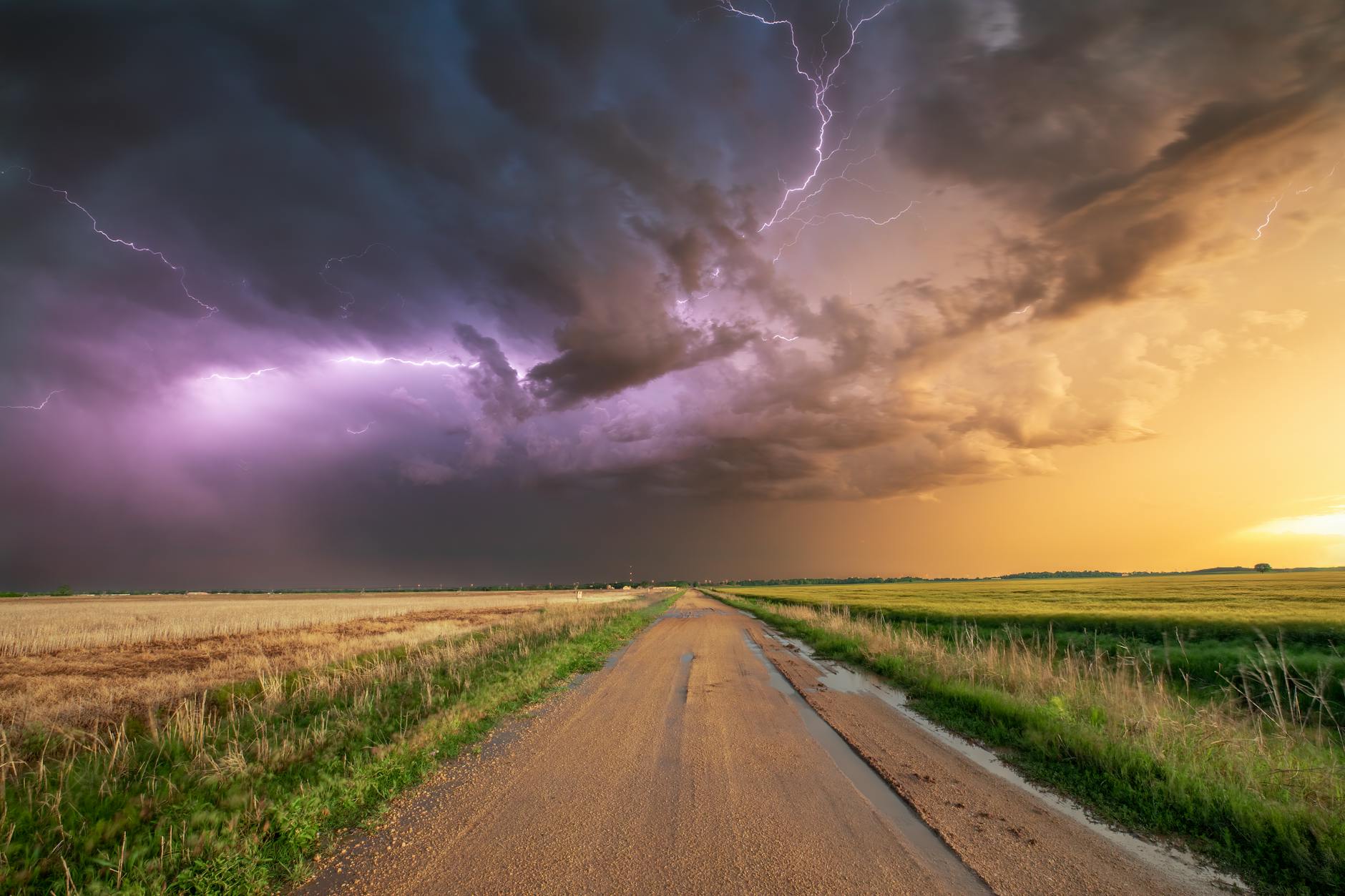
If the February blizzard was a sledgehammer, the March 13-17 megastorm was a Swiss Army knife of destruction. This system was unusual — and unusually dangerous — because it delivered three distinct types of severe weather simultaneously. The Upper Midwest and High Plains were buried under 3 to 4 feet of blizzard snow. Northern Michigan was encased in a crippling ice storm. And from central Illinois through the Carolinas and up into the Mid-Atlantic, a severe weather outbreak produced multiple confirmed tornadoes, some packing winds of 105 mph. The tornado component was particularly alarming for a mid-March storm system.
A cluster of six tornadoes — four rated EF1 and two rated EF0 — tore through central Illinois, uprooting trees, snapping power poles, and ripping roofs from buildings. Two EF1 and two EF0 tornadoes struck southern Missouri. One confirmed EF1 tornado carved a 14-mile path with peak winds of 105 mph. These are not the kind of tornadoes that generate massive national coverage on their own, but embedded within a storm system that was simultaneously producing blizzard conditions a few hundred miles to the north, they illustrate the extraordinary scale and complexity of what meteorologists were tracking. The storm first moved onshore in the Pacific Northwest on March 13, then strengthened dramatically as it crossed the Rocky Mountains late on March 14. By the time it reached the eastern half of the country, it had undergone the rapid intensification characteristic of bombogenesis, with wind gusts of 60 to 80 mph reported across multiple states. At least three deaths were confirmed from the winter weather portion of the system as of March 16, though that number was expected to rise as search and recovery operations continued in areas cut off by heavy snow and downed trees.
What Rights Do Travelers Have When Flights Are Canceled by a Bomb Cyclone?
For the more than 11,000 travelers whose flights were canceled or the 12,000-plus who experienced significant delays, the immediate question was a practical one: who pays? The answer depends on the airline, the specific circumstances, and whether you know your rights. Under Department of Transportation rules, airlines are required to provide a full refund — including for non-refundable tickets — when they cancel a flight, regardless of the reason. This applies to weather cancellations. You are entitled to your money back, not merely a voucher or credit, though airlines will often try to steer you toward the latter.
The tradeoff, however, is between a refund and rebooking. If you need to reach your destination, accepting a refund and purchasing a new ticket on another carrier during a major weather event will almost certainly cost more — sometimes dramatically more — than your original fare. Most airlines will rebook you on their next available flight at no additional charge, but during a system-wide disruption like the March megastorm, “next available” might be two or three days out. Some airlines offer hotel accommodations and meal vouchers for weather delays, but they are not legally required to do so for weather events, which are classified as circumstances outside the carrier’s control. This is where travel insurance, particularly policies that cover weather delays, becomes worth its cost — but only if you purchased it before the storm was a named forecast event, as most policies exclude known storms at the time of purchase.
Infrastructure Failures Exposed by the 2026 Bomb Cyclones
The repeated, large-scale power outages during both the February and March storms exposed an uncomfortable truth about American electrical infrastructure: much of it was not built to withstand the kind of weather events that are becoming more frequent. The majority of outages during both storms were caused by the same basic mechanism — wind or ice loading bringing down overhead power lines and the trees adjacent to them. This is not a new problem. Utilities have been aware of vegetation management and undergrounding as solutions for decades. But undergrounding distribution lines costs roughly ten times more per mile than overhead construction, and vegetation management programs are perpetually underfunded relative to the scale of the tree canopy they are supposed to address. There is a warning embedded in these numbers that should concern anyone who pays an electric bill: the costs of storm damage restoration are ultimately passed on to ratepayers.
When BGE dispatches hundreds of line crews to restore 16,000 outages, when Delmarva Power mobilizes mutual aid from utilities in unaffected states, those costs enter the rate base. Customers who lost power for days during the storm will eventually pay higher rates to cover the cost of restoring their own service. This creates a perverse cycle in which utilities have limited financial incentive to invest in hardening infrastructure against storms, because they can recover restoration costs through rate increases approved by public utility commissions. Until regulators change the incentive structure — or until ratepayers demand it — the pattern of catastrophic outage followed by expensive restoration followed by rate increase will continue. The limitation of current storm preparedness models is that they are calibrated to historical weather patterns. If bomb cyclones of this magnitude become annual or semi-annual events rather than once-a-decade occurrences, the entire calculus of grid investment changes. What is cost-prohibitive as a precaution against a rare event becomes cost-effective as insurance against a regular one.

The Human Cost Beyond the Statistics
Statistics like 650,000 outages and 11,000 canceled flights are useful for conveying scale, but they flatten the individual experiences of the people caught in these storms. At least three people died during the winter weather portion of the March megastorm alone, and the full human toll across both events, including indirect deaths from carbon monoxide poisoning caused by improper generator use, hypothermia in unheated homes, and medical emergencies that could not reach hospitals on impassable roads, will likely never be fully counted. In Providence, where nearly 38 inches of snow fell during the February blizzard, some residents were trapped in their homes for days. Flat-roofed commercial buildings faced the threat of structural collapse under the sheer weight of accumulation.
📨 Get Free Accountability Coverage Alerts
Free · No spam · Unsubscribe anytime
In the Midwest during the March storm, 3 to 4 feet of snow made entire communities inaccessible to emergency vehicles, while the tornado outbreak to the south destroyed homes and businesses in communities that had little warning time to seek shelter. Nearly 200 million Americans — roughly 60 percent of the U.S. population — were in the threat zone for at least some portion of the March megastorm. That is not a regional weather event. That is a national emergency.
Are Bomb Cyclones Becoming the New Normal for the East Coast?
Two bomb cyclones of this magnitude hitting the same region within roughly six weeks is unusual by any historical standard, and it has prompted renewed debate about whether climate change is altering winter storm patterns in ways that make these events more likely. The science is nuanced. Warmer ocean surface temperatures provide more moisture to feed into storm systems, potentially increasing precipitation totals. Some research suggests that the weakening of the polar vortex — itself linked to Arctic warming — may be allowing frigid air to plunge farther south more frequently, creating the temperature contrasts that fuel rapid cyclogenesis.
What is less debatable is that the consequences of these storms are worsening regardless of their frequency. Denser population along the Eastern Seaboard, aging infrastructure, and a more interconnected transportation network mean that a storm of a given intensity causes more disruption today than an equivalent storm would have caused 20 or 30 years ago. The February and March 2026 bomb cyclones should be treated not as freak events but as stress tests — ones that the nation’s power grid, aviation system, and emergency response apparatus did not convincingly pass. The question for policymakers, utilities, and the public is whether the response will be reactive, as it has historically been, or whether these storms will finally catalyze the kind of forward-looking infrastructure investment that climate scientists and engineers have been advocating for years.
Conclusion
The back-to-back bomb cyclones of early 2026 — the February Blizzard that produced 644,000 power outages, 9,000 flight cancellations, and record-shattering snowfall, followed by the March megastorm that threatened 200 million Americans with blizzards, ice storms, and tornadoes simultaneously — represent a sobering benchmark for extreme winter weather in the United States. Together, these events left at least 650,000 customers without power at their respective peaks, disrupted well over 11,000 flights, killed multiple people, and caused billions of dollars in damage from the Upper Midwest to the Mid-Atlantic. The lessons are clear but whether they will be acted upon is another matter. Travelers should understand their refund rights and invest in weather delay insurance before storm season.
Homeowners in vulnerable areas should have backup power plans and emergency supply kits that assume multi-day outages, not just overnight inconveniences. And at the systemic level, the United States needs an honest conversation about the cost of modernizing its power grid and the cost of not doing so. The bomb cyclones of 2026 provided the evidence. What happens next is a policy choice.
Frequently Asked Questions
What is a bomb cyclone and how is it different from a regular winter storm?
A bomb cyclone forms through a process called bombogenesis, in which a storm system’s central pressure drops by at least 24 millibars in 24 hours. This rapid intensification produces much stronger winds and more intense precipitation than a typical winter storm. Both the February and March 2026 storms underwent this process, producing wind gusts of 60-80 mph and, in the March case, spawning tornadoes alongside blizzard conditions.
How many people were affected by the 2026 bomb cyclones?
During the March megastorm alone, AccuWeather estimated that nearly 200 million Americans were threatened by the triple-threat storm system. The February blizzard knocked out power to over 644,000 customers at its peak, and during the broader late January through early February system, over one million customers lost power across the country. Since each “customer” often represents a multi-person household, the actual number of people affected was significantly higher than reported outage figures.
Am I entitled to a refund if my flight was canceled due to a bomb cyclone?
Yes. Under Department of Transportation rules, airlines must provide a full cash refund when they cancel a flight, even for non-refundable tickets, regardless of whether the cancellation was caused by weather. You are not required to accept a voucher or travel credit. However, airlines are generally not required to provide hotel or meal accommodations for weather-related delays, as these are considered outside the airline’s control.
How much snow fell during the February 2026 blizzard?
Providence, Rhode Island received 37.9 inches, breaking a 48-year-old city record. New York City’s Central Park recorded 15 inches, with identical totals at LaGuardia and JFK airports. Other areas across the Northeast saw varying but substantial accumulations.
Were there tornadoes during the March 2026 bomb cyclone?
Yes. The March megastorm produced multiple confirmed tornadoes as part of a severe weather outbreak across the Southeast and Mid-Atlantic. A cluster of six tornadoes, four rated EF1 and two rated EF0, struck central Illinois. Two EF1 and two EF0 tornadoes hit southern Missouri. One EF1 tornado produced winds of 105 mph and tracked 14 miles across the ground.
What should I do to prepare for a bomb cyclone?
Prepare for multi-day power outages by having flashlights, batteries, a battery-powered radio, and a plan for staying warm without electricity. Stock at least three days of non-perishable food and water. If you use a generator, operate it outdoors only to avoid carbon monoxide poisoning. Charge all devices before the storm arrives. If you have travel plans, purchase weather delay insurance before the storm enters the forecast, as most policies will not cover known weather events at the time of purchase.
You Might Also Like
- The Suez Canal Sees Reduced Traffic as Ships Avoid the Entire Middle East Region
- Semiconductor Materials That Transit the Region Could Face Shipping Delays
- Pharmaceutical Supply Chains That Run Through the Middle East Face Disruption