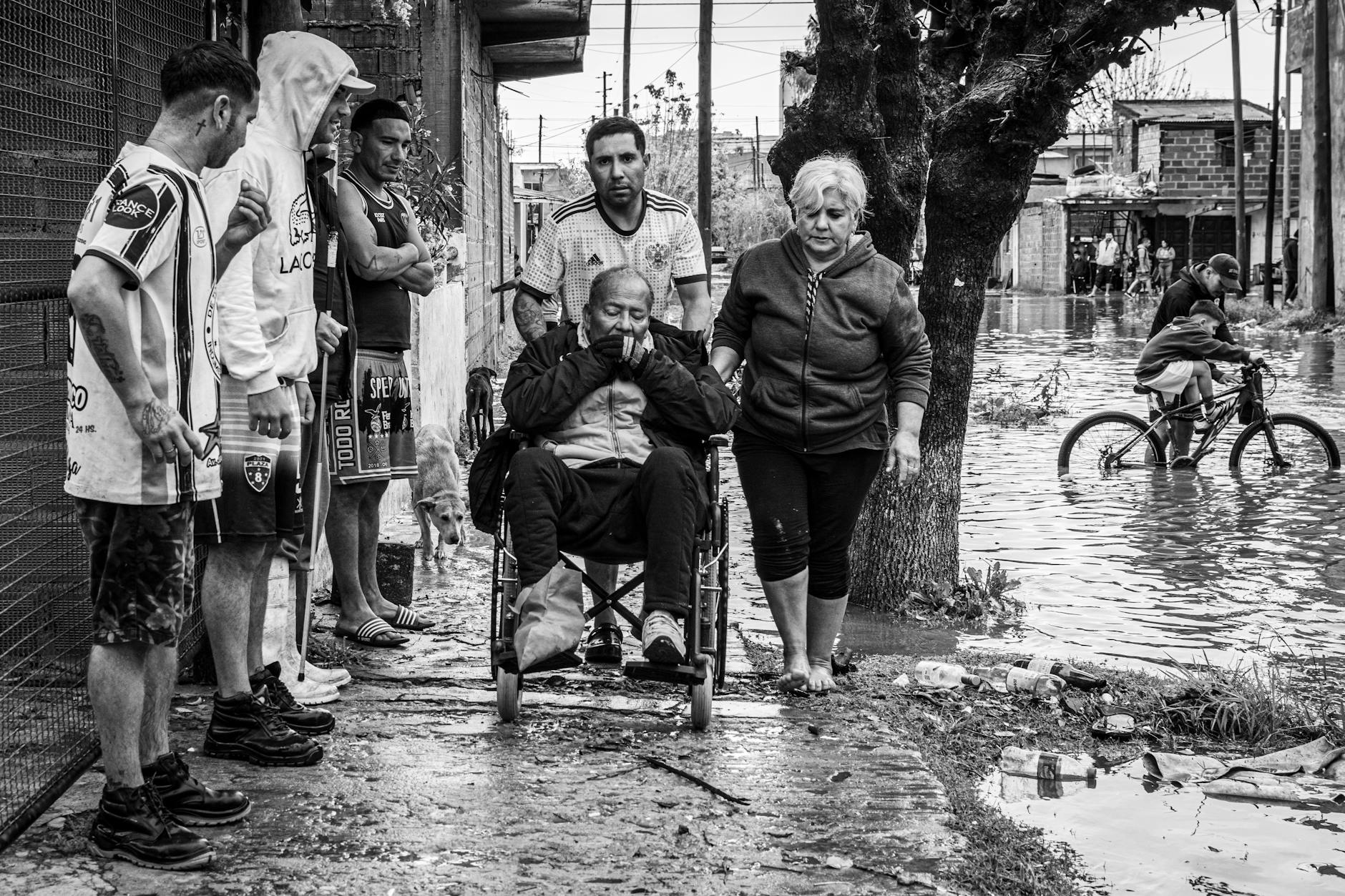
At least 44 people are dead across Colombia as catastrophic dry-season flooding — triggered by relentless rainfall since January 26, 2026 — has displaced tens of thousands of families and prompted President Gustavo Petro to declare a national emergency. The disaster, which NASA has documented as highly unusual for this time of year, has damaged or destroyed over 16,000 homes across 104 municipalities in 16 departments. Meanwhile, the Trump administration’s dramatic military seizure of Venezuelan President Nicolás Maduro in early January continues to reshape hemispheric politics, with Venezuela’s economy now spiraling into 600% inflation even as the U.S. embassy in Caracas reopened for the first time in seven years.
These two crises — one natural, one geopolitical — are unfolding simultaneously across northern South America, and both carry serious implications for U.S. policy, regional stability, and the millions of civilians caught in between. The Colombia flooding has exposed longstanding infrastructure failures and reignited debate over the role of the Urrá Dam in worsening flood damage, while Trump’s capture of Maduro has drawn global condemnation even as polling suggests the move is more popular in Latin America than in the United States itself. This article examines the verified facts behind both emergencies, what they mean for affected populations, and where things stand as of mid-March 2026.
Table of Contents
- How Did Colombia’s Flooding Kill at Least 44 People During the Dry Season?
- Did the Urrá Dam Make Colombia’s Flooding Worse?
- What Happened During Trump’s Military Seizure of Maduro in Venezuela?
- What Has the U.S. Actually Gained From Controlling Venezuela’s Resources?
- How Has the International Community Responded to Both Crises?
- What Does the Colombia Emergency Mean for Displaced Families?
- Where Do These Crises Go From Here?
- Conclusion
- Frequently Asked Questions
How Did Colombia’s Flooding Kill at Least 44 People During the Dry Season?
The death toll reached 44 across 16 Colombian departments as of February 11, 2026, after persistent heavy rainfall began on January 26 and simply did not stop. What makes this disaster especially alarming is that it struck during what should be Colombia’s dry season — a fact NASA flagged in its own documentation of the event. Dry-season floods of this scale are not normal, and they caught communities and emergency infrastructure off guard in ways that wet-season flooding typically would not. The Córdoba department on Colombia’s Caribbean coast absorbed the worst of it. Rivers burst their banks across the region, leaving up to 70% of the department underwater. In Montería, Córdoba’s capital city, river levels exceeded 5 meters — roughly 16.4 feet — forcing the mayor to order evacuations across 13 neighborhoods.
Over 200,000 residents in Córdoba alone were directly affected. Across the country, 72,000 families found themselves dealing with flooded homes, destroyed infrastructure, and limited access to clean water and medical care. Of the 16,000 homes impacted, roughly 4,000 were completely destroyed, meaning those families have nothing to return to. President Petro declared the national emergency across all Caribbean coast provinces and Chocó province, and his government moved to issue emergency tax decrees aimed at collecting approximately $2.2 billion (COP 8 trillion) for relief operations and infrastructure repairs. World Central Kitchen deployed teams to Córdoba to provide meals. But the scale of the disaster — 104 municipalities across 16 departments — has strained Colombia’s response capacity to its limits.
Did the Urrá Dam Make Colombia’s Flooding Worse?
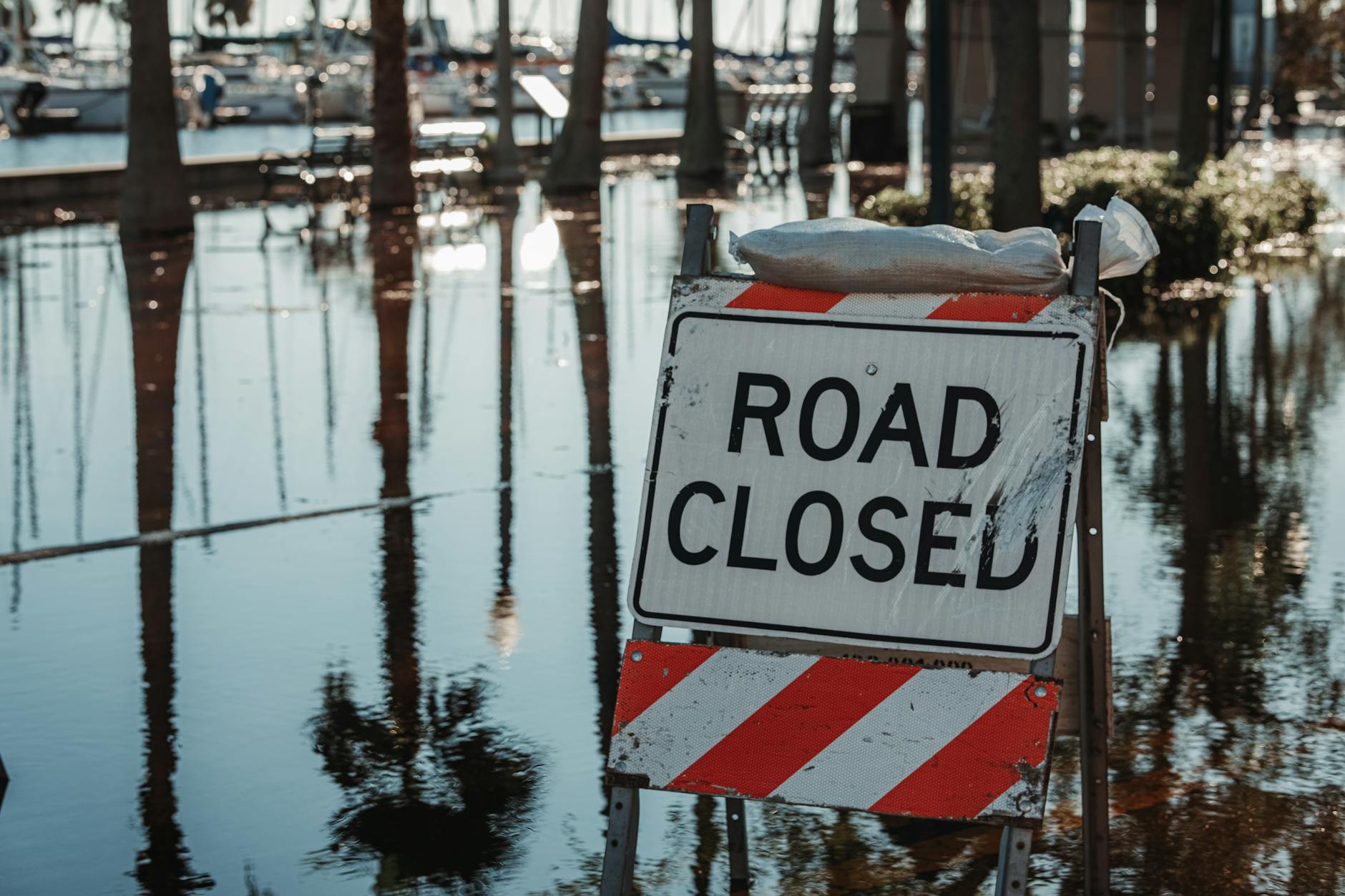
President Petro did not limit his public statements to emergency declarations. He directly accused the Urrá Dam of compounding the flooding, calling its spillages “the continuation of an environmental crime.” The Urrá hydroelectric dam, located on the Sinú River in Córdoba, has been a source of controversy for decades — indigenous communities and environmentalists have long argued that its construction and operation disrupted natural water flows and worsened flood risk downstream. However, the dam’s operators and some independent engineers have pushed back on Petro’s characterization, arguing that the dam actually moderated flood peaks and that the sheer volume of rainfall would have caused catastrophic flooding regardless. This is not a settled debate.
What is clear is that the disaster has reignited a broader national conversation about how Colombia manages its river systems, whether hydroelectric infrastructure is being operated in ways that prioritize energy generation over flood control, and whether downstream communities are bearing disproportionate risk. If you live in a flood-prone area downstream of a major dam anywhere in the world, this case is a stark reminder that dam operations during extreme weather events can either help or hurt — and the difference often comes down to operational decisions made in real time under enormous pressure. The emergency tax decree of $2.2 billion signals that the Colombian government views this not just as a disaster response problem but as an infrastructure failure requiring long-term investment. Whether those funds actually reach affected communities, and whether they are directed toward genuine flood mitigation rather than political priorities, remains to be seen.
What Happened During Trump’s Military Seizure of Maduro in Venezuela?
On January 3, 2026, the United States launched Operation Absolute Resolve — a military operation that began around 2:00 a.m. local time with overnight strikes across northern Venezuela. U.S. forces bombed infrastructure to suppress Venezuelan air defenses before an apprehension force attacked the compound where President Nicolás Maduro and his wife, Cilia Flores, were located in Caracas. Both were captured and transferred to New York, where Maduro faces charges of narco-terrorism, drug trafficking, and weapons offenses. The operation was unprecedented in modern history. While the United States has a long record of interventions in Latin America — from Guatemala in 1954 to Panama in 1989 — the nighttime military seizure of a sitting head of state and his transfer to U.S.
soil for criminal prosecution crossed a line that drew immediate global outcry. UN Security Council members condemned what they characterized as the “abduction” of a head of state. Trump, for his part, declared that the United States would “run” Venezuela until a “safe, proper and judicious transition” could be arranged, and announced that U.S. companies would seize and sell Venezuelan oil. Delcy Rodriguez, Maduro’s former vice president, took over as interim president with Trump’s approval. The arrangement effectively installed a figure from the same Chavista political apparatus that the U.S. had spent years opposing, raising immediate questions about whether this was a genuine democratic transition or simply a reshuffling of authoritarian leadership under American supervision.
What Has the U.S. Actually Gained From Controlling Venezuela’s Resources?
The Trump administration moved quickly to capitalize on its control of Venezuelan resources. Approximately 80 million barrels of Venezuelan oil have been transferred into U.S. hands and subsequently sold. The administration also issued a license authorizing trade in Venezuelan gold, including deals with Minarven, the state-owned gold mining company. On March 14, 2026, the U.S. embassy in Caracas formally reopened, with the American flag raised for the first time in seven years — a symbolic marker of the new relationship. But the economic tradeoff has not gone the way the administration promised.
Venezuela’s inflation has hit 600%, according to Bloomberg reporting from mid-March 2026, directly undercutting Trump’s public promises that removing Maduro would bring economic prosperity to the Venezuelan people. The oil sales have benefited U.S. energy interests, but ordinary Venezuelans are living through an economic crisis that has arguably worsened since the intervention. The comparison to Iraq is difficult to avoid: regime change accomplished through military force, followed by resource extraction and economic instability for the civilian population. The gold licensing adds another dimension. Venezuela sits on some of the largest gold reserves in the hemisphere, and the Minarven deals open the door to long-term U.S. commercial access to those reserves. Whether this constitutes legitimate economic development or resource extraction under military occupation depends heavily on your perspective — and on whether the Rodriguez government has any genuine independence from Washington.
How Has the International Community Responded to Both Crises?
The international response to Colombia’s flooding has followed familiar humanitarian patterns — aid organizations deploying, international donors pledging support, and the EU documenting the event through its humanitarian aid channels. World Central Kitchen’s deployment to Córdoba is notable because WCK tends to respond to the most severe food security emergencies, and their presence signals that the situation on the ground is dire. However, Colombia’s flooding has received relatively modest international media attention compared to the Venezuela situation, despite affecting far more civilians directly. The Venezuela intervention has generated a fundamentally different kind of international response. Condemnation from UN Security Council members was swift and pointed, with multiple nations characterizing the operation as a violation of international law and state sovereignty.
The legal precedent is troubling regardless of one’s views on Maduro’s authoritarian governance: if the United States can unilaterally launch military operations to capture and prosecute sitting heads of state, the implications for international order extend far beyond Venezuela. Russia and China have been particularly vocal, though their objections are complicated by their own records on sovereignty and intervention. One surprising data point: polling has shown that Trump’s capture of Maduro enjoys more support in Latin America than in the United States itself. This likely reflects deep frustration with Maduro’s governance among populations most directly affected by Venezuelan migration and economic collapse. But popular support for an action does not resolve its legal or ethical dimensions, and the long-term consequences of normalizing this kind of intervention remain unknown.
What Does the Colombia Emergency Mean for Displaced Families?
The 72,000 families affected by Colombia’s flooding face a recovery timeline measured in months, if not years. The 4,000 families whose homes were completely destroyed are in the most precarious position — they need not just temporary shelter but permanent relocation or reconstruction. Colombia’s disaster response infrastructure has improved in recent years, but the scale of this event across 104 municipalities is testing every system simultaneously. The emergency tax decree targeting $2.2 billion in funding suggests the government understands the scope, but collecting and distributing that money effectively is a different challenge entirely. For context, Córdoba is one of Colombia’s poorer departments, with limited economic resilience even in normal times.
📨 Get Free Accountability Coverage Alerts
Free · No spam · Unsubscribe anytime
When 70% of a department is underwater and over 200,000 residents are directly affected, the economic disruption compounds the immediate physical danger. Small farmers lose crops, livestock, and equipment. Small business owners lose inventory and customers. Schools and clinics close. The recovery is not just about rebuilding houses — it is about rebuilding an entire local economy.
Where Do These Crises Go From Here?
Colombia’s flooding disaster will likely fade from international headlines long before recovery is complete. The key question is whether the Petro government can effectively deploy the emergency funds and whether the debate over the Urrá Dam leads to any meaningful changes in how Colombia manages flood risk along its major river systems. Climate patterns suggest that dry-season flooding events may become more frequent, which would mean that what happened in January and February 2026 is not an anomaly but a preview. In Venezuela, the trajectory is even less certain. Maduro sits in U.S. custody facing serious federal charges.
Delcy Rodriguez governs under American supervision. Inflation is running at 600%. The U.S. embassy is open, oil is flowing, and gold deals are being signed — but the democratic transition Trump promised remains theoretical at best. The question that hangs over the entire situation is whether this intervention will ultimately be remembered as a turning point for Venezuela or as another chapter in the long history of U.S. interventions in Latin America that delivered resource access without delivering stability.
Conclusion
Colombia’s flooding emergency and Trump’s seizure of Maduro represent two very different kinds of crisis playing out in the same region at the same time. The flooding has killed at least 44 people, displaced tens of thousands of families, and exposed infrastructure vulnerabilities that will take years and billions of dollars to address. The Venezuela intervention has removed an authoritarian leader but replaced him with economic chaos, international condemnation, and an interim government whose independence from Washington is questionable at best.
Both situations demand continued scrutiny. Colombia’s affected communities need sustained support long after the floodwaters recede, and the debate over dam management and flood infrastructure deserves serious policy attention rather than political point-scoring. In Venezuela, the gap between the Trump administration’s promises of prosperity and the reality of 600% inflation needs honest accounting. For readers following these stories, the most important thing is to track what actually happens to affected civilians — not what politicians on any side claim is happening.
Frequently Asked Questions
How many people died in Colombia’s 2026 flooding?
At least 44 people were killed across 16 departments as of February 11, 2026, with 72,000 families affected and over 16,000 homes damaged or destroyed.
Why is dry-season flooding in Colombia unusual?
Colombia’s dry season typically brings reduced rainfall and lower river levels. NASA documented the January-February 2026 floods as highly anomalous for this time of year, suggesting potential links to shifting climate patterns.
What charges does Maduro face in the United States?
Nicolás Maduro faces federal charges of narco-terrorism, drug trafficking, and weapons offenses after being captured during Operation Absolute Resolve on January 3, 2026 and transferred to New York.
Who is running Venezuela after Maduro’s capture?
Delcy Rodriguez, Maduro’s former vice president, assumed the role of interim president with Trump’s approval. The U.S. embassy in Caracas reopened on March 14, 2026.
How much Venezuelan oil has the U.S. taken control of?
Approximately 80 million barrels of Venezuelan oil have been transferred into U.S. hands and sold by the Trump administration. The U.S. also authorized trade of Venezuelan gold through deals with Minarven, the state-owned mining company.
Has the Venezuela intervention improved conditions for Venezuelans?
Not according to current economic data. Venezuela’s inflation has reached 600% as of March 2026, directly contradicting Trump’s promises that removing Maduro would bring economic prosperity. Polling shows the intervention has more support in Latin America than within the United States.
You Might Also Like
- At Least 3 Countries Recruited to Accept Deportees…What the Judge Actually Ruled
- At Least 25% of Men Under 35 Lonely Every Day…Male Loneliness Crisis
- Will Trump Try to Stay in Power Beyond 2028? Third Term Discussion