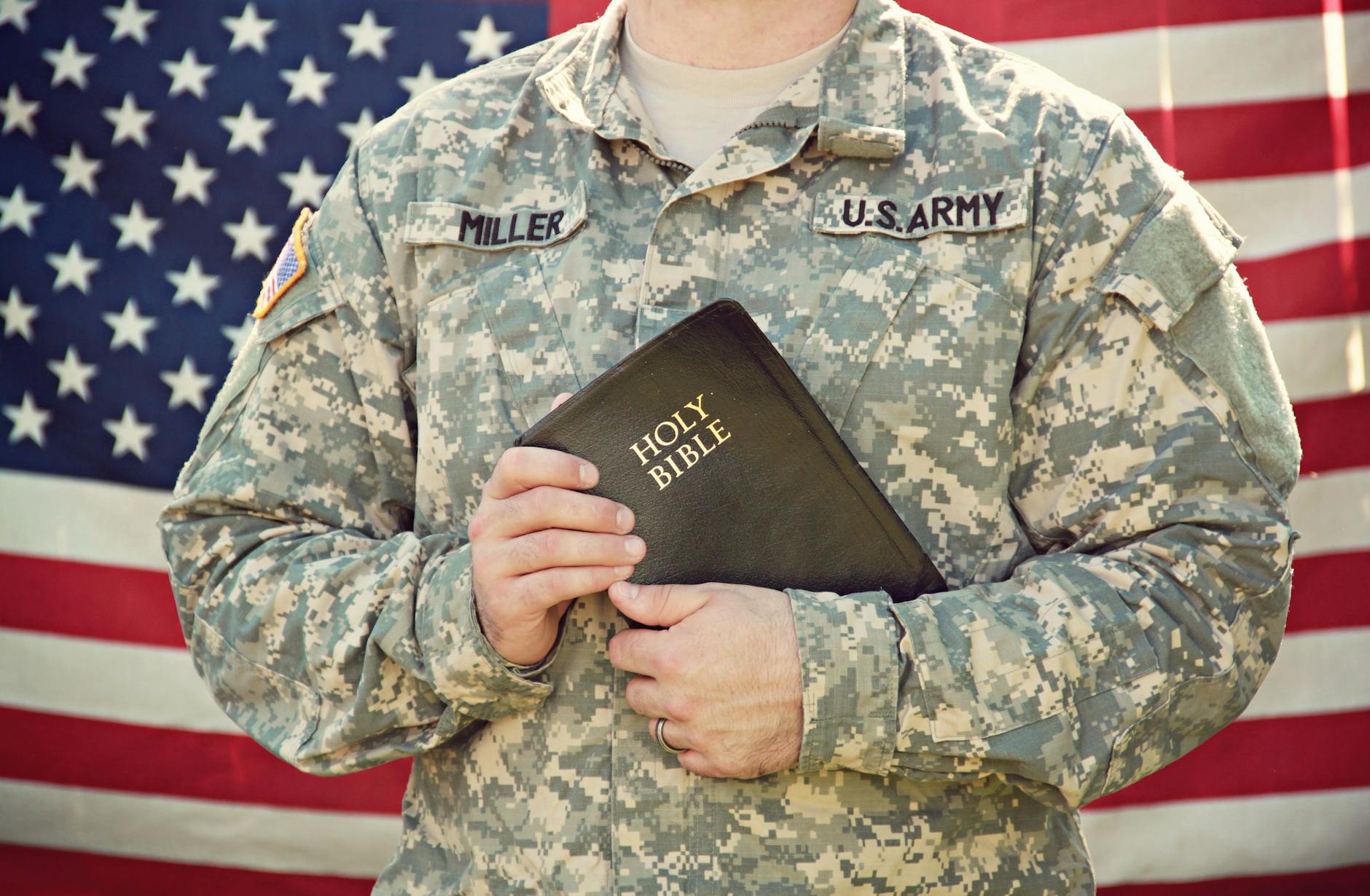
Christian nationalism alarms critics because it blurs the line between religious identity and national identity in ways that historically have threatened religious freedom and pluralism. Critics worry that Christian nationalism treats America as fundamentally Christian, positioning Christian values as the basis for law and policy while marginalizing non-Christian perspectives. This concern intensified during the Trump administration and continued into his second term, with debates over how openly Christian nationalist rhetoric shapes policy on education, abortion, immigration, and religious exemptions.
The movement gained visible momentum at specific events that became focal points for criticism. The January 6, 2021 Capitol riot featured some participants carrying Christian nationalist symbols and messaging, which critics cited as evidence that the ideology could motivate political violence. Subsequent polling showed growing identification with Christian nationalist beliefs, particularly among evangelicals and Republicans, raising alarm among religious leaders, civil liberties advocates, and constitutional scholars who saw the trend as destabilizing to church-state separation principles established by the First Amendment.
Table of Contents
- What Do Critics Mean by “Christian Nationalism” and Why Is It Different from Christian Political Engagement?
- The Church-State Separation Concern and Constitutional Risk
- How Does Christian Nationalism Relate to Education Policy and LGBTQ+ Rights?
- The Religious Freedom Tradeoff: When Christian Nationalism Limits Rights for Other Believers
- How Christian Nationalism Intersects with Immigration and National Identity
- Supreme Court Decisions and the “Religious Liberty” Expansion
- The Future Risk and International Comparisons
- Conclusion
What Do Critics Mean by “Christian Nationalism” and Why Is It Different from Christian Political Engagement?
Critics define Christian nationalism as the belief that america was founded as an explicitly Christian nation and should be governed according to Christian principles, with Christian identity seen as central to American identity itself. This differs from Christians voting their values or advocating for policies informed by faith—activities protected by the First Amendment. The distinction, critics argue, is that Christian nationalism treats Christian dominance as normative for government, rather than one perspective among many in a pluralistic democracy. Legal scholars and religious organizations point to specific policy demands that flow from Christian nationalist ideology: removing separation of church and state protections, mandating Christian prayer in public schools, restricting access to contraception and abortion based on theological doctrine, and denying services or employment to people based on religious grounds.
The Family Research Council and other Christian right organizations have promoted these goals for decades, but Christian nationalism specifically frames them as “taking back” a nation that rightfully belongs to Christians—language critics find dangerous because it positions non-Christian Americans as outsiders or usurpers. A concrete example illustrates the difference. When a Christian legislator votes to defund Planned Parenthood because her faith opposes abortion, that is political participation informed by religion. When the same legislator frames abortion restrictions as restoring Christian law to a nation that was founded on Christian principles and is being corrupted by secular forces, that rhetoric appeals to Christian nationalist worldview—and critics argue it’s coded to mobilize Christian voters around identity and dominance, not just policy disagreement.

The Church-State Separation Concern and Constitutional Risk
Critics from mainline Protestant churches, the Anti-Defamation League, and constitutional law experts have raised specific alarms about the intersection of Christian nationalism and religious freedom. The First Amendment’s Establishment Clause prohibits government establishment of religion; critics argue that Christian nationalism fundamentally opposes this principle, viewing separation of church and state as secular corruption rather than constitutional foundation. If Christian nationalist ideology increasingly shapes law, the warning goes, minorities—both religious minorities and non-believers—lose legal protection against government favoritism of Christianity. A critical limitation of the concern, acknowledged by critics themselves, is that Christian nationalism operates more as a cultural and political movement than as a formal doctrine with a defined membership.
No one runs for office as a “Christian nationalist.” Instead, the ideology spreads through messaging, rhetoric, and cultural signaling—which makes it harder to regulate while also harder to measure its actual influence on specific policies. Critics sometimes struggle to distinguish between culturally conservative Christian politics and Christian nationalism specifically, leading to debates about whether the concern overstates the threat. The warning critics emphasize: Christian nationalist rhetoric has historically preceded discrimination against religious minorities and non-believers. In countries where Christian nationalism became government policy—Romania under Ion Antonescu or even the modern Hungarian government under Viktor Orbán—minorities faced legal restrictions, hate violence, and loss of equal citizenship. While the American constitutional system and civil liberties infrastructure are stronger, critics argue the trajectory is worth monitoring, especially as Christian nationalist ideology becomes more normalized in Republican politics and as specific policies erode Establishment Clause protections.
How Does Christian Nationalism Relate to Education Policy and LGBTQ+ Rights?
A major flashpoint for Christian nationalism concerns has been public education. Critics argue that Christian nationalist activists have pushed for restrictions on curriculum discussing sexual orientation and gender identity, citing values-based exemptions from diversity training, and advocated for school prayer and religious teaching in public schools. Organizations like Moms for Liberty, which gained political prominence during the Trump years, frame these campaigns as “protecting children” from ideological corruption—language that echoes Christian nationalist framing of secular American culture as a threat to Christian youth. In specific jurisdictions, critics point to policies that went beyond typical values-based objections to show Christian nationalist influence.
In some Tennessee school districts, for example, policies restricted curriculum on LGBTQ+ topics beyond what most Christian-majority communities have implemented, reflecting what critics call a maximalist Christian nationalist agenda rather than a local values compromise. The framing of LGBTQ+ equality as a “secular ideology” opposed to Christian truth, critics argue, relies on Christian nationalist logic that positions America as naturally Christian and other worldviews as foreign impositions. A concrete example: When the Moms for Liberty movement successfully removed books addressing gender identity from libraries, critics noted that the organization’s founders explicitly connected parental rights to Christian values and framing. The debate is not simply about age-appropriateness of content—it’s about whether public institutions should operate under assumptions that Christian sexual ethics are the default and other perspectives are ideological indoctrination. This, critics argue, is Christian nationalism at work in education policy.

The Religious Freedom Tradeoff: When Christian Nationalism Limits Rights for Other Believers
Critics raise a pointed irony: Christian nationalism claims to defend religious freedom, but its policies often restrict it. Religious exemptions to contraception coverage mandates, LGBTQ+ non-discrimination laws, and other policies framed as “religious liberty” by Christian nationalist advocates often operate in practice to allow Christian-majority businesses and institutions to deny services or benefits to others based on Christian doctrine. The tension is that genuine religious freedom protects minorities; it prevents government from favoring one religion over another. But Christian nationalism uses religious freedom language to protect Christian institutional dominance.
A Muslim employer requesting prayer space at work is exercising religious freedom. A Christian employer denying health benefits to an LGBTQ+ employee based on religious objection is invoking religious exemption—different concepts, but Christian nationalist rhetoric collapses them into a single category of “religious liberty under attack.” Critics also highlight the practical tradeoff: as Christian nationalist influence expands exemptions for Christian institutions and individuals, it narrows the space for non-Christian religious practice. For example, if a public school permits student Christian prayer but bans student Muslim prayer, or if a workplace grants Christian religious holidays but not Jewish or Hindu observances, Christian nationalism in practice becomes Christian privilege. The warning is that “religious freedom” rhetoric can mask a system that advantages Christian institutions while disadvantaging others.
📨 Get Free Accountability Coverage Alerts
Free · No spam · Unsubscribe anytime
How Christian Nationalism Intersects with Immigration and National Identity
Immigration emerged as a central Christian nationalist concern under the Trump administration, with critics identifying explicit links between Christian nationalist ideology and immigration restriction policy. Trump’s rhetoric on immigration—framing it as an invasion, depicting undocumented immigrants as criminals, conflating immigration with cultural replacement—overlapped significantly with Christian nationalist messaging about preserving a Christian America. Critics point to specific rhetoric from Christian right figures who explicitly connected immigration restriction to Christian nationalism.
Some evangelical leaders framed immigration limits as necessary to preserve Christian Western civilization; others used language about protecting “Christian nations” and resisting “replacement.” This differs from policy disagreements about immigration enforcement or rates; it frames immigration itself as a threat to Christian American identity. A critical limitation to highlight: not all opposition to immigration is Christian nationalist, and not all Christian nationalists prioritize immigration. But critics argue the movement’s prominence in immigration debates—particularly in Trump-era policy—demonstrates how Christian nationalism shapes practical politics. The warning is significant: Christian nationalist framing can fuel discrimination against immigrant communities and religious minorities in America, particularly Muslim immigrants and Latin American (Catholic or non-Christian) migrants viewed as threats to Christian dominance.
Supreme Court Decisions and the “Religious Liberty” Expansion
Critics closely watch Supreme Court decisions expanding religious exemptions and noting that several recent rulings reflect Christian nationalist influence on jurisprudence. The Dobbs decision eliminating federal abortion protections, the Masterpiece Cakeshop cases, the decision allowing prayer at high school football games, and the decision striking down affirmative action have all been celebrated by Christian nationalist advocates as victories for “religious liberty” and Christian values in law.
A specific example: the Masterpiece Cakeshop case, in which the Supreme Court ruled that a baker with religious objections to same-sex marriage could refuse service at LGBTQ+ weddings, directly affects non-Christian and LGBTQ+ Americans’ access to public accommodations. Critics argue this represents Christian nationalism winning in court—the law now permits Christian religious objection to override nondiscrimination principles that protect other minorities. The implication, critics warn, is that Christian religious conviction is receiving elevated legal status over other values, including equality and pluralism.
The Future Risk and International Comparisons
Critics increasingly frame Christian nationalism as a warning sign, comparing trends in America to developments in other democracies where Christian nationalism has consolidated political power. Hungary under Viktor Orbán, Poland under the Law and Justice party, and Brazil under Jair Bolsonaro have all seen Christian nationalist movements mobilize politically, restrict minority rights, and erode secular governance norms. While the American constitutional system differs, critics worry that normalizing Christian nationalist rhetoric and policy makes such consolidation possible over time.
The forward-looking concern is not inevitable decline but institutional erosion. If Christian nationalism continues to gain influence—particularly if Republicans continue using Christian nationalist messaging and policy priorities—critics warn that the Establishment Clause, religious freedom protections, and pluralistic assumptions embedded in the Constitution face slow-motion revision through appointments, judicial decisions, and legislation. The question, critics argue, is not whether America will become a Christian nationalist theocracy overnight, but whether secular governance principles can survive repeated institutional pressure from a movement with growing political power.
Conclusion
Critics alarm about Christian nationalism because it represents a coherent movement to transform American law and governance around Christian dominance rather than pluralism, and because it blurs religious faith with national identity in ways that have historically preceded discrimination and reduced freedoms for minorities. The concern is not that Christians participate in politics—they do, and have the right to. The concern is that Christian nationalism uses religious freedom language to justify Christian institutional privilege, frames non-Christian perspectives as alien impositions on a naturally Christian nation, and gains ground in jurisprudence and policy in ways that erode Establishment Clause protections and equal treatment under law.
The stakes, in critics’ assessment, are about whether America remains committed to the constitutional principle that government remains neutral on religion, protecting religious freedom for all by favoring none. Christian nationalism directly opposes that principle, and its growing political influence—visible in Supreme Court decisions, Republican Party rhetoric, and electoral mobilization—suggests the conflict will intensify. Monitoring this trend and defending secular governance and religious minority protections will likely remain central to debates over religious freedom and democracy in coming years.
You Might Also Like
- Would Jesus Vote Red, Blue, or Neither?
- Why Voters Say They Hate Drama but Reward It
- Why Thanksgiving Politics Became a National Joke