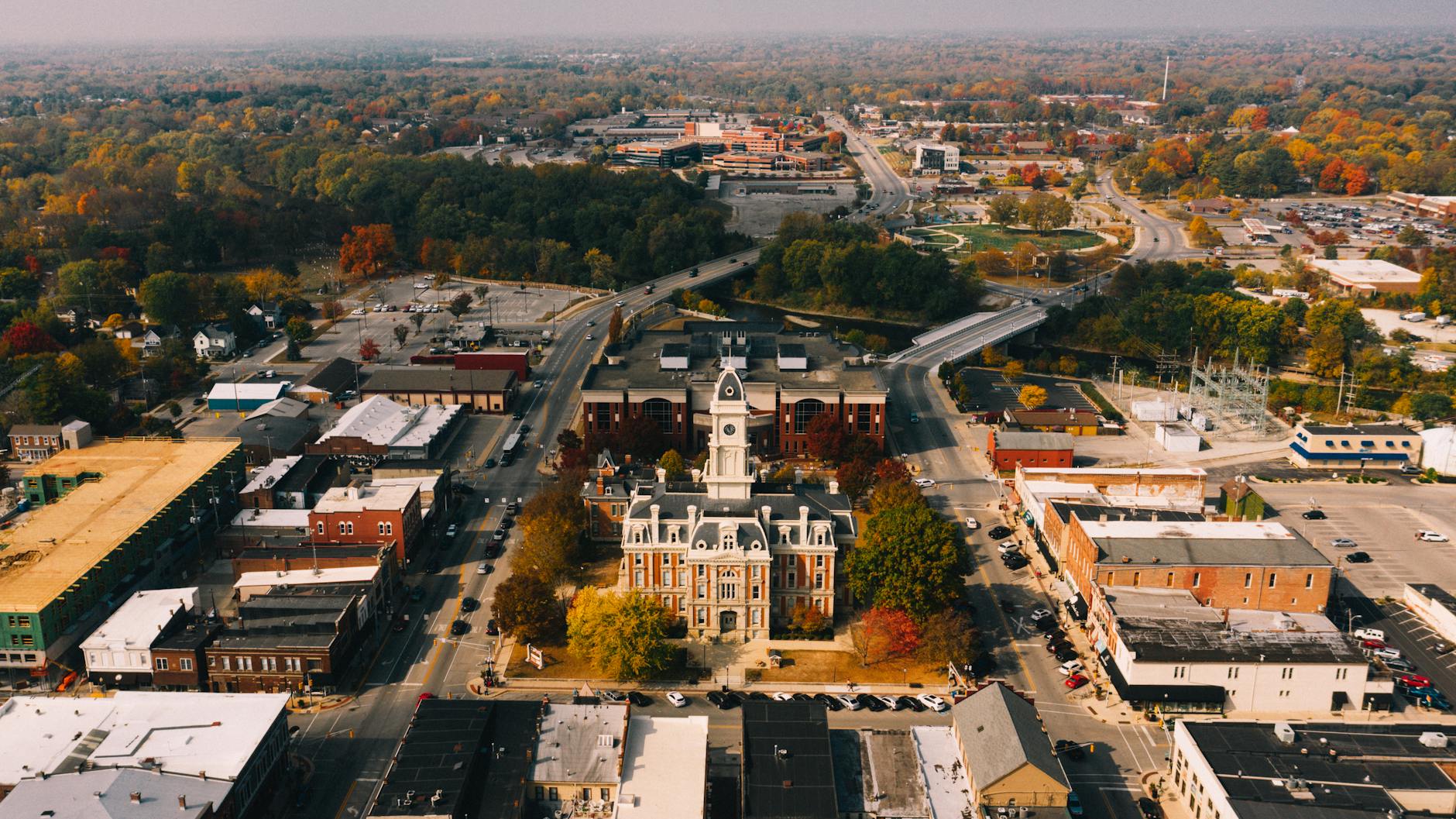
The short answer is no—not without fundamental change. Democrats face a crisis in small town America that goes far beyond normal electoral volatility. In 2024, rural voters supported Trump by a crushing 69% to 29% margin over Vice President Kamala Harris. This wasn’t just a bad year for Democrats; it reflected decades of organizational abandonment and cultural drift that the Democratic Party is only now beginning to acknowledge as an existential problem.
The scale of defection reveals just how dire the situation has become. Seven percent of voters who backed President Biden in rural areas in 2020 switched to Trump in 2024, while only 3% of Trump’s rural voters switched to Harris. That asymmetry matters. When your support is bleeding away at more than double the rate of your opponent’s, you’re not facing a messaging problem—you’re facing a structural collapse. The Democratic Party holds only a 35% party affiliation advantage to Republicans’ 60% in rural America today, a 25-point gap that has widened steadily over two decades.
Table of Contents
- How Deep Does the Rural Democratic Decline Go?
- The Organizational Vacuum Democrats Created in Rural America
- What the 2026 Strategy Signals About Democratic Desperation
- The Messaging Shift That Might Actually Resonate
- The Messaging Authenticity Problem Rural Democrats Must Solve
- Why Local Candidate Development Matters More Than National Advertising
- The Long Game and What Success Actually Looks Like
- Conclusion
How Deep Does the Rural Democratic Decline Go?
The Democrat’s rural problem isn’t new, but its magnitude has become undeniable. In 2000, Republicans held only a narrow 51% to 45% advantage in rural party affiliation. By 2010, that advantage had widened to 13 percentage points. Today, Republicans enjoy approximately a 25-point lead.
This isn’t a single electoral cycle flipping—it’s a generation-long realignment that Democratic strategists largely ignored until it became impossible to deny. What makes this trend particularly alarming is the organizational infrastructure collapse it reflects. Democrats fail to even declare a party chair in roughly 20% of rural counties, and they don’t field congressional candidates in nearly the same percentage of races. By contrast, Republicans hold 96% of rural county chairships and field candidates for essentially every competitive seat. A rural voter looking to engage with the democratic party in many small towns will literally find no one there to talk to.
The Organizational Vacuum Democrats Created in Rural America
The organizational weakness isn’t incidental—it’s a direct consequence of deliberate choices. As democrats invested resources in suburban and urban voter outreach over the past two decades, rural America became a forgotten territory. Party infrastructure atrophied. Local leadership pipelines dried up. The result is that in large swaths of small town America, the Democratic Party exists only as a name on a ballot, not as a living organization with community presence.
This creates a vicious cycle. Without local party infrastructure, Democrats can’t recruit and develop local candidates. Without local candidates, voters never see themselves represented in party leadership. Without representation, voter engagement drops further, which accelerates organizational decline. A republican county chair in rural Ohio or Iowa has the resources and support network to build political power; a Democrat in the same county might be literally the only party operative for 50 miles. This isn’t a messaging disadvantage—it’s institutional collapse.
What the 2026 Strategy Signals About Democratic Desperation
Recognizing the crisis, the Democratic National Committee is now directing approximately $1 million per month to state parties—a historic level of investment meant specifically to rebuild rural infrastructure. More tellingly, 2026 marks the first time the Democratic Congressional Campaign Committee has created a program specifically dedicated to engaging rural voters. This is the political equivalent of a company suddenly discovering it abandoned an entire market segment.
Tim Walz’s April 2026 launch of the “Small Town PAC” represents another sign of this awakening. The effort is explicitly designed to rebuild Democratic presence in rural areas, signaling that senior party figures now understand what grassroots rural Democrats have been saying for years: you cannot compete where you don’t show up. Meanwhile, Pete Buttigieg has been traveling to rural and Republican-leaning areas in states like South Carolina and Michigan, pairing with local candidates in a direct appeal to voters who rarely see national Democratic figures in their communities.

The Messaging Shift That Might Actually Resonate
Rather than running against Trump or focusing on culture war issues, rural Democratic candidates in 2026 are emphasizing practical kitchen-table issues: tariffs, cost of living, Medicaid cuts, and healthcare access. This is a significant strategic departure from the identity-focused messaging that dominated Democratic campaigns in urban and suburban areas. The difference matters because rural voters have repeatedly signaled they’re focused on economic survival, not cultural symbolism.
There’s a real question about whether money and presence can reverse years of neglect quickly enough to matter in 2026. A million dollars per month sounds impressive until you consider that Democrats need to rebuild credibility in thousands of communities simultaneously. Comparatively, Republicans have maintained continuous organizational presence in these areas for years. Money can accelerate rebuilding, but it can’t instantly create the relationships and trust that take years to develop.
📨 Get Free Accountability Coverage Alerts
Free · No spam · Unsubscribe anytime
The Messaging Authenticity Problem Rural Democrats Must Solve
Even as Democrats shift messaging toward economic issues, they face a credibility challenge. Rural voters have watched Democratic politicians campaign on these issues for decades while delivering policies that rural communities experienced as indifferent or hostile. Trade policy decisions, environmental regulations, agricultural subsidies—these aren’t abstract debates in rural America. They’re experienced as real economic consequences. A national Democrat showing up to campaign on tariffs carries skepticism built from generations of unfulfilled promises.
The limitation of the 2026 strategy is that it’s happening in a single election cycle. Building political trust takes time. A local county chair needs to show up to county fairs, school board meetings, and community events year after year. A congressional candidate can campaign hard and still lose if voters doubt that a Democrat from the city will actually remember rural interests once they get to Washington. Democratic strategists are correct to focus on economic messaging, but they should harbor no illusions that this alone will reverse a 25-point party affiliation gap overnight.

Why Local Candidate Development Matters More Than National Advertising
The most promising aspect of the Democratic’s 2026 repositioning is the emphasis on local infrastructure over national campaigns. Voters trust candidates who live in their communities and understand their specific challenges. A farmer running for state legislature who spent 20 years farming the same land brings credibility that no national candidate can match.
This is why the $1 million monthly investment in state parties is actually more significant than Pete Buttigieg’s tour—it’s money meant to find, train, and support local voices. The example here is instructive: in areas where Democrats have maintained continuous local organizing, electoral outcomes remain more competitive than the national rural average suggests. This proves that rural Democratic decline isn’t inevitable or permanent—it’s a consequence of abandonment, not fundamental incompatibility between rural voters and Democratic policies.
The Long Game and What Success Actually Looks Like
If Democrats are serious about rural competitiveness, they need to measure success in years and decades, not election cycles. The goal shouldn’t be winning rural America—that’s probably unrealistic given current trends. The realistic goal is making rural elections competitive again and preventing further attrition of rural Democratic voters. Preventing another 7% swing to Republicans in 2026 while holding candidates in competitive rural districts would count as progress.
The forward-looking reality is that Democrats will likely remain at a structural disadvantage in rural America for the foreseeable future, but not an insurmountable one. Infrastructure investment, local candidate development, and economic messaging focused on rural concerns can stabilize the decline and create pockets of competitiveness. What cannot happen is another 20 years of organizational neglect. That path leads to rural America becoming what it nearly is already—a Democratic-free zone.
Conclusion
Can Democrats compete in small town America again? Not in the near term, and only if they stop treating rural voters as a demographic afterthought. The 69% to 29% 2024 rural vote margin reflects decades of organizational collapse and strategic indifference. The DNC’s new investments and focused rural engagement strategies are necessary, but they arrive late and face massive headwinds of voter skepticism and Republican institutional advantage.
Real recovery requires sustained commitment beyond 2026. It means building local party infrastructure, recruiting and developing rural candidates, and following through on economic messaging with actual policy results that rural communities can see and trust. The Democratic Party is finally acknowledging the problem. Whether it will commit the resources and strategic patience needed to address it remains an open question.
You Might Also Like
- Can Democrats Keep Union Support?
- Why Democrats Struggle on Social Media
- Why Democrats Keep Losing Simple Messages