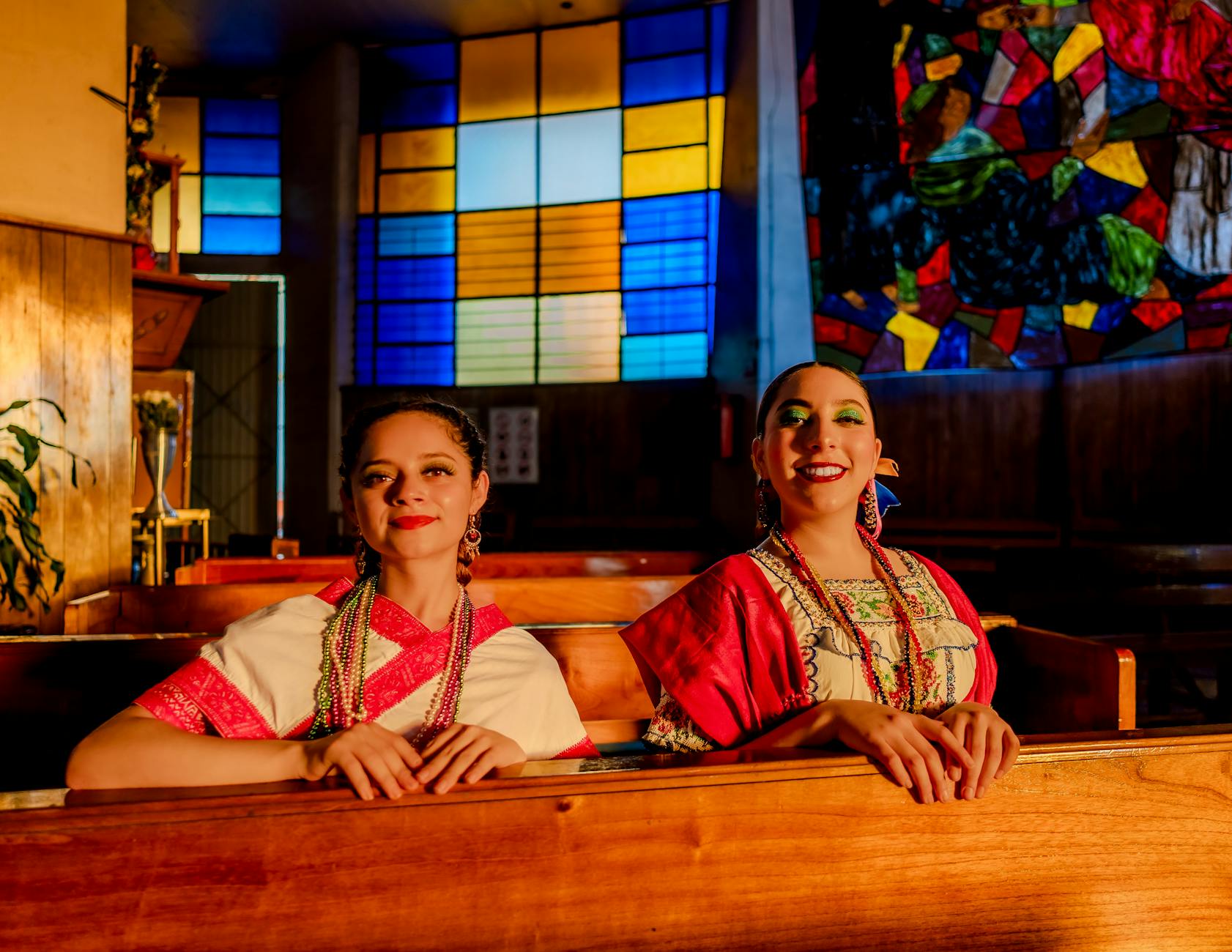
Latino Catholics are moving rightward in meaningful numbers, though the shift is neither uniform nor as dramatic as some headlines suggest. In 2024, Latino Catholics supported Trump at higher rates than in 2020, with some polling showing the Republican presidential candidate gaining 10-15 percentage points among this group compared to four years earlier.
However, “moving right” is incomplete—many Latino Catholics remain Democratic voters, and their political priorities are often driven by economic concerns and family values rather than ideological consistency with either major party. The rightward movement reflects several competing pressures: concern about inflation and job security, skepticism toward progressive positions on gender and sexuality that conflict with Catholic teaching, the growth of Pentecostal and evangelical Protestantism among Latino communities (which tend toward Republican voting), and appeals to traditional family values and law-and-order messaging. Yet Latino Catholics also remain sensitive to immigration rhetoric, environmental policy, and poverty-related issues, creating crosscutting political motivations that don’t fit neatly into left-right categories.
Table of Contents
- What Do Voting Shifts Among Latino Catholics Actually Show?
- Religious Identity and Political Polarization Among Latino Catholics
- Economic Anxiety and the Cost-of-Living Crisis
- Immigration Policy and Intra-Community Divisions
- The Gender Gap and Traditional Values
- Regional Variation and Community-Specific Trends
- Forward-Looking Trends and Demographic Uncertainty
- Conclusion
- Frequently Asked Questions
What Do Voting Shifts Among Latino Catholics Actually Show?
Exit polling and post-election surveys from 2024 show Latino voters overall moved toward Republicans compared to 2020, with catholic subgroups reflecting this broader trend. In 2020, Biden won Latino Catholic voters by roughly 65-35 margins in several battleground states; by 2024, those margins had compressed significantly in key regions. Trump gained particularly among Latino men and younger Latino voters with college degrees—groups that previous Democratic advantages relied upon. The acceleration is recent. In 2016 and 2020, Latino Catholic defection to Republicans was present but smaller.
What changed is intensity and breadth. Inflation eroded confidence in Democratic economic stewardship. The pandemic highlighted disputes over school closures that affected Catholic school decisions. Conservative media increasingly targeted Latino Catholic audiences with culturally-specific messaging about religious freedom and traditional values. A concrete example: in South Florida, where Cuban and Venezuelan communities include many practicing Catholics, Trump gained roughly 25 percentage points among Latino voters between 2016 and 2024—one of his sharpest gains among any demographic.
Religious Identity and Political Polarization Among Latino Catholics
Catholic teaching on abortion, contraception, and religious liberty in healthcare nominally aligns more closely with Republican positions. However, Catholic social doctrine also emphasizes poverty relief, labor protections, and immigration welcome—positions that historically attracted Latino Catholics to Democratic economic policies. This tension has long existed, but it’s now hardening into genuine partisan divisions rather than internal negotiation. A critical limitation of “moving right” framing is that many Latino Catholics aren’t adopting systematic right-wing ideology; they’re voting pragmatically around specific concerns. Exit polls from 2024 show inflation and immigration as top concerns among Latino Catholic voters regardless of voting choice.
Those concerns happen to align with Republican campaign messaging more directly than Democratic messaging did. It’s possible that Latino Catholic voters could move back leftward if economic conditions improve and if Democrats more effectively communicate on issues like healthcare access and family support—both areas where Catholic social teaching overlaps with Democratic policy positions. The warning here is that treating any voting group as monolithic misses internal diversity. Puerto Rican Catholics in the Northeast, Mexican-American Catholics in the Southwest, and Cuban Catholics in Florida have distinct political histories and current pressures. A rising cost of living affects all of them, but they’re not equally mobile as voters.
Economic Anxiety and the Cost-of-Living Crisis
The single most powerful driver of Latino Catholic rightward movement has been inflation and cost-of-living pressure. Between 2021 and 2024, grocery prices rose 25%, rent increased significantly in major cities, and household utility costs spiked. Latino households are disproportionately concentrated in lower-income brackets where these cost increases consume larger percentages of income.
In focus groups and surveys, Latino Catholic voters consistently cite grocery shopping, rent, and gas prices as their top household stress. When asked who bears responsibility, many pointed to the Biden-Harris administration’s economic policies, trade policies, and border enforcement (which affected some labor dynamics). Trump’s messaging around deportations and border restrictions resonated partly because some Latino voters in competitive labor markets saw immigration as a wage suppressor, despite research suggesting net long-term neutral effects. This is a comparison worth noting: whereas progressives framed immigration as a civil rights issue, conservatives framed it as a kitchen-table economic issue, and the latter messaging gained traction among economically stressed voters.

Immigration Policy and Intra-Community Divisions
Immigration politics create a surprising split within Latino Catholic communities that isn’t captured by simple left-right labels. Second- and third-generation Latino voters, many of whom are Catholic, often hold more restrictive views on immigration than first-generation immigrants—not because of ideology, but because they’re economically established and may view new immigration as labor competition. First-generation Latino Catholic immigrants, by contrast, often maintain family ties to countries of origin and hold more expansive immigration views, yet some also support border enforcement if framed around “legal” immigration. Trump’s explicit anti-illegal immigration platform has appeal to this mixed constituency.
Some Latino Catholics view strict immigration enforcement as compatible with valuing legal immigration and family reunification. Democrats, having pivoted to more open immigration rhetoric, lost ground with Latino voters who support legal immigration pathways but oppose what they see as de facto open borders. This tradeoff matters: gains with college-educated urbanites who prioritize immigration rights were outweighed by losses among working-class Latino Catholics who prioritize labor market stability. A concrete example: in Arizona, where Latino population is large and growing, Trump’s 2024 gains were sharpest among Latino voters with high school education or some college—not the demographic most affected by immigration directly, but those experiencing wage stagnation and viewing immigration restrictively as a result.
The Gender Gap and Traditional Values
Within Latino Catholicism, gender and sexuality issues have become more explicitly political. The Church’s teaching against abortion and same-sex marriage creates potential alignment with Republican positions, but Latino Catholic women—who comprise 51% of the Latino Catholic population—have historically voted Democratic at higher rates than men, driven by economic concerns and healthcare access. The 2024 shift toward Republicans was notable for occurring even as Democratic messaging emphasized abortion rights post-Dobbs. Some explanation lies in the fact that Latino Catholic women, especially older cohorts, may hold genuinely conservative views on abortion that weren’t being effectively activated in previous election cycles.
Younger Latino Catholic women are more likely to support abortion rights, creating internal generational tension. But another explanation is that other issues—inflation, immigration, school choice (relevant for Catholic families)—outweighed abortion concern for specific subgroups. The limitation here is that focusing on traditional values misses material concerns. Polling shows most Latino Catholics, including conservatives, support paid family leave, childcare support, and healthcare access—issues that cross partisan lines but are rarely framed that way.
Regional Variation and Community-Specific Trends
Latino Catholic voting patterns vary sharply by region and national origin. Cuban and Venezuelan communities in South Florida lean conservative for historical reasons related to US foreign policy toward their home countries. Mexican-American communities in Texas and the Southwest are internally divided by generation, location (rural vs. urban), and economic sector.
📨 Get Free Accountability Coverage Alerts
Free · No spam · Unsubscribe anytime
Puerto Rican communities in the Northeast maintain stronger Democratic allegiances, though even these shifted rightward in 2024. Texas provides the starkest example of Latino Catholic rightward movement. In 2018, Democrats flipped 23 GOP House seats and made major gains in Texas, partly by winning Latino Catholic voters. By 2024, Republicans reclaimed ground in South Texas and the Rio Grande Valley, gaining among Latino Catholic voters in Nueces County and surrounding areas. This wasn’t driven by a single factor but by cumulative effects of inflation, immigration concern, and cultural messaging around parental control of schools.
Forward-Looking Trends and Demographic Uncertainty
The rightward movement of Latino Catholics may or may not be durable. Much depends on whether inflation moderates (improving Democratic electoral positioning), whether Republican policy on immigration and family services proves popular or unpopular in implementation, and whether either party more effectively reaches this constituency with culturally-resonant messaging. Demographic trends matter too.
Latino Millennials and Gen Z are less likely to identify as strictly Catholic and more likely to be unaffiliated, changing the composition of “Latino Catholics” as a voting bloc over the next decade. Simultaneously, Latino immigrants from Central America arriving now have different economic and political reference points than earlier waves, potentially creating new political divisions. The current rightward movement may represent a temporary realignment around economic issues rather than durable ideological shift.
Conclusion
Latino Catholics are moving rightward in measurable, significant ways—most evident in inflation-driven economic concerns, immigration policy preferences, and greater openness to Republican appeals on religious liberty and traditional values. Yet this movement is neither universal nor one-directional.
Large majorities of Latino Catholics still vote Democratic, and internal divides by generation, gender, regional background, and economic status remain substantial. For voters and policymakers, the key insight is that Latino Catholics are pragmatic political actors responding to material conditions and cultural signals, not monolithic ideological voters. Understanding their rightward shift requires taking seriously their stated economic concerns, respecting the complexity of immigration and religious views, and recognizing that future elections could again shift these patterns if conditions, messaging, or implemented policies change in ways that affect their household security and values.
Frequently Asked Questions
Have Latino Catholics always voted Democratic?
No. In the 1980s and 1990s, Latino Catholic voting was more competitive between parties. The shift to Democratic dominance accelerated under George W. Bush’s reelection campaigns in 2004, when he won significant Latino support, then crystallized after 2008. The current rightward shift represents a move away from 2020 levels, not necessarily a return to 1990s patterns.
Is the shift driven by new voters or voters changing their minds?
Both. Younger Latino voters are turning out at higher rates and trending Republican compared to younger voters in previous cycles. But also, some voters who supported Biden in 2020 or Harris in 2024 shifted voting choices due to economic concerns.
Do all Latin American backgrounds follow the same political pattern?
No. Cuban and Venezuelan communities trend more conservative nationally for historical reasons. Mexican-American, Puerto Rican, and Central American communities show different patterns based on generation, location, and economic status. Regional variation is as important as ethnicity or religion.
Is this shift permanent?
Unclear. Voter preference can shift back if economic conditions improve, if immigration becomes less salient as a concern, or if policy implementation proves unpopular. But the current rightward trend is real and represents a meaningful change from 2016-2020 patterns.
What about abortion—shouldn’t Catholic opposition to abortion drive more Latino Catholics to Republicans?
Some Latino Catholics do hold strict anti-abortion views and vote accordingly. But many Latino Catholics support legal abortion access (especially for health exceptions), and others rank other issues like economic security, healthcare access, and immigration higher in voting priority.
How many Latino Catholics are there in the US?
Roughly 16 million, comprising about 8% of the US population and roughly 60% of all Latino voters. They’re concentrated in Texas, California, Florida, Arizona, Illinois, New York, and Colorado, making them electorally significant in those states.
You Might Also Like
- Why Young Conservatives Are Rebranding the Right
- Are Republican Catholics Choosing Politics Over Faith?
- Why Conservatives Are Divided Over RFK Jr.