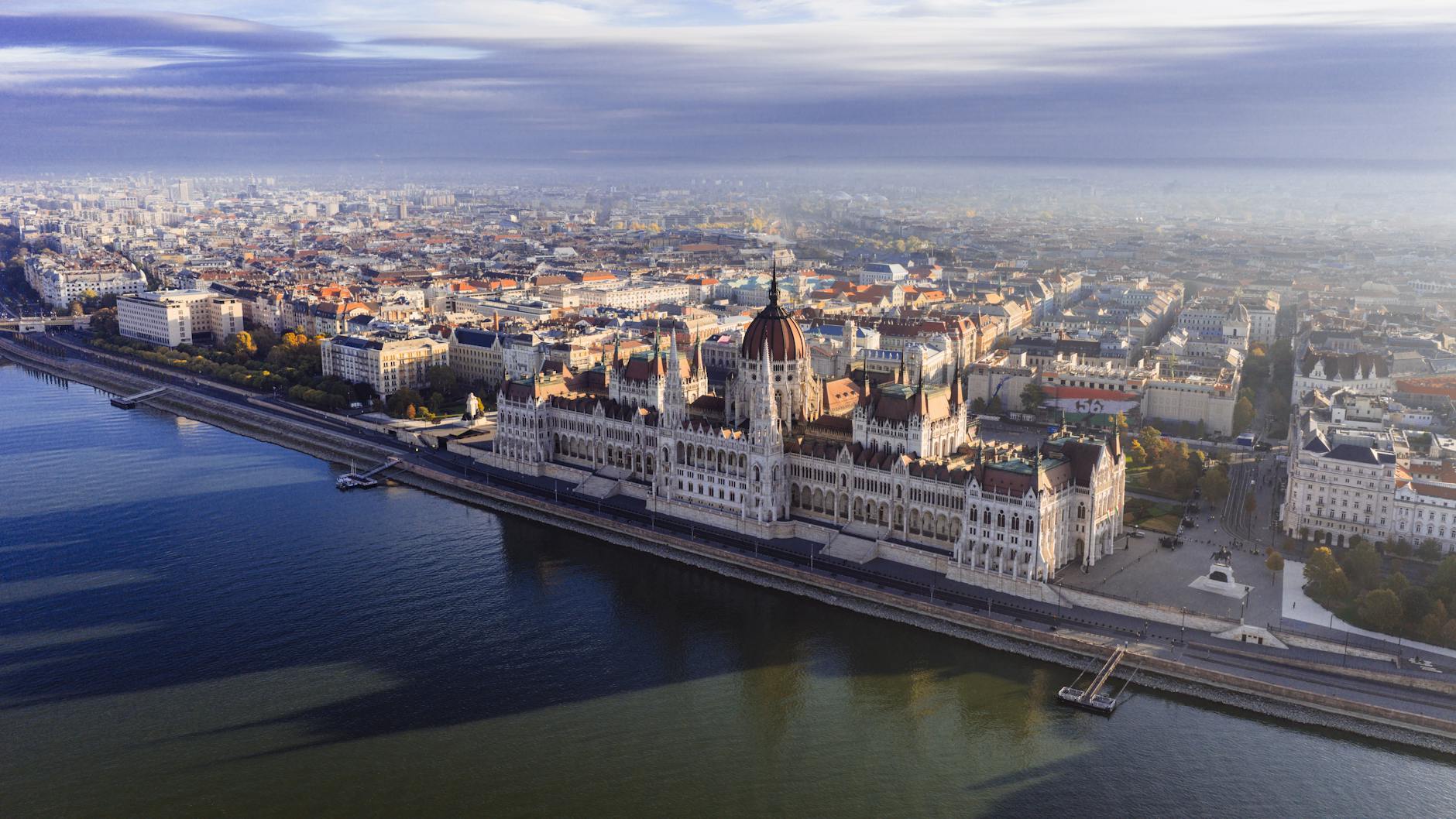
Yes, Viktor Orbán’s grip on Hungarian politics is measurably weakening. Recent election results, defections from his ruling coalition, and challenges to his control of key institutions suggest that even his carefully constructed political machine is vulnerable to erosion. For Donald Trump, this presents a direct cautionary tale: the authoritarian playbook that once seemed impervious to electoral pressure in Hungary—control of media, courts, and state resources—is proving less durable than it appeared. In Hungary’s 2024 European Parliament elections, Orbán’s Fidesz party saw its support decline, and within his own country, opposition parties are gaining traction through unconventional alliances and voter mobilization despite the structural advantages he built into the system.
The warning for Trump in 2028 is not that authoritarian control is impossible, but that it requires constant pressure, institutional loyalty that can fracture, and populations that ultimately tire of the model. Orbán’s eighteen-year dominance rested on specific conditions: European Union funding he could redirect to allies, a fragmented opposition he could outmaneuver, and control over state television and allied media. When those conditions changed—when EU funding threatened, when opposition parties coordinated, when some elites defected—the system showed real cracks. Trump’s potential second term would operate under different conditions than Orbán’s regime, but the pattern matters: concentrated power attracts resistance, institutional capture isn’t permanent, and electoral legitimacy remains harder to engineer than authoritarian leaders assume.
Table of Contents
- How Orbán’s Political Machine Began to Fracture
- The Structural Limits of Captured Institutions
- The Defection Problem in Authoritarian Coalitions
- What Trump Could Learn (and Mislearn) from Orbán’s Decline
- Institutional Resistance and the Cost of Suppression
- The Role of External Actors and International Pressure
- The Unpredictability of Democratic Systems and Forward-Looking Implications
- Conclusion
How Orbán’s Political Machine Began to Fracture
Orbán’s dominance in Hungary was built on what analysts call “illiberal democracy”—a system where elections occur but are structured to make the governing party nearly impossible to dislodge. He achieved this through gerrymandering, control of public media, manipulation of campaign finance, and the placement of loyalists throughout the judiciary and bureaucracy. For nearly two decades, this model worked. Fidesz won consecutive elections, sometimes with supermajorities that allowed Orbán to rewrite Hungary’s constitution and reorganize institutions at will. The fractures became visible when even structural advantages couldn’t prevent opposition gains. In local elections and European Parliament races, opposition parties and independent candidates improved their standing.
More tellingly, defections within Orbán’s own coalition began—some allies distanced themselves over rule-of-law concerns that threatened EU funding, while others sensed the political momentum shifting. The psychological shift matters as much as the numerical one: when elites believe the strongman’s dominance is permanent, they invest in loyalty. When they believe it might end, calculations change rapidly. A specific example is Orbán’s conflict with the European Union over judicial independence and press freedom. The EU began withholding billions in funding, making Orbán’s patronage network harder to maintain. Unable to distribute as many resources to loyalists and regional allies, his political coalition developed fissures that would have been unthinkable when state resources flowed freely. This suggests that for any authoritarian system, even one as well-constructed as Orbán’s, external constraints—or loss of resource control—can accelerate decline faster than internal opposition alone.

The Structural Limits of Captured Institutions
Orbán’s government attempted to consolidate power by capturing courts, media outlets, and the civil service. In theory, once an authoritarian controls these institutions, they become nearly impossible for opponents to challenge. In practice, institutional capture has significant limitations. Courts can be staffed with loyalists, but judges educated in law and influenced by international legal norms don’t always rule as directed. State television can promote the government, but it cannot entirely control information when opposition parties have alternative platforms—social media, international outlets, word-of-mouth networks. Civil servants can be incentivized to support the government, but they also have career interests that don’t always align with a single leader’s preferences. Hungary’s experience reveals another vulnerability: captured institutions become corrupt and inefficient. When the primary criterion for hiring is loyalty rather than competence, state agencies perform worse.
Infrastructure projects bloated with corruption become visible to voters. Courts full of partisan judges lose legitimacy, making people less likely to accept their verdicts. Over time, the authoritarians governing through these institutions face a tradeoff: maintain institutional capture and accept declining effectiveness, or allow some institutional independence and risk losing control. Orbán chose to maintain capture, and Hungary’s state capacity degraded as a result. A limitation of this comparison for the trump context: Hungary is a small, EU-member state vulnerable to economic pressure from Brussels. The United States has no comparable external authority that can withhold funding or threaten sanctions. Trump would face resistance from domestic institutions, not supranational ones. However, the core insight holds—once institutions are structured for one leader’s control, they become rigid and less effective, creating conditions where voters and elites eventually seek alternatives.
The Defection Problem in Authoritarian Coalitions
Every authoritarian system depends on a coalition of interests: oligarchs seeking monopolies, party functionaries seeking positions, military or security chiefs seeking resources and autonomy, and ordinary voters seeking tangible benefits or simply social order. Orbán built such a coalition by distributing state resources to oligarchs loyal to him, giving party positions to functionaries, and maintaining a patronage network deep into local government. For years, this coalition held because the benefits of staying aligned exceeded the costs of defection. In recent years, defections have increased. Some businesspeople invested in Orbán-aligned projects faced EU sanctions, making their assets less valuable. Some regional politicians saw voter preferences shifting away from Fidesz and positioned themselves as alternatives. Security apparatus loyalists faced international investigations for corruption.
The coalition’s internal logic weakened—staying with Orbán became more expensive and offered fewer guaranteed rewards. When coalition members believe the strongman’s dominance is certain, they stay. When they believe it’s at risk, they defect. A specific example: János Lázár, a longtime Orbán ally and minister, eventually distanced himself and later positioned himself in ways that suggested he was hedging against Fidesz’s continued dominance. This is not a dramatic defection, but it’s a signal—when top figures begin to hedge, others follow. The same pattern occurred in other authoritarian regimes, from the Philippines to Venezuela, where key coalition members began to defect when the leader’s invulnerability became questionable. For Trump, this suggests that maintaining a governing coalition depends not just on distributing rewards, but on ensuring coalition members believe the arrangement is stable long-term. Any sign of weakness—electoral vulnerability, legal liability, loss of institutional control—accelerates defections.

What Trump Could Learn (and Mislearn) from Orbán’s Decline
The most obvious lesson from Orbán’s experience is that even carefully constructed systems of control are vulnerable to collapse when external conditions change. Orbán’s dominance depended on specific factors: EU funding he could channel to allies, media landscape where state television could effectively suppress opposition coverage, an opposition too fragmented to coordinate, and international indifference to his illiberal practices. When those conditions shifted—when EU began enforcing rule-of-law conditions for funding, when social media provided opposition platforms, when opposition parties coordinated, when the International Criminal Court began investigating—his position weakened faster than many analysts expected. Trump’s potential second term would operate under different structural conditions. He would face a Congress that he cannot fully control, a judiciary with lifetime appointments that constrain executive power, a federal bureaucracy larger than the Hungarian government and harder to purge, and media pluralism embedded in first amendment protections.
The institutional constraints on presidential power in the United States are substantially greater than those on prime ministerial power in Hungary. This doesn’t mean Trump couldn’t attempt to push those constraints, but it means the effort would face different obstacles than Orbán faced. A key tradeoff worth considering: Orbán’s system was brittle. By concentrating power, eliminating checks, and making institutions serve a single leader, he gained speed in governance but lost adaptability and legitimacy. When conditions changed, the system couldn’t adjust because all authority flowed from one source. A different model—maintaining institutional pluralism, genuine separation of powers, competitive elections—produces slower decision-making but greater resilience. The lesson for Trump is not whether he can govern like Orbán (the institutions of the US make this harder), but whether attempting to do so would be self-defeating in the longer term, requiring constant effort to suppress inevitable resistance.
📨 Get Free Accountability Coverage Alerts
Free · No spam · Unsubscribe anytime
Institutional Resistance and the Cost of Suppression
Maintaining an authoritarian system requires constant suppression of resistance. Courts must be staffed with loyalists and monitored. Media outlets must be intimidated or purchased. Opposition politicians must be prosecuted, harassed, or co-opted. Bureaucrats must be monitored for disloyalty. The effort is ongoing and expensive—in money, in moral authority, and in the regime’s focus. Orbán’s government devoted enormous energy to these tasks, which meant less energy available for actual governance. The system consumed itself. This pattern appeared in numerous authoritarian regimes.
The cost of suppression increases over time because resistance doesn’t disappear—it adapts and finds new channels. Social media made it harder to suppress opposition messaging. European courts, despite Orbán’s attempts at influence, sometimes ruled against his government. International actors provided platforms for opposition voices. Each adaptation by the resistance required new suppression efforts, creating an escalating cycle. The regime became increasingly focused on maintaining control and less on actual policy outcomes. A warning for any leader pursuing this model: the transition point often comes suddenly. A regime can appear stable for years—Orbán seemed invulnerable in 2015, 2018, 2022—before conditions shift rapidly. The shift is often triggered by something apparently minor: a coalition partner defection, an unexpected electoral showing, loss of a key external patron, or an event that triggers massive opposition mobilization. At that point, all the institutions that were captured become vulnerabilities rather than assets, because they lack the legitimacy to suppress opposition and the competence to solve the problems opposition is highlighting.
The Role of External Actors and International Pressure
Orbán’s decline accelerated when international actors—primarily the European Union—began conditioning aid on rule-of-law concerns. Hungary receives substantial EU funding, which Orbán had redirected to allies and loyalists. When that funding was threatened, Orbán lost a crucial tool for maintaining his coalition. International sanctions, investigations by the International Criminal Court, and diplomatic pressure from EU and NATO allies didn’t directly overthrow Orbán, but they constrained his options and signaled to his coalition that his position was becoming more precarious. For Trump, the international context is dramatically different. The United States is not dependent on international organizations for funding.
Trump’s potential adversaries cannot threaten to withhold aid that his government needs. NATO allies depend on U.S. security guarantees, not the reverse. This suggests that international pressure would be a far less effective constraint on Trump than it was on Orbán. However, international actors could still matter through secondary channels—sanctions on allies, withdrawal from alliances, or economic disruption could create domestic pressure. The broader point is that authoritarian leaders are more vulnerable when operating within international systems that can apply pressure. Operating outside those systems (or being willing to exit them) provides more freedom of action.
The Unpredictability of Democratic Systems and Forward-Looking Implications
Orbán’s decline illustrates something often missed in discussions of authoritarianism: democratic systems are inherently unpredictable in ways authoritarian systems try to suppress. Elections can surprise even careful analysts. Voter preferences shift. Unexpected events trigger cascading effects. Orbán thought he had engineered elections to be impossible to lose, but he didn’t fully account for voter determination to find ways to express opposition despite structural obstacles, or for the ways opposition parties would coordinate despite advantages for fragmentation. Looking forward, Hungary’s experience suggests that even well-constructed authoritarian systems have expiration dates.
The question for observers of U.S. politics is whether institutional constraints in the American system—separation of powers, judicial independence, bureaucratic professionalism, electoral legitimacy—are sufficient to prevent the kinds of power concentration Orbán achieved. The U.S. has stronger institutions but is not immune to erosion of those institutions. The comparative warning is that once erosion begins, it can accelerate quickly, and the reversal requires significant political energy and risk. Orbán’s declining grip doesn’t prove that authoritarianism is impossible, but it does show that it’s more fragile than it appears from the inside.
Conclusion
Viktor Orbán’s weakening position in Hungarian politics is a warning to Trump not because the same dynamics will necessarily play out identically in the United States, but because they show that even carefully engineered systems of political control have structural vulnerabilities. Orbán’s dominance appeared invulnerable when external conditions favored it, but when those conditions shifted—EU pressure on funding, opposition coordination, coalition defections, international scrutiny—his position eroded faster than many expected. The decline wasn’t caused by a single dramatic event but by the accumulation of pressures that exposed the brittleness of concentration.
For Trump in 2028, the relevant lessons are these: institutional capture requires constant effort and carries long-term costs to system effectiveness; coalition members defect when they perceive weakness; external constraints matter less in the U.S. context but internal resistance is harder to suppress than in smaller democracies; and democratic systems retain unpredictability that even well-designed authoritarian structures cannot fully eliminate. Hungary’s experience is not a prediction of what will happen in the United States, but a documented case study of how systems that appear permanent can become vulnerable to change.
You Might Also Like
- Trump Says He Will Tax remittances sent abroad. Here’s what that could do to immigrant families
- Trump Says He Will Remove Regulations on homebuilding. Here’s Which Rules Are Local
- Trump Says He Will Overhaul Medicare Advantage payments. Here’s the reimbursement system