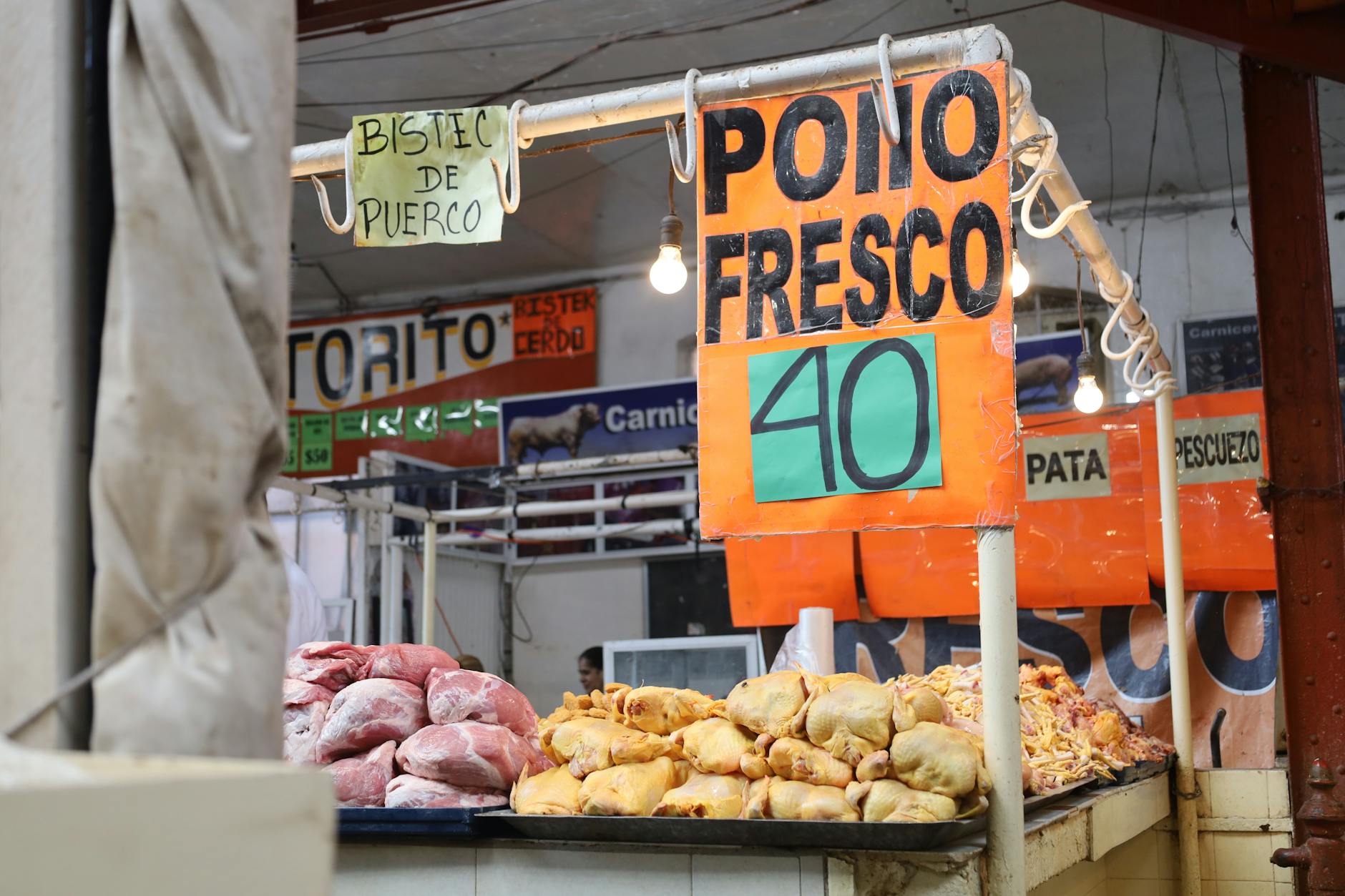
The antitrust data tells a complicated story that doesn’t fully support Trump’s price-fixing claims. While the Trump administration has ordered investigations into grocery chain pricing practices and issued an executive order in December 2025 addressing “price fixing and anti-competitive behavior in the food supply chain,” actual grocery inflation data shows more modest increases than accusations of systematic collusion would suggest. In February 2026, food prices at supermarkets rose just 2.4% year-over-year—well below overall inflation rates and far less dramatic than headlines about “price gouging” would lead consumers to believe. The market does show legitimate concentration concerns.
The top four grocery retailers control more than 30% of national market sales, and upstream in meatpacking, the Big Four processors controlled 85% of beef processing, 53% of chicken, and 67% of pork production as of 2019. However, concentration alone doesn’t prove active collusion, and actual price data shows something more complex: select items like eggs have fallen sharply (down 42.1% in February 2026 versus the prior year), while other categories remain elevated. The FTC did uncover some problematic conduct during the pandemic—threats and penalties imposed on suppliers—but this is different from the broad price-fixing claims now being investigated. The real question is whether Trump’s framing of a price-fixing scandal matches what the data actually shows, or whether he’s exploiting legitimate market structure concerns to address a more modest pricing problem.
Table of Contents
- WHAT DID TRUMP ACTUALLY ORDER, AND WHAT HAPPENED BEFORE?
- WHAT DOES MARKET CONCENTRATION DATA ACTUALLY SHOW?
- WHAT DOES THE ACTUAL PRICE DATA REVEAL?
- DID THE FTC ACTUALLY FIND EVIDENCE OF PRICE FIXING?
- WHY DID THE TRUMP ADMINISTRATION DROP THE PREVIOUS CASE?
- WHAT ABOUT UPSTREAM MARKET CONCENTRATION IN MEATPACKING?
- WHAT COMES NEXT FOR THE ANTITRUST INVESTIGATION?
- Conclusion
WHAT DID TRUMP ACTUALLY ORDER, AND WHAT HAPPENED BEFORE?
On December 6, 2025, President trump signed an executive order directing the Department of Justice and Federal Trade Commission to investigate price-fixing in the food industries. The White House fact sheet positioned this as a national security priority, linking food supply chain stability to broader economic security concerns. This order came at a moment when grocery prices remained an active political concern, with consumers feeling the lingering effects of inflation that peaked in 2022. What complicates this narrative is that the Trump administration had previously *dropped* an FTC investigation into price-fixing allegations.
In May 2025, the Trump administration terminated an FTC lawsuit against Pepsi and Walmart that alleged anti-competitive conduct in the food distribution supply chain. The details of this lawsuit were not fully public until December 2025, when documents were unsealed—but the basic fact is stark: the administration simultaneously abandoned an investigation into grocery industry misconduct while launching a new, broader investigation into price-fixing. The dropped case involved claims about exclusive dealing arrangements and competitive behavior that prosecutors had deemed serious enough to pursue, yet the administration chose not to continue the fight. This reversal raises questions about whether the December 2025 executive order represents a genuine policy shift or a political pivot designed to address consumer complaints about grocery prices without necessarily committing to the kind of sustained antitrust enforcement that would require litigating complex cases.

WHAT DOES MARKET CONCENTRATION DATA ACTUALLY SHOW?
High market concentration in grocery retail and meatpacking is real and documented. The top four grocery chains control more than 30% of national grocery sales, a figure that has held relatively steady since at least 2019. Upstream, the concentration is even more dramatic: the four largest beef packers controlled 85% of beef processing capacity, the four largest chicken processors controlled 53% of chicken processing, and the four largest pork packers controlled 67% of pork processing in 2019. These figures come from FTC analyses and represent genuine structural advantages that allow large suppliers to negotiate favorable terms with retailers. However, high concentration is not the same as active price-fixing.
Concentration creates the *opportunity* for anticompetitive behavior, but it doesn’t prove the behavior occurs. The FTC’s 2024 supply chain report did find that some large retailers exploited their power during the COVID-19 pandemic—imposing strict delivery requirements, threatening fines on suppliers, and in some cases re-imposing penalties during supply disruptions. This conduct was real and documented, but it was supplier-directed behavior during a specific crisis period, not a systematic price-fixing scheme aimed at consumers over an extended period. A limitation of focusing on these pandemic-era actions is that supply chains have since normalized, yet prices remain elevated, suggesting that other factors (commodity costs, labor, logistics) may play a larger role in current pricing than active collusion. The proposed Sysco-US foods merger was blocked partly over concentration concerns—the merger would have created a broadline food distributor with 59% national market share and even higher local concentrations (63-90% in specific markets). This blocking decision suggests the FTC recognizes that concentration can facilitate anticompetitive behavior, but it also indicates the agency takes market structure seriously as a preventive measure rather than waiting for evidence of active collusion.
WHAT DOES THE ACTUAL PRICE DATA REVEAL?
Recent grocery price inflation is real but significantly more modest than “price-fixing” rhetoric suggests. In 2024, overall food inflation was 2.3%, but food purchased at supermarkets (rather than restaurants) rose only 1.2%. In 2025, overall food inflation was 3.1%, but groceries specifically increased 2.4%. By February 2026, grocery prices were up 2.4% year-over-year. These are not trivial increases, but they are not the explosive, across-the-board price surges that would be expected if major chains were actively colluding on pricing. More telling is the variation within grocery categories.
Eggs—a staple tracked closely by consumers—actually fell 42.1% in February 2026 compared to February 2025. This dramatic decline in a single high-profile food item directly contradicts a narrative of systematic price-fixing across the industry. If major grocers were genuinely coordinating prices upward, commodity items with active price discovery (like eggs) would be among the hardest to manipulate, yet we see sharp declines. Other categories have remained elevated, but this reflects a mix of factors: lingering supply chain disruptions, commodity price movements, labor cost increases, and transportation expenses. Compared to pre-pandemic prices in 2019, consumers are paying approximately 32% more per month on average for groceries. This is substantial and has clear political salience, but it spans a period of significant macroeconomic disruption. The question is whether this gap reflects collusion or the cumulative effect of supply chain stress, commodity inflation, and labor market tightening—all factors that would raise costs without requiring industry coordination.

DID THE FTC ACTUALLY FIND EVIDENCE OF PRICE FIXING?
The FTC’s investigations and reports have not concluded that systematic price-fixing occurred among grocers, either before or after the pandemic. What they *did* find during the pandemic was that large retailers exercised market power in ways that harmed suppliers. Some retailers imposed strict delivery requirements, demanded price concessions, threatened penalties, and in some cases re-imposed these penalties when supply was tight and other distributors couldn’t easily substitute. This is anticompetitive conduct, but it’s directed upward (toward suppliers) rather than downward (toward consumers through coordinated pricing). The distinction matters because supplier-directed conduct, while harmful to competition, doesn’t necessarily result in higher consumer prices.
In fact, a retailer that uses its power to extract concessions from suppliers might pass some savings to consumers, or might raise prices and keep the margin. The FTC report doesn’t establish that pandemic-era conduct by retailers resulted in inflated consumer prices; it documents that some retailers used market power aggressively. Without evidence of coordination among major retailers on consumer pricing, claims of “price-fixing” in the formal antitrust sense are difficult to support. The practical limitation here is that proving price-fixing requires either direct evidence of coordination (communications, meetings, agreements) or strong circumstantial evidence of parallel behavior that couldn’t plausibly result from independent competitive decisions. High prices alone don’t prove collusion. Rising prices that exceed inflation in other sectors deserve investigation, but investigation isn’t the same as proof, and the current data doesn’t strongly point to coordinated price-fixing as the primary cause of elevated grocery costs.
📨 Get Free Accountability Coverage Alerts
Free · No spam · Unsubscribe anytime
WHY DID THE TRUMP ADMINISTRATION DROP THE PREVIOUS CASE?
The details of the dropped Pepsi-Walmart price-fixing lawsuit were unsealed in December 2025, offering some insight, but the basic question remains: why would the administration terminate an existing FTC investigation while simultaneously announcing a new, broader inquiry into the same issue? One plausible explanation is that the previous case, focused on a specific company pair and specific conduct, may have had evidentiary weaknesses or legal obstacles that the Trump administration determined weren’t worth pursuing. Another explanation is political positioning. Continuing a narrow, technical antitrust case against Pepsi and Walmart—both large, employment-providing corporations—might not have appealed to an administration skeptical of aggressive antitrust enforcement against American companies. Yet responding to consumer complaints about grocery prices required a visible policy response.
A broad executive order directing investigation into “price-fixing and anti-competitive behavior in the food supply chain” allows the administration to appear responsive without necessarily committing to the kind of sustained litigation that might implicate companies that support Republican political causes or employ workers in key districts. A warning for consumers and policymakers: executive orders directing investigations are not the same as enforcement actions. The DOJ and FTC conducting an investigation may result in settlements (which often include minor behavioral changes and token financial penalties), actual litigation (which takes years), or findings of no violation. The order itself is politically symbolic; the real test is what the agencies do with it and whether they pursue cases that might prove unpopular with the administration’s political base.

WHAT ABOUT UPSTREAM MARKET CONCENTRATION IN MEATPACKING?
Meatpacking represents the clearest case for concentration-driven anticompetitive concern in the food supply chain. The Big Four beef packers control 85% of processing capacity, and similar patterns hold for chicken and pork. This concentration is documented, stable, and creates genuine leverage in negotiating with farmers and retailers. When four companies control 85% of an essential food processing market, they have the ability to set prices and terms that smaller competitors cannot challenge.
During the pandemic, meatpacking became a flashpoint for both supply disruptions and price volatility. Processing plants closed due to COVID outbreaks, tightening supply and raising prices. Some observers attributed price spikes to deliberate output reduction by large packers to maintain margins, but direct evidence of collusion in output reduction was limited. What was clear is that the market structure allowed large processors to maintain pricing power during disruptions that would have been impossible in a more competitive market. This is not price-fixing in the legal sense, but it is concentration-enabled pricing power, which carries many of the same consumer harm concerns.
WHAT COMES NEXT FOR THE ANTITRUST INVESTIGATION?
The December 2025 executive order initiating the price-fixing investigation sets a process in motion, but the timeline and likely outcomes remain uncertain. FTC investigations typically take 6 to 18 months before conclusions are reached, and prosecutable cases often take years of litigation. If the investigation produces settlement agreements, expect remedies focused on behavior changes (end certain pricing practices, increase transparency) rather than structural relief (forced divestitures).
If it produces major litigation, the cases will almost certainly extend beyond Trump’s current term, potentially exposing them to inconsistent enforcement priorities across administrations. The broader question is whether this investigation represents a shift toward more aggressive food industry antitrust enforcement, or a one-term political response to consumer discontent that will lose momentum once grocery prices stabilize or other issues dominate headlines. The fact that Trump’s administration dropped a previous food industry price-fixing case in May 2025, only to announce a broader investigation seven months later, suggests the commitment to this issue may be more flexible than the rhetoric suggests.
Conclusion
Trump’s claims about price-fixing in grocery chains identify a real problem—market concentration is high, some retailers exercised power aggressively during the pandemic, and consumers are paying significantly more for groceries than they did in 2019. However, the antitrust data does not establish systematic, ongoing price-fixing as the primary cause of current grocery prices. Recent inflation in groceries (2.4% year-over-year as of February 2026) is meaningful but more modest than accusations of collusion would predict, and some key items like eggs have fallen sharply.
The FTC has documented supplier-directed anticompetitive conduct but has not concluded that coordinated pricing among major retailers is occurring. The practical question for consumers and policymakers is what to expect from the investigation announced in December 2025. Real enforcement could improve market competition and pricing, but the administration’s previous decision to drop a narrower antitrust case suggests that political and economic considerations may influence how aggressively these investigations proceed. For now, elevated grocery prices reflect a mix of legitimate factors—concentrated market structure, supply chain stress, commodity costs, and labor expenses—that require investigation but don’t currently point conclusively to active collusion.
You Might Also Like
- Trump Claims Manufacturing Plants Are “Fleeing the U.S.” Here’s the Latest Investment Data
- Trump Claims Grocery Inflation Is the Highest Since the 1970s. Here’s the Data
- Trump Claims Food Prices Are “Out of Control Everywhere.” Here’s the Regional CPI Data