
Everybody has it. That is the honest answer heading into spring 2026. The term “Trump Derangement Syndrome” was once a weapon aimed squarely at liberal critics who couldn’t stop talking about the 45th (and now 47th) president. But the evidence — from peer-reviewed research, polling data, a sitting Democratic senator’s public confession, and the behavior of Trump’s own allies — points to a straightforward conclusion: irrational, reflexive, identity-driven reactions to Donald Trump are not confined to one side of the aisle.
When Sen. John Fetterman goes on the “All-In” podcast and declares that “TDS is the leader of the Democratic Party right now,” and Trump himself calls the Supreme Court a “weaponized and unjust Political Organization” after it rules against him, you are not looking at a one-party affliction. You are looking at a mirror. This article digs into who actually has TDS in 2026, what the research says (spoiler: the academic data contradicts the popular narrative), what Congress is literally trying to do about it, and why Trump’s approval ratings suggest the country’s frustration is not derangement at all — it is something far more ordinary. We will also examine the Supreme Court battles fueling rage on both sides and what psychologists say is actually happening inside the brains of partisans who cannot engage with Trump-related policy on its merits.
Table of Contents
- What Is Trump Derangement Syndrome and Who Actually Has It in 2026?
- What Does the Peer-Reviewed Research Actually Say About TDS?
- Fetterman, the Democrats, and the Leadership Vacuum
- Trump’s Approval Ratings — Derangement or Just Disapproval?
- The Supreme Court Fight That Proves Both Sides Have Lost the Plot
- Congress Wants to Literally Study TDS — No, Really
- Where Does the TDS Debate Go From Here?
- Conclusion
- Frequently Asked Questions
What Is Trump Derangement Syndrome and Who Actually Has It in 2026?
Let’s start with what TDS is not: a real medical condition. It does not appear in any edition of the Diagnostic and Statistical Manual of Mental Disorders. The American Psychiatric Association does not recognize it. No clinician in any U.S. jurisdiction can diagnose you with it.
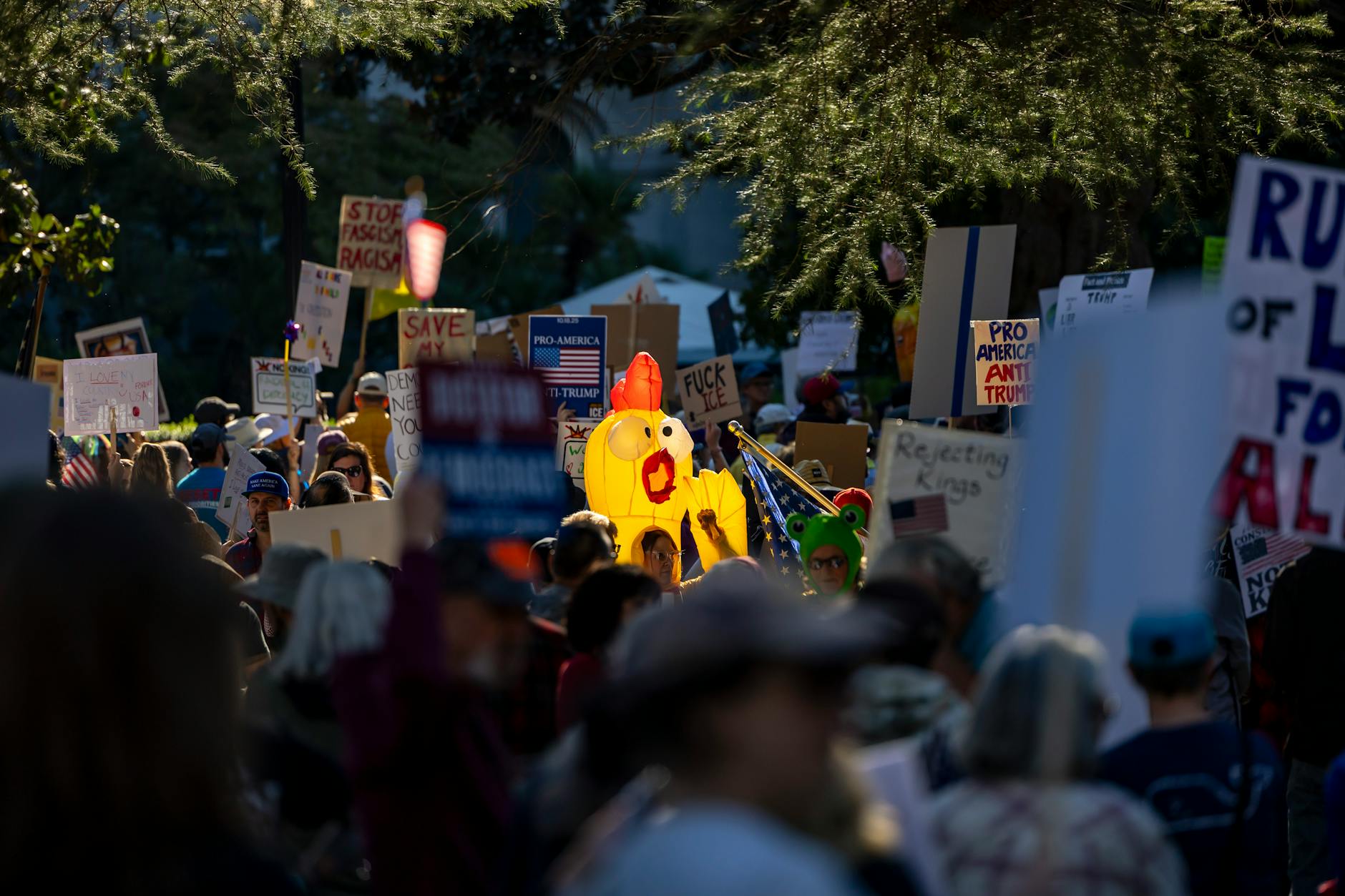
The phrase was adapted from “Bush Derangement Syndrome,” coined by conservative columnist and psychiatrist Charles Krauthammer in 2003 to describe liberals’ outsized reactions to George W. Bush. It was always a rhetorical device, not a clinical observation. By 2026, the term has been stretched so far that it describes almost nothing — or everything. A March 17, 2026 op-ed in the San Diego Union-Tribune argued that TDS is a “bipartisan phenomenon,” pointing out that trump supporters exhibit their own form of derangement in defending him unconditionally and suggested they “look in the mirror.” The same day, Flat Hat News published an article describing TDS as “collective bipartisan insanity,” arguing that Trump’s continued dominance of American politics has driven irrational behavior across the entire political spectrum. The term that was invented to shut down one side’s critics now applies just as cleanly to the other side’s loyalists — which means it has effectively lost any diagnostic value it never had in the first place.
What Does the Peer-Reviewed Research Actually Say About TDS?
Here is where the popular narrative runs headfirst into data. A peer-reviewed study published in the journal Societies examined whether people on the left reflexively opposed Trump regardless of policy substance — the core claim behind TDS as it is traditionally used. The findings were striking: Trump supporters consistently shifted their own attitudes to match Trump’s stated positions, even when those positions changed. Meanwhile, Trump’s strongest detractors did not reflexively oppose him. The researchers concluded that their results “do not support the broad existence of so-called ‘Trump Derangement Syndrome’ on the left.” Read that again. The academic evidence suggests that the group most likely to abandon their own previously held views in order to align with one man’s statements is not the opposition.
It is the base. This does not mean every Trump supporter is irrational, and it certainly does not mean every Trump critic is operating from pure reason. But it does mean the popular deployment of “TDS” — as a label aimed exclusively at the left — has the direction of the phenomenon backwards, at least according to the only controlled study that has bothered to test the hypothesis. However, a significant limitation applies here: one study is not a settled consensus. The research measured attitude shifts on specific policy questions and cannot capture the full range of behaviors people associate with TDS, including protest tactics, social media pile-ons, or the inability to discuss any topic without pivoting to Trump. The study tells us something important, but it does not tell us everything.
Fetterman, the Democrats, and the Leadership Vacuum
No moment in 2026 crystallized the TDS debate more than Sen. John Fetterman’s appearance on the “All-In” podcast in March. Fetterman, a Democrat from Pennsylvania, did not mince words: “We don’t have [a leader]… the TDS, that’s the leader right now. Our party is governed by the TDS. And now it’s made it virtually impossible without being punished as a Democrat to agree something’s good or ‘I agree with the other side.'” Fetterman pointed to a specific example. He claimed to be the “only” Democrat in congress who publicly supported Operation Epic Fury — the U.S.-Israeli strikes that killed Iranian Supreme Leader Ali Khamenei on February 28, 2026.
Whether or not you support that operation, Fetterman’s argument was not really about Iran. It was about the Democratic Party’s inability to evaluate any Trump administration action on its merits without first filtering it through partisan identity. In Fetterman’s framing, TDS has become an organizational principle: oppose first, think later, punish anyone who breaks ranks. This is a significant indictment coming from inside the party, and it lands differently than the same accusation lobbed by a Republican. Fetterman is not claiming Democrats are mentally ill. He is claiming they are strategically paralyzed — that the reflex to oppose Trump on everything has replaced the harder work of deciding what to oppose and what to support. Whether his fellow Democrats agree with that assessment is another matter, but the fact that a sitting senator is publicly making it tells you something about the state of the party’s internal debate.

Trump’s Approval Ratings — Derangement or Just Disapproval?
One of the most important questions buried inside the TDS debate is whether widespread opposition to Trump reflects irrational hysteria or straightforward political disagreement. The polling data from March 2026 suggests the latter is at least plausible. Nate Silver’s aggregate from mid-March 2026 shows Trump at 40.9 percent approval against 54.7 percent disapproval — a net rating of negative 13.9. The Quinnipiac poll from March 6-8 was harsher: 37 percent approve, 57 percent disapprove, for a net of negative 20. For context, Trump is less popular at this point in his second term than he was at the same point in his first term, when his net approval sat at negative 12.5. He is also less popular than Biden was at the equivalent point, when Biden’s net was negative 9.3.
These are not numbers that suggest a small, deranged fringe is driving opposition. A majority of Americans disapprove of the job Trump is doing, and that majority is larger than the one that disapproved of Biden — a president whose approval ratings were themselves treated as historically bad. The tradeoff in this argument is obvious. Approval ratings measure broad sentiment, not the intensity or rationality of that sentiment. You can disapprove of a president for perfectly coherent policy reasons, or you can disapprove because you have constructed an identity around opposition. Polling does not distinguish between the two. But the sheer scale of disapproval — consistently above 54 percent across multiple pollsters — makes it difficult to write off the opposition as a psychological disorder rather than a political one.
The Supreme Court Fight That Proves Both Sides Have Lost the Plot
If you want a case study in how TDS operates on both sides simultaneously, look at the Supreme Court battles of early March 2026. After the Court struck down Trump’s signature global tariffs, Trump publicly attacked the institution, calling it a “weaponized and unjust Political Organization.” This is a president describing a co-equal branch of government — one that includes three justices he personally appointed — as a corrupt political weapon, because it ruled against him. On the other side, when the Supreme Court agreed to hear cases on terminating Temporary Protected Status for roughly 350,000 Haitians and 6,000 Syrians, the reaction from Trump critics treated the Court’s willingness to even hear the case as proof of institutional capture — despite the fact that the Court declined Trump’s request to immediately lift injunctions blocking his policy, which was actually a setback for the administration. Oral arguments are not scheduled until late April 2026, but the reaction on both sides has already been set to maximum outrage.
This is the warning: when both the president and his opponents treat the Supreme Court as an enemy whenever it does something they dislike, you are not watching one side succumb to derangement. You are watching a shared institutional crisis in which political identity has become so consuming that no neutral arbiter is acceptable to anyone. That is not TDS. That is something worse.

Congress Wants to Literally Study TDS — No, Really
In case you thought the TDS discourse could not get more absurd, on May 15, 2025, H.R. 3432 — the “TDS Research Act of 2025” — was introduced in the 119th Congress. The bill directs the National Institutes of Health to research Trump Derangement Syndrome as “a behavioral or psychological response to Donald J. Trump,” including identifying its earliest cases, long-term psychological impacts, contributing factors like media exposure and political dynamics, and potential interventions.
📨 Get Free Accountability Coverage Alerts
Free · No spam · Unsubscribe anytime
It requires annual reports to Congress starting two years after enactment and was referred to the House Committee on Energy and Commerce. Set aside your opinion on Trump for a moment and consider what this means: members of Congress used legislative time and taxpayer-funded institutional resources to propose that the NIH study a term that is not recognized by any medical or psychological authority. Whether you find this funny, alarming, or politically savvy depends on your priors, but it is worth noting that the bill treats TDS as something that happens to Trump’s opponents — not his supporters. The peer-reviewed research cited above suggests that framing may have it exactly backwards.
Where Does the TDS Debate Go From Here?
Psychologists who have weighed in on TDS frame it through established concepts: confirmation bias, the Dunning-Kruger effect, and social identity theory — the idea that people derive self-worth from political affiliation, which creates in-group favoritism and out-group hostility on both sides. Critics of the term argue that it “ends debate without engaging substance” by replacing argument with accusation. In other words, calling someone deranged is easier than explaining why they are wrong. Looking ahead, the TDS label is unlikely to disappear.
It is too useful as a rhetorical weapon for partisans on both sides — and yes, both sides now use it. But the 2026 version of the conversation is different from the 2017 version in one critical way: there is now enough data, enough polling, and enough intra-party dissent (thanks, Senator Fetterman) to say with confidence that reflexive, identity-driven reactions to Trump are a bipartisan condition. The question is no longer who has TDS. The question is whether American politics can function when most of its participants have decided that engaging with the other side’s arguments is a form of betrayal.
Conclusion
Trump Derangement Syndrome is not a medical condition, and it never was. It is a label that started as a partisan weapon, evolved into a bipartisan accusation, and now describes something closer to a national condition: the inability to evaluate Trump-related policy on its merits, detached from tribal identity. The peer-reviewed research does not support TDS as a left-wing phenomenon. Fetterman’s public break with his own party suggests the Democratic leadership vacuum is real. Trump’s attacks on the Supreme Court after adverse rulings show the same pattern in reverse.
And approval ratings in the high 30s to low 40s suggest that most Americans who disapprove of this president are not deranged — they just disagree. The most useful takeaway is not about Trump at all. It is about the reflexive, identity-first mode of political engagement that has consumed both parties. When a sitting senator says his party is “governed by TDS,” and the president calls the Supreme Court a political weapon for ruling against him, the syndrome — if we insist on calling it that — belongs to everyone. The only cure is the one nobody wants to take: evaluating each policy, each action, and each decision on its own terms, even when the person behind it makes your blood boil.
Frequently Asked Questions
Is Trump Derangement Syndrome a real mental health diagnosis?
No. TDS does not appear in any version of the DSM, is not recognized by the American Psychiatric Association, and cannot be diagnosed by any clinician. The term was adapted from “Bush Derangement Syndrome,” coined by Charles Krauthammer in 2003, and has always been a rhetorical label rather than a clinical one.
What did the peer-reviewed research find about TDS?
A study published in the journal Societies found that Trump supporters consistently shifted their attitudes to match Trump’s positions, while Trump’s strongest detractors did not reflexively oppose him. The researchers concluded their results “do not support the broad existence of so-called ‘Trump Derangement Syndrome’ on the left.”
What is the TDS Research Act of 2025?
H.R. 3432, introduced on May 15, 2025, directs the NIH to research TDS as “a behavioral or psychological response to Donald J. Trump.” It was referred to the House Committee on Energy and Commerce and would require annual reports to Congress starting two years after enactment.
What did Sen. Fetterman say about TDS?
On the “All-In” podcast in March 2026, Fetterman said “TDS is the leader of the Democratic Party right now,” arguing that reflexive opposition to everything Trump does has paralyzed Democratic leadership and made it “virtually impossible without being punished as a Democrat to agree something’s good.”
What are Trump’s current approval ratings?
As of mid-March 2026, Nate Silver’s aggregate shows 40.9 percent approval and 54.7 percent disapproval (net negative 13.9). A Quinnipiac poll from March 6-8, 2026 showed 37 percent approval and 57 percent disapproval (net negative 20). Both are worse than his first-term numbers at the same point.
Do psychologists take TDS seriously?
Psychologists do not recognize TDS as a diagnosis, but they use established frameworks — confirmation bias, Dunning-Kruger effect, and social identity theory — to explain the hyper-partisan behavior the term describes. Many critics argue the label “ends debate without engaging substance” by substituting accusation for argument.
You Might Also Like
- Trump 2026 State of the Union: What Time, How to Watch Live
- Trump Would Like the Government to Pay Him Billions…$10B CBS Lawsuit, $5B JPMorgan Demand
- Trump Delivers State of the Union Tonight as DHS Shutdown Enters Its Second Week