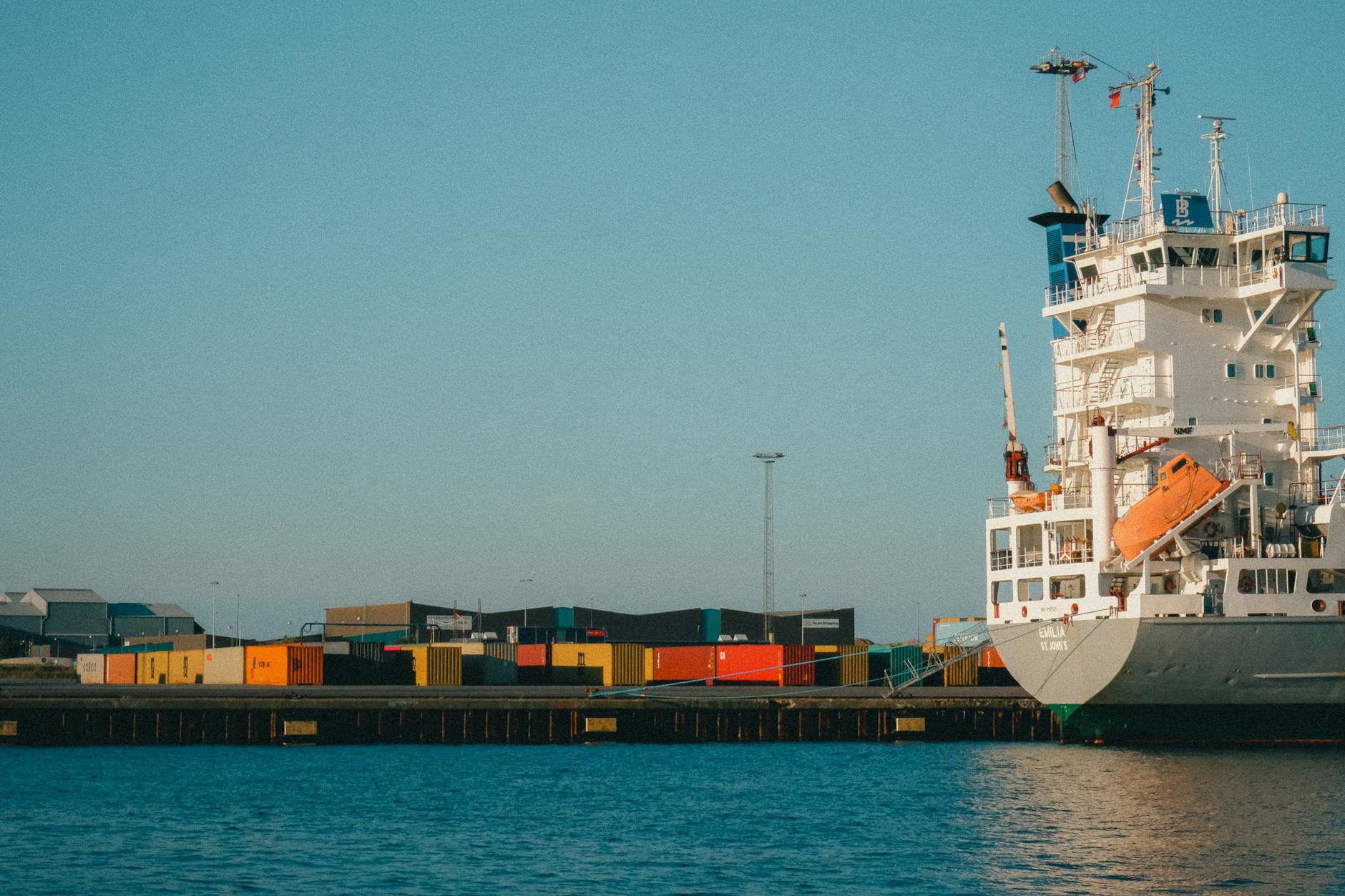
Yes, commercial shipping through the Strait of Hormuz has ground to a near-total halt. Following the joint U.S.-Israeli military strikes on Iran on February 28, 2026 — which included the killing of Supreme Leader Ali Khamenei — major shipping lines including Maersk, Hapag-Lloyd, and CMA CGM have suspended all vessel transits through the strait. Tanker traffic initially dropped roughly 70 percent before falling to essentially zero as Iranian retaliatory attacks intensified. More than 300 ships are now stranded in the Persian Gulf, and over 150 vessels have anchored outside the strait rather than risk passage without armed protection.
The standstill has triggered what analysts are calling the 2026 Strait of Hormuz crisis, with oil prices surging past $100 per barrel and the International Energy Agency releasing 400 million barrels from strategic reserves in an unprecedented emergency measure on March 11. Iran’s Islamic Revolutionary Guard Corps has issued explicit warnings prohibiting all vessel passage, with an IRGC spokesperson declaring that “not a litre of oil” would pass through the strait. The Trump administration has announced plans for a military escort operation — dubbed “Operation Epic Escort” — but a top official confirmed as recently as March 12 that the U.S. military is “not ready” to begin escorting commercial ships, with the Navy saying escorts won’t start for weeks. This article examines why commercial carriers are refusing to transit without military protection, the logistical and military obstacles standing in the way of escort operations, the economic fallout already rippling through global markets, and what the realistic timeline looks like for any return to normal shipping through one of the world’s most critical chokepoints.
Table of Contents
- Why Are Commercial Ships Refusing to Enter the Persian Gulf Without Military Escort?
- How Much Oil and Trade Flows Through the Strait of Hormuz — and What Happens When It Stops?
- Operation Epic Escort — What the U.S. Military Is Planning and Why It Is Not Ready
- The Cost Problem — When Military Escorts Are More Expensive Than the Cargo
- Why International Allies Are Not Rushing to Help
- What Stranded Ships and Crews Are Facing Right Now
- When Will Shipping Through the Strait of Hormuz Resume?
- Conclusion
- Frequently Asked Questions
Why Are Commercial Ships Refusing to Enter the Persian Gulf Without Military Escort?
The answer is straightforward: the risk of destruction is too high, and no insurer will cover it. After Iran’s IRGC launched retaliatory missile and drone attacks on shipping lanes and explicitly warned that no vessel would be permitted to pass, the commercial calculus shifted overnight. Maersk, the world’s second-largest container shipping company, suspended all vessel crossings through the Strait of Hormuz “until further notice.” Hapag-Lloyd followed immediately, citing “safety and security of its crews.” CMA CGM went further, instructing all vessels already inside the Gulf and those bound for the region to proceed to shelter positions rather than attempt transit. These are not small or risk-averse companies. They operate in contested waters around the world, including through the Red Sea during the Houthi attacks of 2024. The fact that all three major carriers simultaneously pulled out signals a threat assessment well beyond what commercial operators are willing to absorb. Ships are now explicitly waiting for the U.S.
to declare a safe passageway before resuming any transit. The U.S. Maritime Administration (MARAD) issued Advisory 2026-001A covering the Strait of Hormuz, persian Gulf, Gulf of Oman, and Arabian Sea, effectively confirming the danger zone extends well beyond the strait itself. The human cost is already significant. At least 15,000 cruise passengers are stranded on six major cruise ships that were caught inside the Gulf when the crisis erupted. For commercial crews aboard the 300-plus stranded vessels, the situation means indefinite waiting in a potential conflict zone with no clear timeline for resolution.

How Much Oil and Trade Flows Through the Strait of Hormuz — and What Happens When It Stops?
The Strait of Hormuz is the single most important oil chokepoint on earth. Approximately 20 million barrels of oil pass through it daily, representing roughly 20 percent of all global seaborne oil trade. The strait also carries about 20 percent of the world’s liquefied natural gas. There is no comparable alternative route for the volume of energy that normally transits this 21-mile-wide passage between iran and Oman. When that flow dropped to near zero, markets reacted with predictable violence. Oil prices surged to nearly $120 per barrel before settling above $100 — the highest sustained levels since the energy shock of 2022. However, it is important to note that price behavior depends heavily on how long the closure persists. A short disruption — days or even a couple of weeks — can be partially absorbed by strategic reserves and existing inventory.
The IEA’s release of 400 million barrels on March 11 was designed precisely for this purpose, and it is the largest coordinated reserve release in the agency’s history. But if the strait remains effectively closed for months, no reserve release can substitute for 20 million barrels per day of lost flow. The math simply does not work. The downstream effects extend well beyond fuel prices. Gulf petrochemical exports, containerized goods transiting to and from Gulf ports, and food imports into Gulf states all depend on the same passage. Countries like Qatar, which exports nearly all its LNG through Hormuz, face a near-complete shutdown of their primary revenue source. For consumers in the U.S. and Europe, the most immediate impact is at the gas pump, but the broader inflationary pressure on everything from plastics to fertilizer will take weeks to fully materialize.
Operation Epic Escort — What the U.S. Military Is Planning and Why It Is Not Ready
President Trump announced that the U.S. Navy would escort tankers through the Strait of Hormuz and called on “many countries” to send warships to help patrol the strait. The operation has been informally dubbed “Operation Epic Escort.” On paper, it sounds decisive. In practice, it faces enormous logistical and tactical problems that the administration has been slow to acknowledge publicly. A basic escort operation would require 8 to 10 Arleigh Burke-class destroyers protecting convoys of 5 to 10 commercial vessels per transit. At best, this arrangement could move 3 to 4 ships per day — restoring traffic to only about 10 percent of pre-war levels. That is not a return to normal.
That is a trickle through a firehose. The Navy itself has said escorts will not begin for weeks, possibly not until the end of March, and not until the threat of Iranian fire has meaningfully decreased. There is a critical equipment gap that makes the timeline even more uncertain. The U.S. Navy decommissioned its four dedicated minesweepers previously stationed in the Persian Gulf in 2025, replacing them with littoral combat ships equipped with mine-countermeasure modules. Iran has one of the largest inventories of naval mines in the world, and the strait’s shallow, narrow waters are ideal for mine warfare. Without dedicated minesweeping capability already on station, clearing a safe corridor adds days or weeks to any escort timeline — assuming the mines can be located and neutralized under fire in the first place.

The Cost Problem — When Military Escorts Are More Expensive Than the Cargo
One of the least discussed but most revealing aspects of this crisis is the raw economics of naval escort. Jeff Currie, an energy analyst at Carlyle Energy Pathways, told The Economist that the cost of a single military escort would exceed the value of the cargo it protects. That statement deserves to sit for a moment, because it exposes a fundamental tension in the entire escort strategy. Deploying an Arleigh Burke-class destroyer costs roughly $2 to $3 million per day in operational expenses — fuel, crew, maintenance, and munitions readiness. A full escort group of 8 to 10 destroyers protecting a convoy of tankers runs into the tens of millions per transit.
The value of the oil aboard a single tanker, even at $100 per barrel, might range from $100 to $200 million for a fully loaded supertanker, but many of the vessels waiting are smaller carriers, container ships, or LNG tankers with lower per-unit cargo values. When you factor in the risk of losing a $2 billion warship to an anti-ship missile — a cost that dwarfs the cargo value many times over — the economics become deeply unfavorable. The tradeoff the administration faces is therefore not simply military versus diplomatic. It is whether the United States is willing to spend far more protecting individual shipments than those shipments are worth, while simultaneously accepting the risk of significant naval losses in what Fortune has described as an Iranian “kill box.” For comparison, during the 1987-1988 Tanker War, the U.S. Navy’s Operation Earnest Will escorted reflagged Kuwaiti tankers through the Gulf — but Iran’s military capabilities in 2026 are vastly more sophisticated than they were nearly four decades ago, with advanced anti-ship cruise missiles, fast attack boats, and drone swarms that did not exist in the 1980s.
Why International Allies Are Not Rushing to Help
Trump’s call for allied nations to contribute warships to a multilateral escort force has received what Al Jazeera described as a “muted” response as of March 15. France and several other European and non-European states are reportedly working on a support mission to help escort merchant ships, but no concrete multinational force has materialized. The reluctance has several causes, and they are not flattering to the administration’s diplomatic position. Many allied nations did not support the February 28 strikes that triggered the crisis and are hesitant to commit their own naval assets to protect shipping lanes that were disrupted by a military operation they had no part in planning. There is also a practical concern: contributing a frigate or destroyer to a convoy operation in waters where Iran has declared open hostility means accepting the risk of losing that vessel and its crew.
For smaller navies, even a single ship loss would be strategically devastating. However, the lack of international participation creates a dangerous feedback loop. If the U.S. cannot assemble a credible multinational escort force, it must either bear the full burden alone — straining an already overstretched Navy — or accept that shipping will not resume at meaningful levels until a diplomatic resolution is reached. Neither option offers a quick fix, and commercial carriers have made clear they will not move without a declared safe passageway, regardless of how many press conferences announce otherwise.

What Stranded Ships and Crews Are Facing Right Now
The more than 300 ships stranded in the Gulf are not simply parked and waiting. Crews aboard these vessels face deteriorating conditions — limited resupply, psychological stress from being anchored in a conflict zone, and contractual complications as charter agreements expire while ships sit idle. The National reported that stranded vessels face weeks of disruption at minimum, with no clear mechanism for evacuation or safe departure.
📨 Get Free Accountability Coverage Alerts
Free · No spam · Unsubscribe anytime
The 15,000 cruise passengers trapped on six major cruise ships represent a particularly visible dimension of the crisis. These are civilians who booked vacations, not voyages into a war zone. Repatriation options are limited as long as the strait remains impassable, and overland evacuation through Gulf states presents its own logistical and diplomatic hurdles. For the shipping companies, the financial exposure from stranded vessels, spoiled cargo, and breached delivery contracts is mounting daily.
When Will Shipping Through the Strait of Hormuz Resume?
The honest answer is that nobody knows, and anyone offering a firm date is guessing. The Navy’s own assessment points to the end of March at the earliest for escort operations to begin, and even then, throughput would be roughly 10 percent of normal. A full resumption of commercial traffic requires either a dramatic reduction in the Iranian military threat — through further strikes, a ceasefire, or diplomatic agreement — or an escort capability so overwhelming that carriers feel confident enough to risk transit. Neither scenario appears imminent.
The IRGC has shown no signs of backing down from its blockade posture, and the U.S. military has been candid about its readiness gaps. The most likely near-term trajectory is a slow, partial reopening under heavy military escort, with oil prices remaining elevated well above $100 per barrel for weeks or months. For global energy markets, supply chains, and the millions of consumers who ultimately pay the price, the Strait of Hormuz crisis is not a short-term disruption. It is a structural shock whose full consequences are still unfolding.
Conclusion
The refusal of commercial ships to enter the Persian Gulf without military escort is not an overreaction — it is a rational response to an unprecedented threat. When every major global shipping line simultaneously suspends operations through a waterway, when 300-plus vessels sit stranded rather than risk passage, and when the world’s most powerful navy says it is not ready to provide protection, the severity of the situation speaks for itself. The 2026 Strait of Hormuz crisis has exposed how fragile global energy supply chains remain when a single chokepoint is threatened, and how quickly a military operation can cascade into an economic emergency affecting billions of people. What happens next depends on variables that are largely outside commercial shipping’s control: the pace of U.S.
military readiness, the willingness of allies to contribute naval assets, Iran’s calculation about how long to maintain its blockade posture, and whether diplomatic channels can produce a de-escalation before the economic damage becomes irreversible. For now, the ships wait. The oil stays in the ground or in storage. And the world pays the price at the pump and beyond.
Frequently Asked Questions
How much of the world’s oil supply passes through the Strait of Hormuz?
Approximately 20 million barrels per day, representing about 20 percent of all global seaborne oil trade. The strait also carries roughly 20 percent of the world’s liquefied natural gas exports.
Which shipping companies have suspended transits through the Strait of Hormuz?
Maersk, Hapag-Lloyd, and CMA CGM — three of the world’s largest container and cargo shipping companies — have all suspended transits. Maersk and Hapag-Lloyd halted crossings entirely, while CMA CGM instructed vessels to proceed to shelter positions.
When will U.S. Navy escorts through the Strait of Hormuz begin?
As of mid-March 2026, the Navy has indicated escorts will not begin for weeks, possibly by the end of March at the earliest. A top administration official confirmed on March 12 that the military is “not ready” to escort oil ships through the strait.
How many ships are stranded in the Persian Gulf?
Over 300 ships are reported stranded in the Gulf, with more than 150 additional vessels anchored outside the strait waiting for safe passage. Approximately 15,000 cruise passengers are also stranded on at least six major cruise ships.
What has happened to oil prices because of the Strait of Hormuz closure?
Oil prices surged to nearly $120 per barrel before settling above $100 — the highest sustained levels since 2022. The IEA responded by releasing 400 million barrels from strategic reserves on March 11, the largest coordinated release in the agency’s history.
Could Operation Epic Escort restore normal shipping traffic?
Not even close to full capacity. At best, escort convoys could move 3 to 4 ships per day, restoring traffic to only about 10 percent of pre-crisis levels. A full restoration requires either a ceasefire or a significant reduction in the Iranian military threat.
You Might Also Like
- Countries That Depend on Persian Gulf Oil Are Reconsidering Their Entire Energy Strategy
- U.S. Minesweeping Capability in the Persian Gulf Has Been Declining for Years
- The Distance From the Persian Gulf to Tehran Is Over 500 Miles of Difficult Terrain