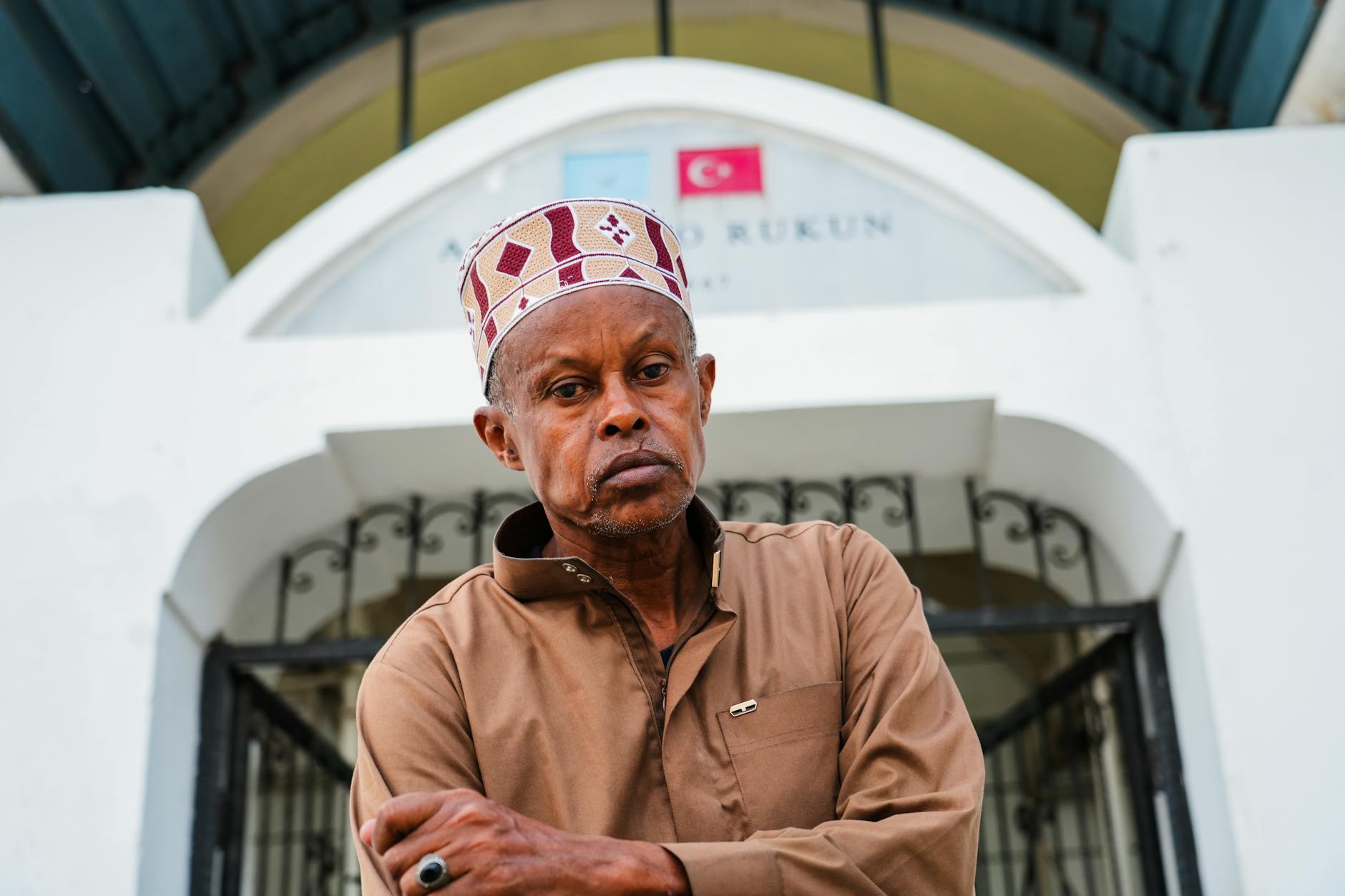
During his State of the Union address on February 24, 2026, President Trump referred to Minnesota’s Somali community as “pirates,” prompting Rep. Ilhan Omar to shout “That’s a lie! You’re a liar!” from the House chamber floor. The confrontation escalated further when Omar’s guest, Aliya Rahman, was removed from the gallery by U.S.
Capitol Police after she stood up silently during Trump’s remarks — and was ultimately charged with “Unlawful Conduct” on Capitol grounds. The incident encapsulated one of the most charged moments in recent State of the Union history: a president using inflammatory language to characterize an entire immigrant community, a congresswoman publicly calling him a liar in real time, and a civilian guest arrested for what Omar described as simply standing up. Trump also cited a $19 billion fraud figure tied to Minnesota’s Somali community — a number that dramatically overstates what prosecutors and journalists have actually documented. This article breaks down what Trump said, what the real fraud numbers look like, how Omar responded, what happened to her guest, and why the clash matters for immigration policy, civil liberties, and political accountability.
Table of Contents
- What Did Trump Actually Say About the Somali Community — and Did Omar Really Fire Back?
- The $19 Billion Fraud Claim — What the Numbers Actually Show
- The Arrest of Aliya Rahman — What Happened in the Gallery
- How State of the Union Conduct Rules Actually Work
- The Broader Pattern of Immigration Rhetoric and Fraud Claims
- Omar’s Political Gamble in Shouting Back
- What This Clash Means Going Forward
- Conclusion
- Frequently Asked Questions
What Did Trump Actually Say About the Somali Community — and Did Omar Really Fire Back?
trump‘s exact words during the address were pointed and sweeping. He said: “The Somali pirates who ransacked Minnesota remind us that there are large parts of the world where bribery, corruption and lawlessness are the norm, not the exception.” He followed that with: “Importing these cultures through unrestricted immigration and open borders brings those problems right here to the USA.” The language was not subtle. He was not referring to actual maritime piracy — he was branding an entire ethnic community with a slur tied to their national origin while speaking from the most prominent platform in American politics.
Omar, a Somali American who represents Minnesota’s 5th Congressional District, did not stay quiet. She shouted from her seat: “That’s a lie! You’re a liar!” She also yelled “You have killed Americans” — an apparent reference to the federal agents who fatally shot Renee Good and Alex Pretti in separate incidents. Omar gestured directly at Trump and added: “You should be ashamed.” Heckling during a State of the Union is rare and typically draws bipartisan criticism, but Omar clearly decided the moment called for something louder than a press release the next morning.
The $19 Billion Fraud Claim — What the Numbers Actually Show
Trump cited $19 billion in fraud by Minnesota’s Somali community. That figure deserves serious scrutiny because it appears to be dramatically inflated. Federal prosecutors have said that stolen funds could total up to $9 billion, stemming from decades of poor oversight across multiple government programs. That is already a significant number, but it is less than half of what Trump claimed — and it reflects systemic administrative failures, not a single community’s coordinated scheme. The gap between rhetoric and reality gets wider.
The Minnesota Star Tribune, which has covered these fraud cases extensively, found that alleged fraud actually uncovered so far in state programs is closer to $200 million. That is a serious amount of money and real prosecutions have resulted from it. But $200 million is not $19 billion. It is not even $9 billion. When a president inflates a fraud figure by roughly 95 times over what journalists have documented, it is worth asking whether the goal is accountability or scapegoating. None of this excuses actual fraud — people who stole public funds should face consequences — but accuracy matters, especially when the inflated number is used to characterize an entire ethnic group on national television.
The Arrest of Aliya Rahman — What Happened in the Gallery
Omar’s guest for the evening was Aliya Rahman, a south Minneapolis resident. After Trump made his remarks about Minnesota’s Somali community, Rahman stood up silently in the House gallery. She did not shout. She did not hold up a sign. According to accounts from Omar’s office, she simply stood. U.S.
Capitol Police officers moved in and removed her from the chamber. The removal was reportedly forceful. Rahman warned the officers about her injured shoulders during the process, but was taken out regardless. She was ultimately charged with “Unlawful Conduct” on Capitol grounds — a charge that covers a range of behaviors in the Capitol complex. Omar publicly stated that her guest was arrested for standing during the speech. Whether standing silently constitutes a protest that violates House gallery rules, or whether the response was disproportionate to the conduct, became an immediate point of debate. Gallery attendees are expected to remain seated and silent, but the enforcement of that norm has historically been inconsistent, and critics noted the speed with which officers acted against a Somali American woman standing in silence compared to other disruptions in congressional history.

How State of the Union Conduct Rules Actually Work
The rules for attending a State of the Union address as a guest are strict on paper. Gallery attendees are prohibited from displaying signs, applauding in certain designated sections, or engaging in demonstrations. Standing up — particularly during a controversial moment — can be interpreted as a form of protest, and Capitol Police have broad discretion to remove anyone they determine is disrupting proceedings. However, enforcement has always been selective.
Members of Congress themselves routinely stand, applaud, or sit in coordinated displays of approval or disapproval. Some years, guests have worn themed clothing or held small symbols without consequence. The tradeoff is between maintaining decorum in a constitutionally significant event and respecting the rights of individuals who are, after all, invited to be present by elected members of Congress. Rahman’s case raises a particular question: if standing silently is enough to trigger arrest, the practical standard for “unlawful conduct” in the gallery may be lower than most Americans assume. Omar’s decision to publicly frame the arrest as politically motivated adds another layer — guest invitations to the State of the Union are themselves a form of political speech by members of Congress.
The Broader Pattern of Immigration Rhetoric and Fraud Claims
Trump’s “Somali pirates” remark did not occur in a vacuum. It fits a pattern of using specific fraud cases or crime statistics tied to immigrant communities as justification for broader immigration restrictions. The rhetorical move — take a real problem, inflate the numbers, attach it to an ethnic identity, and present restrictive policy as the only solution — is effective politically but problematic factually. The limitation of this approach is that it conflates individual criminal conduct with community identity.
Fraud in government programs is a real issue that predates and extends well beyond any single immigrant community. The Government Accountability Office and inspectors general across federal agencies have documented billions in improper payments across Medicare, Medicaid, unemployment insurance, and pandemic relief programs — fraud committed by people of every background. When a president singles out one community’s fraud while ignoring the broader landscape, the framing tells you more about the political objective than the policy problem. That does not mean fraud should be ignored. It means honest governance requires honest numbers and honest context.
📨 Get Free Accountability Coverage Alerts
Free · No spam · Unsubscribe anytime
Omar’s Political Gamble in Shouting Back
Heckling a president during a joint session of Congress carries political risk. Omar’s outburst was immediately replayed across every news network and drew criticism from Republicans and some Democrats who view the State of the Union as an occasion that demands institutional respect regardless of the content. For Omar, though, the calculus was different.
As the most prominent Somali American in Congress, staying silent while Trump called her community “pirates” on national television would have carried its own cost — among her constituents, within the Somali American community nationally, and in terms of her own political identity. The moment also highlighted something often overlooked: Omar shouted “You have killed Americans,” referencing the deaths of Renee Good and Alex Pretti at the hands of federal agents. That accusation received less media coverage than the “liar” exchange, but it pointed to a separate and serious set of concerns about federal law enforcement conduct that Omar clearly wanted on the record.
What This Clash Means Going Forward
The Trump-Omar confrontation and Rahman’s arrest will likely have consequences beyond a single news cycle. For immigration policy, Trump’s willingness to use the State of the Union to single out a specific ethnic community signals that targeted rhetoric will remain a central feature of his administration’s approach.
For civil liberties, the arrest of a guest for standing silently raises questions about the boundaries of permissible conduct in government spaces — questions that may eventually be tested in court. For the Somali American community in Minnesota and elsewhere, the night was a reminder that political vulnerability can be activated from the highest platform in the country with a single phrase. Whether the long-term effect is greater political mobilization or greater marginalization will depend in part on how institutions — courts, media, Congress itself — respond to both the inflated fraud claims and the arrest of a woman whose only documented act was standing up.
Conclusion
The State of the Union clash between Trump and Omar distilled several of the most contentious dynamics in American politics into a few minutes of live television. A president used a racially charged term to describe an immigrant community while citing a fraud figure that was roughly 95 times larger than what investigative journalism has documented. A congresswoman broke protocol to call him a liar in real time. And a civilian guest was arrested for standing in silence.
The facts matter here more than the spectacle. The $19 billion fraud claim does not hold up against the $200 million that the Star Tribune has actually documented in state program fraud. The arrest of Aliya Rahman for standing raises legitimate civil liberties concerns. And the use of “pirates” to describe an entire ethnic community during a formal presidential address is a rhetorical choice with real consequences for the people it targets. Accountability requires accurate numbers, proportional enforcement, and language that distinguishes between individual wrongdoing and collective blame.
Frequently Asked Questions
Did Trump actually use the word “pirates” to describe the Somali community?
Yes. During his February 24, 2026 State of the Union address, Trump said: “The Somali pirates who ransacked Minnesota remind us that there are large parts of the world where bribery, corruption and lawlessness are the norm, not the exception.”
How much fraud has actually been documented in Minnesota’s Somali community?
Trump cited $19 billion. Federal prosecutors have said stolen funds could total up to $9 billion from decades of poor oversight. However, the Minnesota Star Tribune found that alleged fraud actually uncovered in state programs is closer to $200 million.
What did Ilhan Omar’s guest do to get arrested?
According to Omar, her guest Aliya Rahman stood up silently in the House gallery after Trump’s remarks about the Somali community. She was removed by U.S. Capitol Police and charged with “Unlawful Conduct” on Capitol grounds.
Is it illegal to shout during the State of the Union?
Members of Congress are not typically subject to arrest for speech on the floor under the Speech or Debate Clause. Gallery guests, however, are subject to stricter conduct rules and can be removed and charged for disruptions, though enforcement has historically been inconsistent.
What were the deaths Omar referenced when she shouted “You have killed Americans”?
Omar was apparently referring to the fatal shootings of Renee Good and Alex Pretti by federal agents, though she did not elaborate further during the exchange.
You Might Also Like
- Trump Sued 358 Times in One Year…Lost 93%…Courts Called DOJ “Patently Incredible”
- MTG Said Trump “Fought the Hardest” to Block Epstein Files…2,000 Videos…Youngest Victim Was 9
- Trump Vowed $2,000 Tariff Rebate Check…Tariffs Cost Your Household $1,200