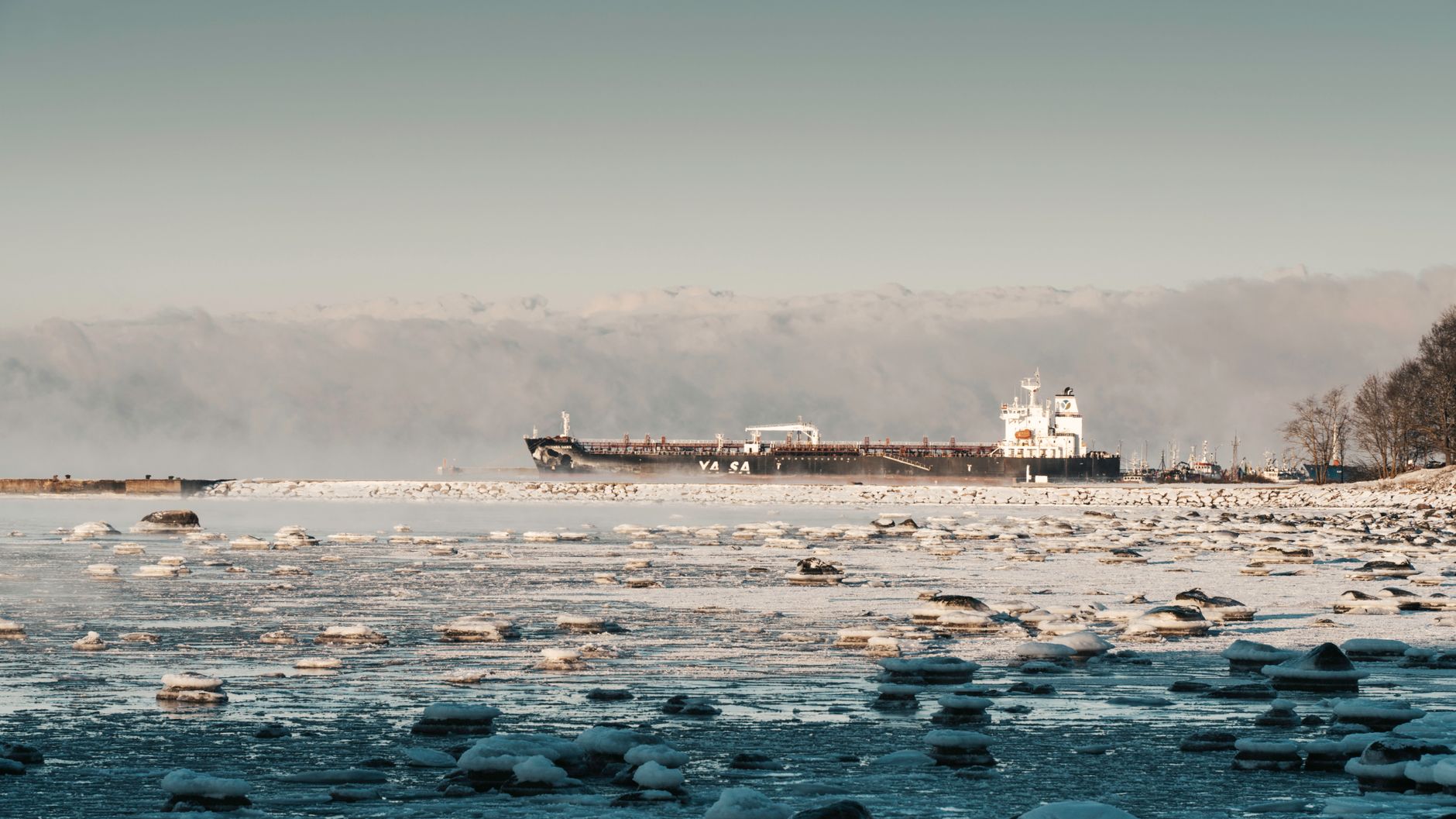
Gas from Russia’s Arctic LNG 2 plant, under U.S. blocking sanctions since 2023, has kept flowing to China through what Western governments call the Russian LNG shadow fleet. By June 22 of this year, Reuters reported, China’s Beihai terminal had taken 41 cargoes, or 2.6 million tons, from the project, and a second Chinese terminal was being readied.
Where it stands: The plant is back in the news because the Financial Times reported this month, citing people familiar with U.S.-Russia negotiations, that one idea on the table had Novatek helping to develop an Alaska LNG facility “in exchange for sanctions relief for Arctic LNG 2.” The administration’s response, from an unnamed White House official quoted by the FT, was that the concept “has only been broadly and briefly mentioned” and that “no granular discussions have occurred.” As of Oct. 26, no change to the plant’s U.S. designation had been announced, and the tankers Washington sanctioned in 2024 and early 2025 remained on Treasury’s list.
Novatek, which owns 60% of Arctic LNG 2, says its Alaska involvement was never conditioned on lifting sanctions and treats the venture as a standalone project. Polar LNG, the Alaska company named in the FT and New York Times reporting, says its work is “in full compliance with applicable US laws,” and no federal regulator has made any finding against it. Our report on the proposed swap covers that dispute; this article is about the ships.
Link one: icebreakers and floating storage
Arctic LNG 2 sits on the Gydan Peninsula in Russia’s Arctic, and its export chain begins with a short leg on ice-class ships. gCaptain, describing the system this June, said cargoes were moved from the plant “by Russia’s icebreaking LNG carriers” and then “transferred ship-to-ship in the Murmansk region.”
Two floating storage units do much of the work: the Saam unit near Murmansk and the Koryak unit in Kamchatka. Reuters, in a report republished by gCaptain, said of one of them that it “has only received cargoes from the Arctic LNG 2 project.” Gas is parked there and reloaded onto other ships for the long run to Asia. In winter, when the Northern Sea Route is restricted, carriers have sailed west and gone through the Suez Canal instead, Baird Maritime reported.
The icebreaking ships themselves were early U.S. targets. OFAC’s records show that in June 2024 the U.S. sanctioned Arc7 carriers linked to state shipper Sovcomflot, including the Alexey Kosygin, which Baird Maritime later called the “first Russia-made Arc 7 gas carrier.” In January 2025 the U.S. added the Christophe de Margerie, the first Arc7 tanker built for the older Yamal LNG project.
Link two: older tankers, new names, dark transponders
Sanctions left Novatek short of ships by disrupting its access to financing, insurance and vessel management, gCaptain has reported, so the project has assembled its own fleet. When the State Department moved against the first wave in August 2024, gCaptain reported that the Pioneer and the Asya Energy had loaded at the plant “after turning off or spoofing their AIS transponder signals,” the automatic location beacons ships are supposed to broadcast. A third, the Everest Energy, was broadcasting a false position at the time. All three, gCaptain wrote, were run by Ocean Speedstar Solutions of India, which was sanctioned too.
Ownership is often hard to trace. Reuters found that one tanker delivering Arctic gas to China in 2025 was registered to Lule One Services and managed by SMP Techmanagement, and “was not able to find any contact information” for either. The four ships Britain sanctioned in June “were purchased earlier this year through a network of intermediaries and subsequently reflagged and renamed,” according to gCaptain, which said they belong to a growing set of “older steam-turbine LNG carriers being quietly acquired from the secondary market.”
Link three: one buyer, one terminal
For a year after the sanctions, the plant had almost nowhere to sell. gCaptain reported in August 2025 that loaded tankers had “idled off Russian ports or meandered through international waters for months without offloading.” That changed when the carrier Arctic Mulan docked at Beihai in Guangxi on Aug. 28, 2025, less than two weeks after the Trump-Putin summit in Anchorage.
Beihai, run by state-owned PipeChina, became the outlet. Reuters, via Baird Maritime, counted 23 cargoes, or 1.3 million tonnes, delivered there in 2025. High North News reported that Beijing had effectively “quarantined” the terminal so it receives only Russian deliveries, limiting the reach of sanctions. Britain sanctioned Beihai anyway in October 2025, along with seven LNG tankers.
The route may widen. Reuters reported in June that PipeChina’s Longkou terminal in Shandong, with 5 million tons a year of first-phase capacity, was being lined up for Arctic cargoes, and that Novatek has cut prices “by 30% to 40% since August 2025” to win Chinese buyers. Neither PipeChina nor Novatek commented to Reuters.
📨 Get Free Accountability Coverage Alerts
Free · No spam · Unsubscribe anytime
Russian LNG shadow fleet: who sanctioned which ships
| Date | Action | Source |
|---|---|---|
| June 2024 | U.S. lists Sovcomflot-linked Arc7 carriers, incl. Alexey Kosygin | OFAC |
| Aug. 23, 2024 | U.S. lists Pioneer, Asya Energy, Everest Energy and four newbuilds | OFAC, gCaptain |
| Sept. 26, 2024 | UK sanctions 5 LNG ships, first use of ship power | GOV.UK |
| Jan. 10, 2025 | U.S. lists Christophe de Margerie, Pskov, others | OFAC |
| Oct. 15, 2025 | UK sanctions 7 LNG tankers and Beihai terminal | GOV.UK |
| Oct. 2025 | EU lists 117 more shadow-fleet ships, sets LNG ban | Reuters |
| June 16, 2026 | UK sanctions Orion, Merkuriy, Kosmos, Luch | GOV.UK, gCaptain |
The four newbuilds in the August 2024 action, the North Air, North Mountain, North Sky and North Way, had not yet carried Arctic gas. gCaptain reported they had just moved to a Dubai owner, White Fox, and “were rumored to eventually begin trading in sanctioned LNG.” The same action hit a Novatek unit in China set up “to market its product to buyers in the region.”
Britain can designate individual ships by name. Its 2024 notice called that action “the first time the UK is using its new ship specification power to target LNG vessels directly.” In the June 2026 notice on Merkuriy, London said the ship had been “involved in carrying liquefied natural gas that originated in Russia from a place in Russia to a third country.”
What the sanctions have and have not stopped
By Britain’s count, the pressure has kept output far below design. Its June release said that “in 2025 the Arctic LNG-2 terminal only exported 1.3 million tons of LNG despite having capacity to export over 13.5 million tons a year.” The project’s original target was 19.8 million tonnes a year.
Washington has been quieter lately. Writing in mid-October 2025, High North News said “there has been no action by the current White House” on the project since January 2025. In OFAC’s sanctions list as downloaded on Oct. 26, the most recently added LNG carriers came from OFAC’s Jan. 10, 2025 action. The Graham Act, which Congress passed in September, would have added pressure on “a shadow fleet of tankers that keeps Russian energy moving,” as AP put it, but Trump waived its Russia sanctions on Oct. 16, as our waiver explainer details.
Europe is moving the other way, with consequences for the fleet. The EU’s 19th package, adopted in October 2025, set a two-stage ban on Russian LNG imports ending long-term contracts “from January 1, 2027.” gCaptain noted that closing the EU market to the neighboring Yamal LNG plant will push Russia toward “long-haul deliveries to Asia,” which needs more ships. Whether the U.S. would ever ease the Arctic LNG 2 designation itself, the question the Alaska reporting raised, is covered in our Novatek sanctions explainer; as of Oct. 26 it remained in force.
Frequently Asked Questions
What is the Russian LNG shadow fleet?
It is the term Western governments and shipping media use for LNG carriers, often older ships with opaque owners and new flags, that carry gas from sanctioned Russian projects such as Arctic LNG 2. Britain alone says its tally of sanctioned ships, oil tankers included, has passed 600.
Who buys sanctioned Arctic LNG 2 gas?
China is the only known buyer, according to Reuters. Cargoes have gone to PipeChina’s Beihai terminal in Guangxi since August 2025, and Reuters reported in June 2026 that a second PipeChina terminal, Longkou in Shandong, was being lined up.
Which LNG tankers has the U.S. sanctioned?
OFAC’s designations include the Pioneer, Asya Energy and Everest Energy and four Panama-flagged newbuilds (August 2024), Arc7 icebreaking carriers under construction for Sovcomflot (June 2024), and the Christophe de Margerie, Pskov and Velikiy Novgorod (January 2025). Those ships remained on the SDN list downloaded on October 26.
Has the Trump administration added new Arctic LNG 2 sanctions?
As of mid-October 2025, High North News found no fresh U.S. step against the project since January of that year. In the OFAC list we checked, the newest LNG carriers dated from the Jan. 10, 2025 action. Britain and the EU have continued to add vessels.
Sources
- China Lines Up Second LNG Terminal for Sanctioned Russian Cargoes, Sources Say — gCaptain (Reuters), June 22, 2026
- Russia’s Arctic LNG 2 Delivers First Cargo to China After Year-Long Wait — gCaptain, August 2025
- Tanker Carrying 7th Sanctioned Arctic LNG 2 Cargo Berths at China Port — gCaptain (Reuters), September 30, 2025
- U.S. Targets Russia’s LNG ‘Shadow Fleet’ in Sweeping New Sanctions Package — gCaptain, August 23, 2024
- UK Targets New Arctic LNG 2 ‘Shadow Fleet’ Vessels as Russia Scrambles for Tankers — gCaptain, June 16, 2026
- China receives first gas in 2026 from Russia’s Arctic LNG 2 project — Baird Maritime (Reuters), January 2026
- Russia-related Designations; Publication of Russia-related Determination (06/12/2024) — U.S. Treasury, Office of Foreign Assets Control, June 12, 2024
- Russia-related Designations and Designations Updates (08/23/2024) — U.S. Treasury, Office of Foreign Assets Control, August 23, 2024
- Russia-related and Russia-/Ukraine-related Designations (01/10/2025) — U.S. Treasury, Office of Foreign Assets Control, January 10, 2025
- UK constrains Russia’s future Liquified Natural Gas plans — GOV.UK (Foreign, Commonwealth & Development Office), September 26, 2024
- Huge blow for Putin’s war machine as UK sanctions Russian oil — GOV.UK (HM Treasury and FCDO), October 15, 2025
- UK clamps down on shady networks supplying Putin’s illegal war with new sanctions package — GOV.UK, June 16, 2026
- UK Sanctions Target Russian Arctic LNG, With US Remaining on Sideline and EU Continuing Debate — High North News, October 16, 2025
- EU approves 19th package of Russian sanctions including LNG ban — Arab News (Reuters), October 23, 2025
- Trump pauses US sanctions on Russia — NPR (Associated Press), October 17, 2026
- Former CEO: Russian Firm Backed Alaska Gas Venture — Newsmax via Yahoo News (citing the Financial Times), October 24, 2026
This article is news reporting and analysis based on the public sources listed above, as they stood on the dates shown. Where officials, lawmakers or analysts disagree, including on whether an action is lawful, their positions are attributed to them; Donald Trump Class Action is not a court and nothing here is legal advice. Facts in a developing story can change.