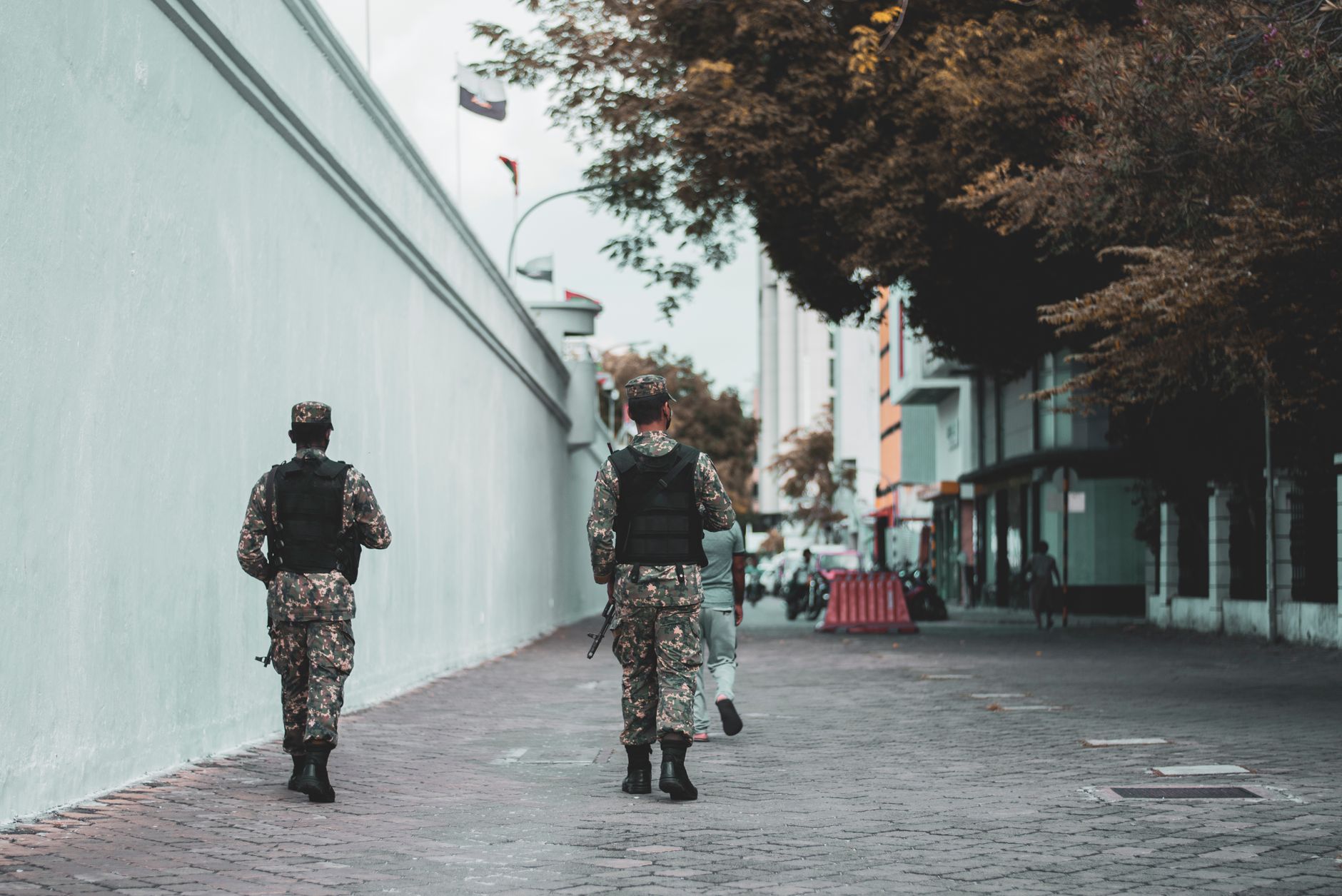
President Trump has issued an order extending the military presence in the nation’s capital through 2029, continuing an arrangement that has kept active-duty troops and National Guard members stationed in Washington, D.C. Since early 2021, military personnel have maintained a presence around federal buildings and key infrastructure, a deployment that was initially characterized as temporary but has now been formalized through this extension order. This move represents a significant commitment to maintain military personnel in the capital for years to come, raising questions about constitutional limits, civilian control of the military, and the long-term implications of normalizing uniformed troops in domestic political spaces.
The extension order signals the Trump administration’s intention to maintain operational readiness and security infrastructure in Washington through the end of the decade. This decision affects thousands of service members currently rotating through temporary assignments in the capital, their families, and the federal agencies coordinating logistics for this sustained deployment. The order also commits budget resources to barracks, command structures, and support systems that would otherwise be allocated to overseas operations or base infrastructure in other regions.
Table of Contents
- How Does Extended Military Presence in Washington D.C. Operate?
- Constitutional and Legal Concerns About Military Deployment in the Capital
- Impact on Military Readiness and Global Operations
- Financial and Budgetary Implications of the Extended Deployment
- Oversight Challenges and Accountability Gaps
- Domestic Politics and Symbolism of Military in Washington
- Service Member Welfare and Rotation Cycles
How Does Extended Military Presence in Washington D.C. Operate?
Military deployment within the nation’s capital operates through defined command structures and coordination with civilian law enforcement agencies, primarily the Capitol Police, Metropolitan Police Department, and Secret Service. Troops typically provide security at federal buildings, conduct perimeter monitoring, manage access points, and provide emergency response capabilities. The logistics of housing, feeding, and managing thousands of active-duty and National Guard members in Washington requires significant coordination with the Department of Defense, General Services Administration, and local authorities.
Military personnel are stationed at bases such as Joint Base Andrews and other installations in the region, with rotations managed to maintain staffing levels across the extended timeframe. The operational model distinguishes between National Guard members (who answer to state governors and federal command depending on deployment status) and active-duty personnel (who answer solely to federal military command). This distinction matters legally and practically, as it affects chain of command, funding sources, and civilian oversight mechanisms. The deployment includes support staff beyond security roles, including medical personnel, logistics coordinators, and communications specialists needed to manage a sustained domestic military operation.
Constitutional and Legal Concerns About Military Deployment in the Capital
The Posse Comitatus Act of 1878 generally prohibits active-duty military from engaging in civilian law enforcement within the United States, with narrow exceptions for national emergencies. Legal scholars have raised questions about whether extended deployments in Washington, even in a security rather than enforcement capacity, approach or exceed constitutional boundaries. The fact that the military presence has shifted from described as emergency measures to a formal extended operation creates new legal questions about congressional authorization, appropriate use of military resources, and whether sustained domestic deployments require legislative action rather than executive orders alone.
A significant limitation of the current arrangement is the lack of explicit congressional legislation authorizing or appropriating dedicated funds for military presence in the capital beyond fiscal year-to-year budget measures. This creates uncertainty about funding mechanisms and potential budget conflicts in future years. Additionally, the constitutional role of the Insurrection Act—which does provide presidential authority for military deployment in domestic emergencies—raises questions about whether that authority should be interpreted to extend to multi-year, ongoing deployments or whether it applies only to acute crisis situations.
Impact on Military Readiness and Global Operations
Deploying thousands of service members to Washington reduces personnel availability for overseas operations, training exercises, and base operations in other regions. Units assigned to capital security rotations lose training time on specialized combat skills and may experience reduced readiness ratings compared to peers focused on traditional military missions. This represents a real opportunity cost: the same troops rotating through Washington Financial and Budgetary Implications of the Extended Deployment
The financial commitment to maintaining military presence through 2029 involves housing costs, meal provisions, transportation, command infrastructure, and administrative overhead that extend well beyond the direct salaries of deployed personnel. The federal government must budget for barracks space or contracted housing, dining facilities or meal contracts, vehicle maintenance, and support staff. When military units are deployed domestically, these costs are typically absorbed by the Department of Defense budget rather than being offset by international cost-sharing arrangements. 📨 Get Free Accountability Coverage Alerts Free · No spam · Unsubscribe anytime Comparison to overseas deployments is instructive: maintaining troops in Germany or Japan involves different cost structures, some shared by allied nations, while a domestic deployment in Washington is entirely a federal cost. Congress appropriates annual defense budgets, and the sustained domestic deployment competes with other military priorities for resources. If the military presence in Washington is maintained through 2029, it locks in funding allocations for seven years across multiple appropriations cycles, reducing budget flexibility for other initiatives. The total cost of maintaining this deployment through 2029 has not been publicly disclosed in comprehensive form, making it difficult for taxpayers or oversight bodies to assess the full financial impact. Sustained military presence in the capital creates new oversight challenges because the arrangement blurs lines between civilian and military authority. The military is generally expected to operate under congressional oversight and the supervision of elected civilian leadership, but domestic deployments reduce the transparency traditionally associated with military operations. Command decisions about troop positioning, rules of engagement, and responses to civilian events are made through military chains of command with limited public visibility. The National Security Council, Defense Department officials, and the White House coordinate the deployment, but the decision-making process has not been subject to the same congressional testimony and appropriations scrutiny as formal military authorizations. A critical warning: the normalization of military presence in the capital creates precedent for future administrations to extend or expand deployments without triggering the political or legal scrutiny that might otherwise apply. Once an arrangement becomes routine, political resistance decreases and legal questions go unexamined. The longer the deployment continues, the more likely it is to be accepted as permanent infrastructure rather than questioned as a temporary emergency measure. The presence of uniformed military personnel in the nation’s capital carries symbolic weight in American politics. It signals to citizens that the federal government considers internal security a priority, which may reassure some but concern others about the normalization of military presence in civilian spaces. The Capitol itself became the focal point of military deployment following January 6, 2021, with troops providing security around the building and grounds. This specific context—military deployed to protect Congress from internal political threats—distinguishes this deployment from typical military uses and raises distinct questions about civilian society’s relationship to its military during politically polarized times. International observers often view military presence in capital cities as a sign of instability or authoritarian governance, which can affect how the United States is perceived globally. Democratic nations typically avoid maintaining active-duty military presence in their capitals during peacetime, making the extended American deployment notable by comparison. Service members assigned to Washington duty often rotate on 6-month, 12-month, or longer cycles, depending on their branch and unit. Extended deployments create family separation, affect spouse employment, and complicate childcare and housing arrangements for military families. Unlike deployments to familiar installations with established family support services, rotation through Washington requires families to navigate temporary housing markets and unfamiliar school systems. The extension order through 2029 means thousands of military families will experience multiple rotations and reassignments, with potential stress on retention rates if assignments are perceived as undesirable or disruptive to career planning. The logistics of rotating service members through Washington also affect readiness at home stations. Units sustain operations with partial staffing while personnel deploy, requiring cross-training and sometimes drawing on reserve capacity that might otherwise be available for surge operations. For reserve and National Guard units, the extended domestic deployment creates unpredictability in civilian planning, as members may receive activation orders with limited notice to arrange work and family accommodations.Oversight Challenges and Accountability Gaps
Domestic Politics and Symbolism of Military in Washington
Service Member Welfare and Rotation Cycles
You Might Also Like