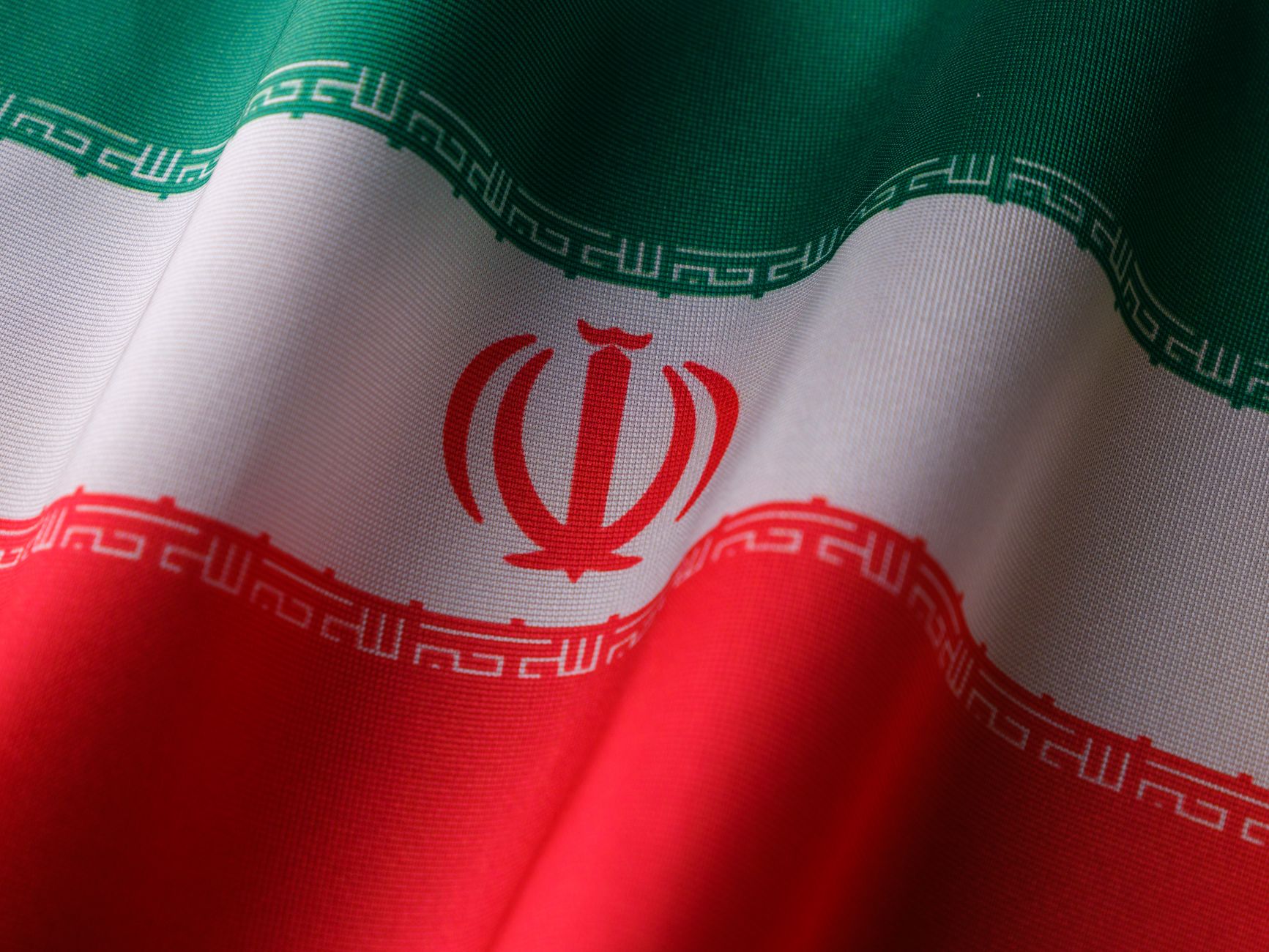
On June 17, 2026, President Donald Trump and Iranian President Masoud Pezeshkian signed a Memorandum of Understanding establishing a $300 billion Reconstruction and Development Fund—a private investment vehicle designed to rebuild Iran’s war-damaged infrastructure, refineries, steel complexes, and transportation networks. The fund is not U.S. government money. Instead, private investors from the United States, the Persian Gulf, South Korea, Japan, Singapore, Malaysia, and other countries have already committed over $150 billion of the total $300 billion pledge, with commitments continuing to come in. The White House has explicitly stated that zero U.S. taxpayer funds support this reconstruction vehicle, positioning it as an alternative after Iran rejected a U.S.
proposal that would have involved government compensation. The deal is a preliminary agreement, not a final treaty. Both sides have 60 days from the June 17 signing to negotiate the final terms, with completion expected by mid-August 2026. The fund remains locked and inaccessible until Iran meets strict conditions: dismantling its nuclear program, eliminating enriched uranium stockpiles, and accepting verification and enforcement mechanisms. Simultaneously, the U.S. is removing its naval blockade over 30 days, reopening the Strait of Hormuz for free passage, granting Treasury waivers for Iranian crude oil exports, and enforcing a 60-day military ceasefire across all fronts including Lebanon.
Table of Contents
- What Is the Private Reconstruction Fund, and Why Not Direct Government Funding?
- What Must Iran Actually Do to Access the $300 Billion?
- Where Is the $300 Billion Coming From, and Which Companies Are Actually Investing?
- How Does the Deal Actually Work Operationally—What Happens on Day One, Day 30, Day 60?
- What Are the Unresolved Issues and Hidden Risks in This Framework?
- How Does This Deal Compare to Other International Investment Frameworks?
- What Are the Implications for U.S. Sanctions Law and American Companies?
What Is the Private Reconstruction Fund, and Why Not Direct Government Funding?
The Reconstruction and Development Fund is structured as a private investment vehicle, not a government-to-government aid program or compensation package. This distinction matters because iran initially requested $400 billion in direct U.S. government reparations or compensation for past sanctions, military actions, and the frozen assets held by the U.S. Treasury. The Trump administration declined that proposal. Instead of committing federal taxpayer dollars, the U.S. offered to facilitate private capital investment through a dedicated fund managed by private financial institutions and corporate investors.
The fund’s structure allows private companies and sovereign wealth funds to profit from reconstruction contracts—building new refineries, restoring the Mobarakeh Steel complex, upgrading airports, and developing logistics infrastructure—while maintaining plausible deniability that American taxpayers are directly funding Iran’s economy. This model resembles infrastructure partnerships seen in post-conflict environments like Afghanistan (where private contractors and international firms have invested billions in rebuilding), but with a critical difference: Afghanistan’s reconstruction relied heavily on U.S. government appropriations and NATO funding, whereas this Iran fund is explicitly private capital. The benefit to the U.S. is that American private investors and corporations gain access to Iranian markets, oil, and construction contracts worth hundreds of billions of dollars over the 20-30 year reconstruction timeline. The risk is that other state actors and corporations—particularly Chinese, Russian, and Gulf state entities—will also pour capital into Iran, potentially cementing strategic partnerships that exclude American interests in the long term. Vice President JD Vance confirmed in June 2026 that Iran could access the $300 billion fund “if it complies with peace terms including nuclear program dismantling,” making clear that fund access is conditional and that private investors are taking on geopolitical and enforcement risk.
What Must Iran Actually Do to Access the $300 Billion?
The MOU is intentionally vague on the nuclear specifics. While both sides agreed that Iran must “dismantle its nuclear program” and “eliminate enriched uranium stockpiles,” the actual terms—what counts as dismantling, inspection frequency, on-site monitoring, what happens to enriched uranium, and verification methods—remain unwritten and will be negotiated over the next 60 days. This is a critical gap. Iran has historically used negotiations to string out talks while continuing lower-level nuclear work, and the MOU does not lock down the final nuclear parameters before private investors start writing checks. If the final deal collapses in August, $150+ billion in committed private capital Where Is the $300 Billion Coming From, and Which Companies Are Actually Investing?
Over $150 billion has already been pledged by private investors and corporations, according to statements from the White House and reporting by NPR and Al Jazeera. These commitments have come from U.S.-based corporations, Persian Gulf sovereign wealth funds, South Korean conglomerates (likely Samsung, Hyundai, SK Group), Japanese trading companies, Singapore state investment entities, Malaysian firms, African investors, and South american corporations. Specific company names and the size of individual pledges have not been publicly disclosed, creating opacity about which U.S. firms are betting on this deal and whether conflicts of interest exist—for example, if major Trump administration officials have financial stakes in companies investing in the Iran fund. The largest chunks of investment are expected in energy sector reconstruction (refineries, petrochemical plants, and oil export infrastructure), which makes sense given Iran’s economy is oil-dependent and Western sanctions over 40+ years have allowed refineries and production facilities to deteriorate. The Mobarakeh Steel complex, one of the world’s largest integrated steel mills, is slated for modernization and expansion. Airports, ports, and transport corridors from the Persian Gulf to Afghanistan are also priority projects. Unlike Marshall Plan aid after World War II (which was U.S. government money), or China’s Belt and Road Initiative (which is Chinese government lending through state banks), this Iran fund is purely private capital seeking returns. Investors expect to make money: profitable refinery operations, steel sales, logistics contracts, and energy export margins. If Iran’s economy stagnates or sanctions are re-imposed, the return on that capital disappears, so private investors have strong incentives to monitor Iran’s compliance and enforce deal terms through capital leverage. The agreement takes effect immediately on non-nuclear fronts. The U.S. naval blockade—the extensive military presence enforcing sanctions on Iranian shipping—begins removal over 30 days, with full removal expected by mid-July 2026. The Strait of Hormuz, through which about one-third of global seaborne oil passes, is reopened for “free passage” without U.S. naval harassment or inspection of Iranian vessels for the initial 60-day period. The U.S. Treasury is issuing waivers that allow U.S. companies to import Iranian crude oil and other petroleum products, lifting sanctions restrictions that have been in place for years. 📨 Get Free Accountability Coverage Alerts Free · No spam · Unsubscribe anytime A ceasefire on all military fronts takes effect immediately, including between Iran-backed forces and Israel in Lebanon, and between U.S. and Iranian proxies across the region. The $300 billion reconstruction fund does not become operational on day one. Instead, investors and Iran’s government must negotiate the structure over 60 days: which bank or financial institution holds the capital, how projects are selected and approved, what happens if Iran breaches terms, and how disputes are resolved. Private equity firms and banks are likely to demand Iranian collateral, sovereign wealth guarantees, or escrow accounts to secure their capital. Iran may resist placing assets into escrow if it appears to surrender control. By mid-August 2026, the final agreement on nuclear terms and fund governance must be signed, or the entire framework collapses. If the final deal is reached, the Reconstruction and Development Fund becomes operational, money flows to project managers, and reconstruction begins. The 60-day military ceasefire is renewable but not automatic; both sides must agree to extend it, creating another potential breakpoint if negotiations stall. The MOU is silent on Iran’s past nuclear weapons work. The JCPOA allowed Iran to keep all its civilian nuclear infrastructure (reactors, enrichment plants) as long as it agreed not to enrich uranium above low levels and accept inspections. The Trump administration withdrew from the JCPOA in 2018 and re-imposed sanctions. Since then, Iran has ramped up uranium enrichment and accumulated stockpiles of highly enriched uranium that could theoretically be weaponized. The new MOU requires Iran to “eliminate enriched uranium stockpiles,” but the definition—what happens to that uranium, whether it is shipped out of Iran, diluted, or stored under international guard—is not yet written. If Iran secretly moves portions of its stockpile before inspections begin, or if it claims the uranium is “civilian” and cannot be removed, another standoff could erupt in August. A second major risk is that the $300 billion private fund assumes Iran will remain stable and cooperative for 20+ years while reconstruction happens. Iran has a history of freezing assets, nationalizing foreign investments without compensation, and using international disputes as leverage. If a new Iranian government comes to power in 2028 or 2032 and rejects the deal, private investors could lose billions. There is no explicit U.S. government guarantee backing private investors if Iran defaults or seizes their assets. The deal also does not address past U.S. sanctions damages that Iranian companies and individuals claim to have suffered; reopening that dispute later could derail the entire framework. Finally, the 60-day negotiation timeline is absurdly compressed for this level of complexity. Previous Iran nuclear negotiations have taken months or years just to define what “verification” and “dismantling” actually mean. If August arrives and key terms remain unsettled, both sides will face pressure to either extend the 60 days (signaling weakness domestically) or walk away (triggering market collapse for investors with pledged capital). The closest modern precedent is the reconstruction of Iraq after 2003, where American and international corporations invested billions in rebuilding oil infrastructure, power plants, and water systems. However, Iraq’s reconstruction was overseen by a U.S. military occupation and the International Monetary Fund, with the U.S. government seizing Iraqi oil revenues to secure debt payments and investment returns. Private investors had a backstop: American military force and U.S. Treasury pressure on Iraq’s government. The Iran framework has no such guarantee. The U.S. can threaten to re-impose sanctions, but without military presence on the ground or control of Iran’s government, enforcement depends on private investors’ ability to sue, freeze assets, or demand collateral. This is weaker than Iraq’s model and similar to China’s Belt and Road investments, where private Chinese firms invest in foreign countries with the implicit backing of the Chinese government but few explicit legal guarantees. Another comparison is the post-Soviet privatization wave of the 1990s, when American investors and oligarchs bought up Russian assets after the USSR collapsed. Many of those deals fell apart within years because the Russian government changed its mind, re-nationalized assets, or used legal arbitration to seize foreign holdings. American investors in Russia lost billions. The Iran framework carries similar risk. The advantage is that Iran is less isolated now; the deal involves investors from many countries, not just U.S. and European firms, so Iran cannot unilaterally seize American assets without angering South Korea, Japan, and the Gulf states. This multilateral investor base creates more pressure on Iran to honor the deal—but it also means America’s leverage is diminished compared to unilateral U.S. sanctions. Lifting the naval blockade and opening the Strait of Hormuz are immediate, tangible changes. American oil companies and traders can now buy Iranian crude legally through Treasury waivers, potentially lowering U.S. gas prices if Iranian oil floods the global market (though global oil prices depend on many factors beyond Iran supply). But the waivers are temporary and can be revoked. If the final deal fails in August or if Iran is caught cheating on nuclear terms, the U.S. can snap sanctions back on immediately, stranding American companies with Iranian crude they can no longer sell and contracts they can no longer fulfill. This creates a “stranded asset” risk where U.S. firms overcommit to Iran projects, only to see sanctions snap back and capital evaporate. American private investors in the reconstruction fund also face Title VII and sanctions laws. If a U.S. investor puts $100 million into an Iranian refinery project and the deal collapses, the investor may face legal liability for doing business with Iran’s government and sanctioned entities during any window when sanctions are re-imposed. Insurance companies may refuse to cover political risk, leaving investors exposed. The deal relies entirely on the assumption that the 60-day nuclear negotiation succeeds and final terms are locked down. If it fails, American firms caught mid-project in Iran face legal jeopardy, capital loss, and potential prosecution for sanctions violations. The White House’s claim that zero U.S. taxpayer money is at risk is true only if the private fund succeeds; if it collapses, U.S. government may end up holding the bag through sanctions litigation, diplomatic incidents, or calls for bailouts—similar to what happened after the 2008 financial crisis when private investment losses triggered government intervention.How Does the Deal Actually Work Operationally—What Happens on Day One, Day 30, Day 60?
What Are the Unresolved Issues and Hidden Risks in This Framework?
How Does This Deal Compare to Other International Investment Frameworks?
What Are the Implications for U.S. Sanctions Law and American Companies?
You Might Also Like