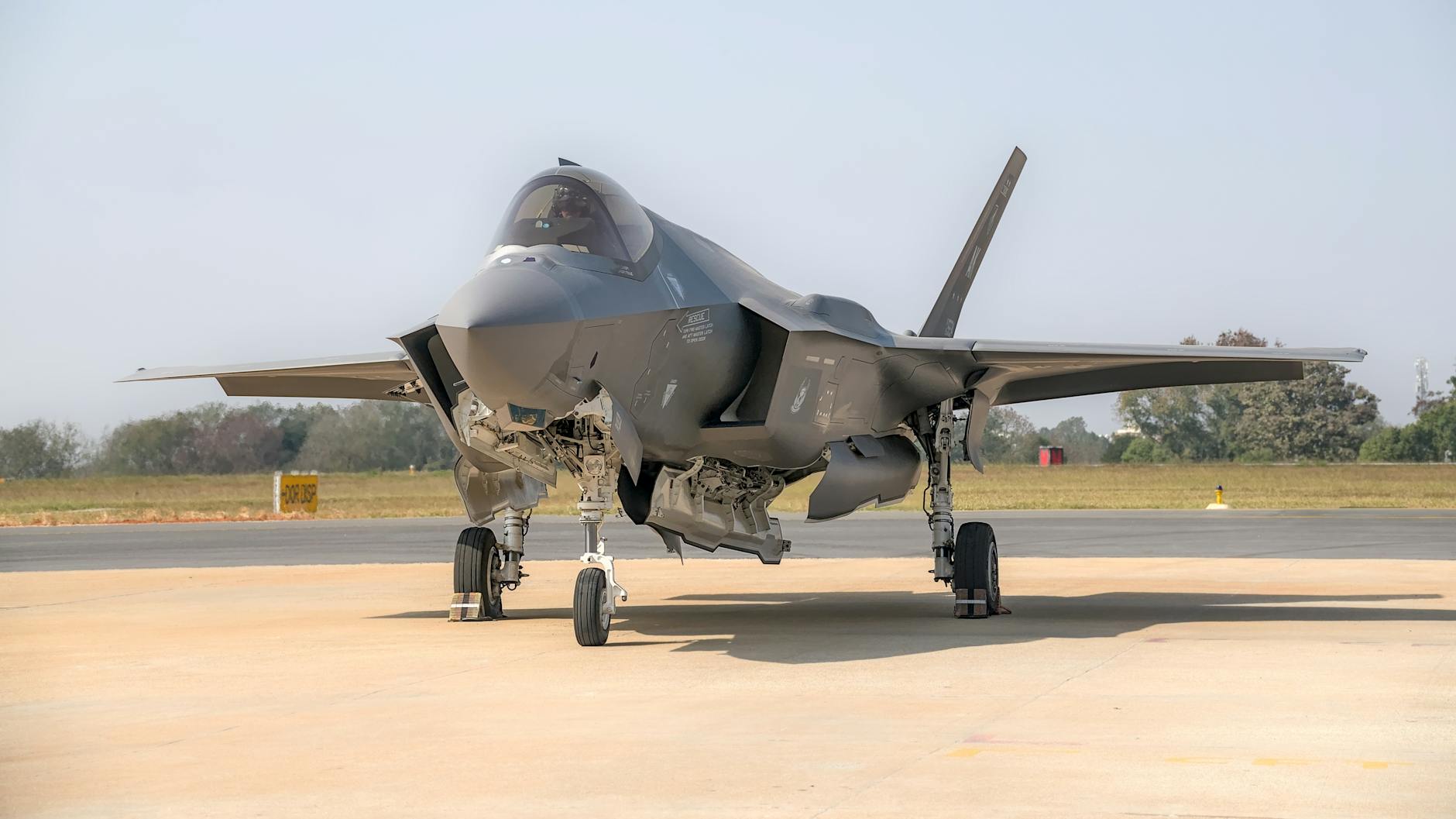
Israel’s Air Force established complete aerial superiority over Iran within the first 24 hours of Operation Roaring Lion, systematically dismantling the country’s air defense network in a phased westward-to-eastward campaign before striking targets in the heart of Tehran. The operation, launched on February 28, 2026, at approximately 9:45 AM Iran time, saw Israeli fighter jets drop over 2,000 bombs across 24 of Iran’s 31 provinces in just 30 hours, flying more than 700 sorties. By the time IAF jets reached Tehran’s airspace, Iran’s ability to contest the skies had been effectively neutralized — a fact underscored by Defense Minister Israel Katz’s announcement that Israeli aircraft were conducting “stand-in” operations directly over the capital, dropping precision-guided munitions from overhead rather than relying on long-range standoff weapons fired from a safe distance. The speed and scale of the air campaign marked a significant escalation in the broader Middle East conflict.
The United States simultaneously launched its own operation, dubbed Operation Epic Fury, deploying B-2 stealth bombers against fortified ballistic missile facilities inside Iran. Together, the combined air campaign decimated Iran’s senior military leadership, with the IDF claiming that 40 top commanders were killed “in one minute” during initial strikes, including Armed Forces Chief of Staff Maj. Gen. Abdolrahim Mousavi. This article breaks down how the IAF achieved air supremacy through its phased approach, what “stand-in” operations over Tehran actually mean in military terms, the high-value targets eliminated, and the broader implications of the operation for regional security.
Table of Contents
- How Did Israel’s Air Force Establish Air Superiority Over Iran Before Striking Tehran?
- What “Stand-In” Operations Over Tehran Reveal About Iran’s Defensive Collapse
- The Decapitation Campaign Against Iran’s Military Leadership
- The U.S. Role — B-2 Bombers and the Limits of Coalition Warfare
- Iran’s Retaliatory Response and What It Signals
- The Scale of Destruction Across Iran’s Provinces
- What Comes Next After Air Supremacy
- Conclusion
How Did Israel’s Air Force Establish Air Superiority Over Iran Before Striking Tehran?
The IAF’s path to air supremacy followed a deliberate three-phase strategy designed to peel back iran‘s defensive layers from west to east. Phase 1 focused on western Iran, where Israeli jets targeted radar installations, anti-aircraft batteries, and integrated air defense systems. This initial wave was critical because western Iran sits closest to Israeli airspace and represents the first line of Iranian aerial defense that any attacking force would encounter. By neutralizing these systems first, the IAF created a corridor through which subsequent waves could operate with diminishing risk. Phase 2 shifted focus to Iran’s ballistic missile apparatus — the launchers and infrastructure that would enable Tehran to mount retaliatory strikes against Israel. This was not merely an offensive choice but a defensive necessity.
If Israel failed to degrade Iran’s missile capabilities early, its own population centers would face sustained bombardment while the air campaign continued. With both western air defenses and the missile threat substantially reduced, Phase 3 commenced: the direct assault on Tehran. The IDF stated that the IAF had “paved the path to Tehran” and established aerial superiority directly over the capital, allowing jets to loiter and strike targets with near-impunity. The comparison to previous Israeli strikes on Iran is stark. In earlier operations, Israel relied heavily on standoff munitions and long-range cruise missiles to hit Iranian targets, precisely because penetrating Iran’s layered air defenses with manned aircraft was considered too risky. Operation Roaring Lion represented a fundamentally different approach — one predicated on the assumption that Iran’s defenses could be overwhelmed and dismantled rapidly enough to permit direct overflight of the country’s most heavily defended city.

What “Stand-In” Operations Over Tehran Reveal About Iran’s Defensive Collapse
Defense Minister Katz’s use of the term “stand-in” operations is not casual military jargon — it carries specific tactical meaning. In modern air warfare, the distinction between “stand-off” and “stand-in” attacks is significant. Stand-off operations involve launching weapons from beyond the range of enemy air defenses, keeping aircraft and crews out of harm’s way. Stand-in operations mean aircraft are flying directly within the engagement envelope of enemy defenses — or, in this case, where those defenses once existed — to deliver munitions with greater precision and in higher volume. Katz announced a “non-stop air train” of strikes on what he described as “Tornado targets in Tehran,” suggesting a continuous rotation of aircraft cycling through the capital’s airspace.
The fact that Israeli jets were conducting stand-in operations over Tehran carries an uncomfortable implication for Iran’s military establishment: the country’s air defense network, which had received substantial investment and included Russian-supplied systems, failed catastrophically. However, it is worth noting that claims of total air supremacy should be weighed with some caution. The IDF’s characterization of its own operational success is inherently self-serving, and independent verification of the extent of air defense degradation was not immediately available in the fog of the operation’s first days. Wartime claims from any military should be treated as provisional until corroborated by independent reporting or post-conflict analysis. That said, the sheer volume of sorties and munitions delivered — 1,200 or more bombs dropped in the first 24 hours alone, with the total exceeding 2,000 by the 30-hour mark — does suggest that Iranian air defenses were unable to impose meaningful costs on the attacking force. If Iranian surface-to-air missile systems had remained operational in significant numbers, sustaining that sortie rate over Tehran would have been extraordinarily costly in aircraft and aircrew.
The Decapitation Campaign Against Iran’s Military Leadership
Beyond the physical destruction of military infrastructure, Operation Roaring Lion targeted Iran’s command structure with lethal precision. The IDF claimed that a “majority” of Iran’s senior military leaders were killed in the initial strikes, a claim punctuated by the reported elimination of 40 top commanders “in one minute.” Among the confirmed kills was Armed Forces Chief of Staff Maj. Gen. Abdolrahim Mousavi. The concentration of leadership casualties suggests that Israeli intelligence had developed detailed targeting packages for command centers and meeting locations well before the operation launched.
The strikes on Tehran’s Pasteur district were particularly consequential. This area houses the presidential palace and the National Security Council, and reports indicated that Supreme Leader Ali Khamenei was killed in the bombardment. If confirmed, the elimination of the supreme leader would represent the single most significant leadership decapitation in the conflict and would raise immediate questions about succession, command continuity, and the coherence of Iran’s retaliatory response. More than 100 jets targeted dozens of IRGC command centers spanning intelligence, air force, and internal security units, indicating a systematic effort to sever the connections between Iran’s political leadership and its operational military forces. The targeting of IRGC command infrastructure specifically — rather than conventional military facilities alone — reflects the reality that Iran’s most capable and politically significant military forces operate under the Revolutionary Guard’s umbrella. By striking IRGC intelligence and internal security units alongside air force and missile commands, Israel aimed to degrade not just Iran’s ability to fight but its ability to organize, communicate, and maintain internal control during a period of extreme stress.

The U.S. Role — B-2 Bombers and the Limits of Coalition Warfare
The simultaneous launch of Operation Epic Fury by the United States added a distinct capability to the air campaign: the B-2 Spirit stealth bomber. The B-2’s role was specifically directed at fortified ballistic missile facilities inside Iran — the kind of deeply buried, hardened targets that conventional fighter-bombers struggle to destroy even with precision-guided munitions. The B-2 carries the GBU-57 Massive Ordnance Penetrator, a 30,000-pound bunker-busting bomb designed to reach targets buried under layers of reinforced concrete and earth. These are weapons that Israel does not possess in its own arsenal, making U.S. participation a practical necessity for the most hardened target set. The tradeoff of direct American military involvement, however, became immediately apparent.
Three American service members were killed during the operation — a cost that instantly transformed what might have been framed as purely Israeli self-defense into a joint U.S.-Israel military campaign against Iran. This distinction matters politically and legally, both in the United States and across the broader Middle East. American casualties create domestic political pressure, invoke questions about congressional authorization, and provide rhetorical ammunition to actors across the region who frame the conflict as American aggression against a Muslim-majority nation rather than an Israeli-Iranian bilateral dispute. The coordination between the IAF and U.S. forces also raises questions about the depth of pre-operational planning. Launching simultaneous named operations — Roaring Lion and Epic Fury — against the same country requires extensive deconfliction of airspace, targeting, and communications. This level of integration does not happen overnight and suggests weeks or months of joint planning preceding the February 28 strikes.
📨 Get Free Accountability Coverage Alerts
Free · No spam · Unsubscribe anytime
Iran’s Retaliatory Response and What It Signals
On the morning of March 1, Iran launched missiles and drones at a broad array of targets: Israel, the UAE, Qatar, Kuwait, Bahrain, Jordan, and Saudi Arabia. The breadth of this targeting list is notable because it extended well beyond Israel to include multiple Gulf states and regional U.S. partners. This suggests either a deliberate Iranian strategy to regionalize the conflict and punish states perceived as enabling the Israeli-American operation, or a more desperate lashing out with whatever retaliatory capability remained after 24 hours of sustained bombardment. The effectiveness of Iran’s retaliatory strikes remains a critical open question.
If the IAF’s Phase 2 targeting of ballistic missile launchers was as successful as claimed, Iran’s retaliatory capability would have been substantially degraded before it was employed. However, Iran’s missile arsenal is large, dispersed, and includes mobile launchers that are inherently difficult to find and destroy from the air. It would be premature to assume that all retaliatory capacity was eliminated, and the fact that Iran did launch strikes on March 1 confirms that at least some portion of its offensive capability survived the initial onslaught. The decision to target Gulf states alongside Israel also carries significant escalatory risk. Countries like the UAE and Saudi Arabia have their own air defense systems and military capabilities, and attacking them risks drawing additional military forces into the conflict — forces that might otherwise have remained on the sidelines. Whether Iran’s broadened targeting reflects strategic calculation or desperation will become clearer as the situation develops.
The Scale of Destruction Across Iran’s Provinces
The geographic breadth of the strikes — hitting targets in 24 of Iran’s 31 provinces — paints a picture of a campaign designed not merely to neutralize specific military threats but to demonstrate the ability to strike virtually anywhere within Iranian territory. This nationwide scope goes well beyond what would be required to establish air superiority over Tehran or to degrade Iran’s missile capabilities along specific corridors.
Striking across nearly 80 percent of Iran’s provinces sends a message that no military installation, command center, or leadership hideout within Iran’s borders is beyond reach. For context, Iran is roughly four times the geographic size of Iraq, and the distances involved in striking targets across the eastern and southern provinces represent a significant logistical achievement in terms of aerial refueling, mission planning, and coordination. The 700-plus sorties required to sustain operations of this scale represent a substantial commitment of Israel’s total air combat capability and suggest that the IAF committed the bulk of its fighter fleet to the operation.
What Comes Next After Air Supremacy
Establishing air superiority is a necessary condition for sustained military operations, but it is not an end state in itself. The question that follows Operation Roaring Lion is whether Israel and the United States intend to use the air supremacy they have achieved to conduct an extended air campaign, to enable ground operations, or to leverage the military advantage for diplomatic purposes. Each of these paths carries different risks and timelines, and the answer will shape the trajectory of the conflict in the days and weeks ahead.
The reported elimination of much of Iran’s senior military leadership, including potentially the supreme leader, creates a volatile internal situation. Decapitated organizations can respond unpredictably — sometimes collapsing, sometimes radicalizing, sometimes fragmenting into competing factions. How Iran’s remaining power centers respond to the leadership losses, and whether coherent command authority can be reconstituted, will be among the most consequential variables determining whether this conflict escalates further or moves toward some form of resolution.
Conclusion
Operation Roaring Lion demonstrated a level of Israeli air power capability that fundamentally altered assumptions about the military balance in the Middle East. The phased destruction of Iran’s air defenses, the rapid achievement of air supremacy over Tehran, the precision decapitation of senior military and political leadership, and the sheer volume of ordnance delivered — over 2,000 bombs in 30 hours — represent an operation of historic scale and ambition. The simultaneous American participation via B-2 stealth bombers added a capability dimension that Israel alone could not have provided, particularly against deeply buried targets.
The consequences of these strikes will unfold over weeks and months. Iran’s retaliatory launches against Israel and multiple Gulf states on March 1 confirm that the conflict is far from over, and the regionalization of hostilities introduces variables that no single military operation can control. What is clear is that the air campaign’s opening phase achieved its stated military objectives — and that the political, diplomatic, and humanitarian aftershocks are only beginning. Readers should continue to follow developments through verified reporting rather than social media speculation, as the fog of this conflict will take time to clear.
You Might Also Like
- Steve Witkoff’s Negotiations With Iran Collapsed Days Before the Strike
- Iran’s Air Force Bases Hit in First Wave of Operation Epic Fury
- Iran Had Agreed to Never Stockpile Enriched Uranium Hours Before the Bombing Started