Gas prices in Ohio have reached alarming levels as of mid-May 2026, with the statewide average climbing to $4.83 per gallon—a dramatic spike that has caught motorists and policymakers off guard. In just one week, prices surged nearly a full dollar per gallon, representing one of the sharpest increases in recent memory. Some drivers in certain areas have encountered prices approaching $5 per gallon, a threshold that many thought had been left behind in previous inflationary periods.
The scale of this climb is staggering when viewed over a longer timeframe. Ohioans are paying $1.06 more per gallon than they were just one month prior, placing the state among the highest in the nation for fuel costs—Ohio now ranks 8th in the country for gas prices. For a typical driver who fills up a 15-gallon tank, this translates to an additional $16 in costs per fill-up compared to a month ago, and that extra $1 weekly increase compounds quickly across household budgets. This price surge comes at a time when household budgets are already strained, and the rapid nature of the increases has left many consumers scrambling to understand what’s driving the costs upward and whether relief is in sight.
Table of Contents
- What’s Driving Ohio’s Sharp Gas Price Increases?
- How Do Ohio’s Prices Compare Nationally, and What Does That Mean for Consumers?
- The Scale of the Weekly and Monthly Price Movements
- How Can Drivers Protect Their Wallets During Price Spikes?
- Refinery Disruptions and Their Cascading Effects
- Geopolitical Risk Premiums and Why Market Prices Jump Overnight
- What Happens Next? Price Outlook and Future Considerations
- Conclusion
- Frequently Asked Questions
What’s Driving Ohio’s Sharp Gas Price Increases?
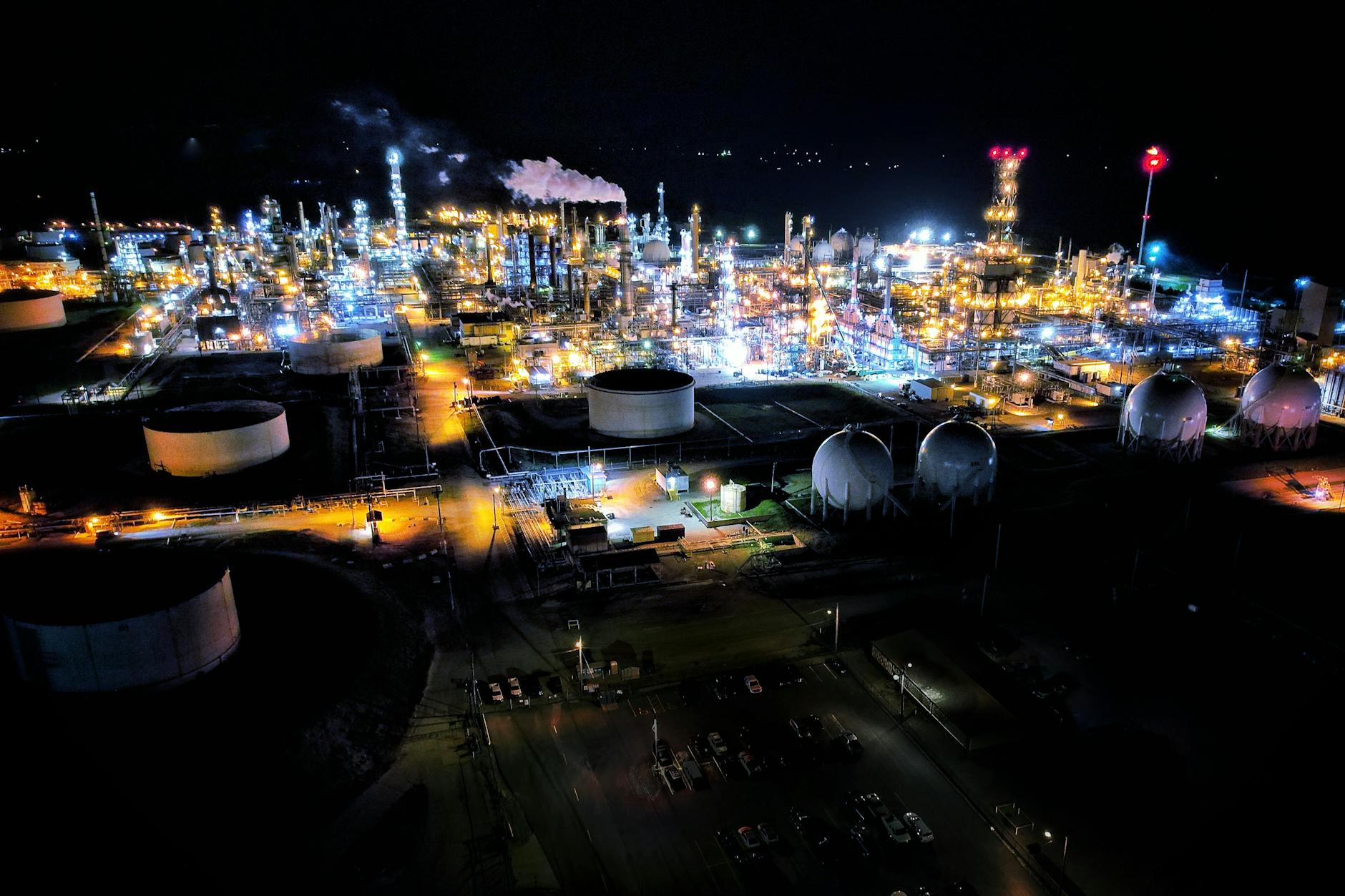
The immediate cause of Ohio’s gas price spike points to a significant disruption in regional refining capacity. In mid-May 2026, a power outage at BP’s Whiting, Indiana refinery—one of the largest fuel processing facilities serving the Midwest and Ohio Valley region—forced a temporary shutdown of operations. This facility is critical to the supply chain that feeds fuel stations across Ohio, so even a brief disruption ripples through the entire market. Compounding this supply-side shock are broader geopolitical tensions.
The current spike represents one of the largest overnight gas price increases since U.S.-Iran conflict tensions escalated two months ago. These international dynamics influence global oil prices, which directly impact what American refineries pay for crude and, by extension, what consumers pay at the pump. When geopolitical risk increases, futures markets react immediately, and those costs get passed down to drivers within days. The combination of these two factors—a regional refinery outage plus elevated geopolitical risk premiums—created a perfect storm for price increases. While the refinery outage may be temporary, the underlying geopolitical tensions remain unpredictable, suggesting that price volatility could continue even if refining capacity returns to normal.

How Do Ohio’s Prices Compare Nationally, and What Does That Mean for Consumers?
With Ohio ranking 8th highest in the nation for gas prices, the state is in the upper tier of expensive fuel markets, though not the absolute worst. This ranking is important context for understanding whether Ohio is experiencing a local crisis or part of a broader national trend. The answer is both: regional supply disruptions amplify national price movements, so Ohio is seeing a magnified effect of forces that are affecting the entire country. What makes Ohio’s situation particularly acute is the speed of the increases rather than the absolute price level alone.
A 92-cent weekly jump is unusual even in volatile commodity markets, and it reflects the speed at which supply disruptions translate into consumer pain. Drivers who budgeted for gas at $3.77 a gallon a week earlier suddenly face a $4.83 reality, with no gradual adjustment period to accommodate the change in household finances. For lower-income Ohioans and those relying on vehicles for work, this matters enormously. A service worker commuting 50 miles daily, a delivery driver, or anyone whose livelihood depends on fuel consumption faces a substantial and immediate reduction in net income. Unlike gradual price increases that might prompt long-term planning, sharp spikes can trigger financial strain within days.
The Scale of the Weekly and Monthly Price Movements
To understand just how severe the current situation is, consider the timeline of increases. The $1.06 monthly increase from early April to mid-May means that prices rose roughly 28 cents per week on average over that period, but that average obscures the fact that one particular week saw a nearly $1.00 jump. This tells us that some weeks saw minimal movement while others saw catastrophic spikes, creating unpredictability for anyone trying to plan fuel expenses. In practical terms, a driver who filled up once per week would have paid approximately $56.55 for a 15-gallon fill-up in early April (at roughly $3.77 per gallon) and now pays $72.45 for the same tank (at $4.83 per gallon).
Over the course of a month, that’s roughly $64 more for the same amount of fuel. For a household running on a tight budget, that’s significant—it could mean the difference between paying for groceries and filling the tank. The weekly $0.92 increase that occurred in the most recent data point is particularly notable because commodity markets typically move more gradually. Such a sharp move suggests either a shock to supply (confirmed by the BP refinery outage) or a sudden shift in expectations about future supply and demand—in this case, the geopolitical tensions playing a role in futures markets.

How Can Drivers Protect Their Wallets During Price Spikes?
While there’s no way to completely shield yourself from commodity price increases, there are practical steps Ohio drivers can take to minimize the financial impact. Consolidating trips to reduce total miles driven, maintaining vehicle fuel efficiency through proper tire pressure and regular maintenance, and shifting toward carpooling or public transit where available can all reduce fuel consumption. Some drivers may also benefit from rewards programs at gas stations, though these typically offer only modest discounts—usually 3 to 5 cents per gallon—which is insufficient to offset a dollar-per-week price surge. Another option worth exploring is timing your fill-ups strategically, though this has limits. Gas prices can shift multiple times per day in volatile markets, but the underlying trend is what matters most.
If experts expect continued supply disruptions, filling up today only to see prices drop tomorrow is a real risk. Conversely, if further increases are likely, delaying a fill-up can be costly. During periods of uncertainty like this, splitting fill-ups across multiple days—purchasing smaller quantities more frequently—can help smooth out the financial impact rather than locking in a high price on a large purchase. The fundamental limitation is this: absent major changes to supply or geopolitical dynamics, there’s no strategy that protects drivers from commodity price increases. These are macroeconomic forces, not consumer behaviors that can be easily optimized away.
Refinery Disruptions and Their Cascading Effects
The BP Whiting refinery outage illustrates a critical vulnerability in America’s energy infrastructure. The Whiting facility is one of the largest in the nation and serves a multi-state region including Ohio. When a single facility shuts down unexpectedly, the regional pipeline system can’t simply reroute supply from other sources quickly enough—oil refining is geographically specific, and pipelines move product in predetermined directions based on infrastructure design. What complicates matters further is that refineries operate with thin margins and little spare capacity. Under normal circumstances, the industry runs at 85-95% utilization, meaning there are no significant reserves of extra fuel sitting in storage waiting to cover shortfalls.
When the Whiting facility went offline, there was no nearby backup capacity to immediately increase production and smooth out the supply gap. This is why even temporary outages cause immediate price spikes—the market has no buffer. The warning here is stark: the U.S. refining system is optimized for efficiency, not resilience. This means that future disruptions—whether from mechanical failure, weather events, cyberattacks, or geopolitical turmoil affecting global supplies—will continue to produce sharp price spikes with minimal warning. Drivers should expect volatility as a permanent feature of fuel markets rather than an anomaly.
Geopolitical Risk Premiums and Why Market Prices Jump Overnight
The role of geopolitical tensions in driving up gas prices deserves separate attention because it operates through a different mechanism than physical supply disruptions. When U.S.-Iran tensions escalate, futures traders immediately adjust their expectations about potential supply disruptions to global oil markets. Even if no oil has actually been removed from the market, the risk premium—the extra price traders demand because of increased uncertainty—gets factored into contracts immediately.
📨 Get Free Accountability Coverage Alerts
Free · No spam · Unsubscribe anytime
This is why gas prices can jump overnight even when the news seems to be about events thousands of miles away. A single headline about military posturing, sanctions, or regional conflict can reshape prices across the entire global supply chain. Ohio drivers filling up the morning after a geopolitical escalation headline will find themselves paying noticeably more, even though no actual supply disruption has occurred yet—and may never occur.
What Happens Next? Price Outlook and Future Considerations
As of mid-May 2026, the immediate question is whether the BP Whiting refinery will return to full operations and how quickly. If repairs proceed on schedule and geopolitical tensions ease, prices could stabilize or even decline somewhat over the coming weeks. However, the baseline expectation should be that prices will remain elevated above the pre-May levels for the foreseeable future.
The longer-term consideration involves energy policy and infrastructure resilience. The current situation underscores the need for investment in refining capacity, pipeline diversification, and strategic petroleum reserves—though such infrastructure improvements take years to implement. In the near term, Ohioans should plan their budgets around elevated fuel costs and monitor both supply news and geopolitical developments, as both factors will continue to influence prices in the months ahead.
Conclusion
Ohio’s current gas price situation—averaging $4.83 per gallon with some areas approaching $5—represents a significant financial burden on households and businesses. The combination of a regional refinery outage and elevated geopolitical risk has created an unusually sharp price spike, with nearly a dollar increase in a single week and $1.06 increases over the past month. This places Ohio among the most expensive states for fuel and highlights the vulnerability of regional energy markets to supply shocks.
Looking ahead, the key variables to watch are the timeline for the Whiting refinery to return to operations and the trajectory of U.S.-Iran tensions. While drivers can take modest steps to reduce consumption, the underlying forces driving prices are macroeconomic and geopolitical—far beyond individual consumer control. Ohio policymakers and federal officials should focus on both short-term relief measures and long-term infrastructure investments to insulate the state from future fuel price volatility.
Frequently Asked Questions
Is $4.83 per gallon the peak price Ohio will see, or could it go higher?
Based on the current data, some areas have already reached $4.99–$5.01 per gallon, so these are not theoretical maximums. If the BP refinery remains offline longer than expected or geopolitical tensions escalate further, prices could move higher.
How does Ohio’s $4.83 average compare to surrounding states?
Ohio ranks 8th highest nationally, meaning seven states have higher averages, but many states remain below $4.50 per gallon. The regional refinery disruption affects Ohio, Indiana, and surrounding states disproportionately.
When will prices come down?
If the Whiting refinery returns to full capacity within 1-2 weeks and geopolitical tensions don’t escalate further, some relief could arrive by early June. However, any further disruptions or escalations would delay or prevent price declines.
Is this price increase permanent?
No, but it reflects structural vulnerabilities in U.S. refining capacity. While prices may decline from current peaks, the baseline for fuel costs is likely to remain higher than the pre-2026 levels given ongoing geopolitical risk.
Should I change my vehicle or driving habits because of these prices?
For temporary price spikes, major vehicle changes aren’t practical. However, if elevated fuel costs persist, consolidating trips, improving fuel efficiency, and exploring public transit become more worthwhile investments.
Is the federal government doing anything about gas prices?
The federal government has limited direct tools to control commodity prices, but the Strategic Petroleum Reserve can be tapped, and coordination with international allies can sometimes influence geopolitical risk. State and federal officials are monitoring the situation, but price relief will primarily depend on supply normalization and geopolitical de-escalation.
You Might Also Like
- Gas Prices Today: Experts Say Fuel Volatility Could Continue Through Summer
- Gas Prices Today: Why Oil Prices Continue Dominating Headlines
- Gas Prices Today: Why Fuel Costs Jump Before Holiday Weekends