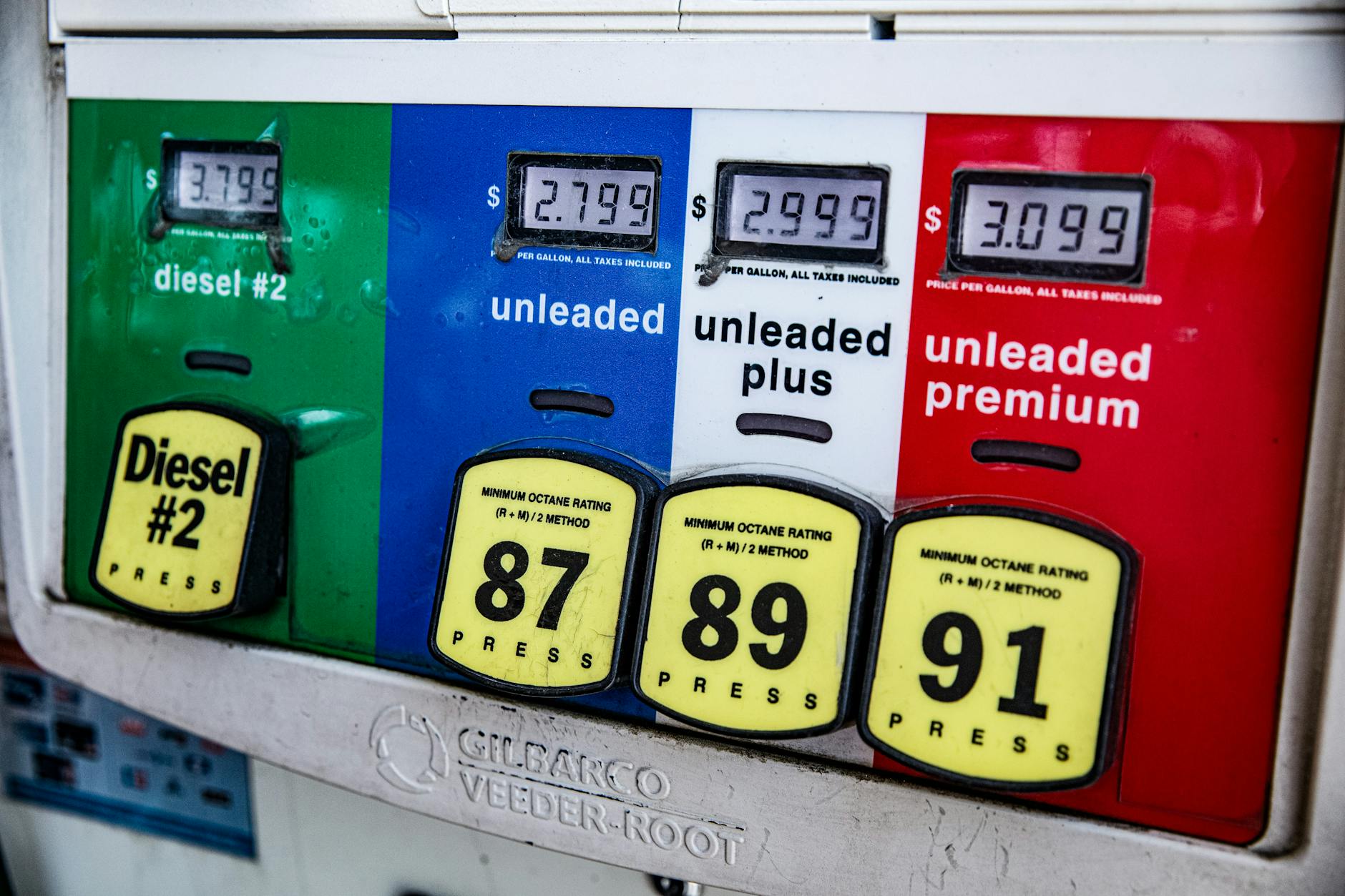
Texas drivers are watching crude oil prices closely because a geopolitical crisis triggered by the U.S.-Israel war on Iran has sent gas prices soaring across the state. The average Texas gas price hit $4.52 per gallon as of May 19, 2026—nearly $2 higher than the $2.55 per gallon drivers paid in February 2026. This dramatic 78% increase in less than four months reflects the shock to global oil markets after Iran closed the Strait of Hormuz, a shipping lane responsible for one-fifth of the world’s daily oil supply.
For Texas residents, the impact is visible every time they fill up. A driver in San Antonio paying $3.86 per gallon faces a different reality than someone in a higher-cost region paying $5.29 per gallon, yet all are caught in the same global energy crisis. The federal government has released 172 million barrels from the Strategic Petroleum Reserve to try to cap prices, but the intervention has barely dented the problem—demonstrating the limits of domestic policy when facing international supply disruptions.
Table of Contents
- Why Are Crude Oil Prices Driving Gas at the Pump?
- The Geopolitical Crisis Behind the Price Surge
- Texas Drivers Feel the Impact Across the State
- The Strategic Petroleum Reserve Response and Its Limits
- Why the SPR Release Isn’t Fully Solving the Problem
- Regional Price Variations and Local Impacts
- What’s Next for Texas Gas Prices and Crude Oil Markets
- Conclusion
Why Are Crude Oil Prices Driving Gas at the Pump?
Crude oil prices and retail gas prices move together because crude is the primary input cost for gasoline production. When a barrel of oil becomes scarcer or more expensive, refineries pay more to produce gasoline, and that cost flows directly to the pump. Texas, home to major refineries in Houston and the Port of Corpus Christi, is particularly sensitive to global crude prices because Texas refineries process both domestic oil and imported crude. A 10% jump in crude typically translates to a 10% jump in gas prices within weeks, though the relationship isn’t perfectly linear—transportation, taxes, and refinery profit margins also factor in.
The current price surge is driven primarily by a loss of supply, not a spike in demand. Before the Strait of Hormuz closure, Iranian oil flowed through that chokepoint regularly. Now that pathway is blocked, forcing the global oil market to scramble for alternatives—or bid up prices to manage existing supply. This is why Texas crude prices (West Texas Intermediate, or WTI) have climbed sharply. When supply tightens, even speculation about future shortages pushes prices higher, which is why Texas drivers saw prices jump before any actual oil supply loss materialized.

The Geopolitical Crisis Behind the Price Surge
The U.S.-Israel war on Iran began on February 28, 2026, and Iran’s closure of the Strait of Hormuz soon followed. This waterway between Iran and Oman is one of the world’s most critical chokepoints—approximately 20% of all global oil flows through it, representing roughly $600 billion in annual oil trade. When Iran blocked the strait, global markets immediately priced in a potential supply loss equivalent to millions of barrels per day. This is why gas prices didn’t wait for actual supply disruptions; they moved on the threat alone. The geopolitical risk premium has become embedded in crude prices.
Traders, refineries, and energy companies are now pricing crude higher because they’re uncertain whether the strait will reopen and when. This uncertainty itself becomes expensive. A refinery operator in Texas doesn’t just pay for today’s crude; they hedge against the risk that tomorrow’s crude might be even more expensive. That hedging cost gets passed through to consumers. The situation differs sharply from 2022, when Russia’s invasion of Ukraine created a similar supply shock—this time, the disruption affects one of the world’s most important energy chokepoints, not just one producer nation’s exports.
Texas Drivers Feel the Impact Across the State
Texas is geographically large, and gas prices reflect that reality. On May 4, 2026, San Antonio drivers paid $3.86 per gallon while Austin drivers paid $3.80 per gallon—a modest difference—but other parts of Texas faced prices as high as $5.29 per gallon. This variation reflects local refinery capacity, transportation costs, and competitive market structures. A driver commuting 50 miles from a rural area into Austin pays significantly more than someone living in Austin, yet both fill up at the pump in the same state on the same day.
These regional price gaps can amount to $1 or more per gallon, making location a major factor in household fuel costs. For working Texans, the impact compounds quickly. A delivery driver, rideshare operator, or long-haul trucker consuming 10-15 gallons per day faces a drastically different cost structure at $4.52 per gallon versus the $2.55 they paid four months prior. That’s an extra $27-40 per day in fuel costs for essential workers. While the Strategic Petroleum Reserve release has theoretically reduced prices by 17 cents per gallon, without it, Texas drivers would be facing prices 17 cents higher—a sobering reminder that government intervention is preventing even worse outcomes, not creating relief Texans would recognize at the pump.

The Strategic Petroleum Reserve Response and Its Limits
The U.S. Department of Energy began releasing 172 million barrels from the Strategic Petroleum Reserve (SPR) in mid-March 2026, with the goal of easing prices over a 120-day window. According to Treasury analysis, this release was designed to reduce prices by approximately 17 cents per gallon. That sounds meaningful until you consider the math: the United States consumes roughly 20 million barrels of oil daily, meaning the SPR release covers only about 8-9 days of national oil consumption at current usage rates. Once those barrels are sold, the government’s emergency stockpile is depleted, and prices will reflect whatever the global market dictates.
The SPR release represents a short-term policy tool, not a long-term solution. It can smooth supply disruptions and signal government intent to markets, but it cannot alter the fundamental problem: Iranian oil is off the market, and no amount of U.S. government inventory can replace it indefinitely. This explains why, even with the SPR release in progress, Texas gas prices remain historically elevated. The release buys time for markets to adjust—encouraging alternative supplies from other producers, reducing demand, or hoping for diplomatic resolution—but it doesn’t change the core supply-demand imbalance. Texas drivers are living through a situation where the government’s largest policy tool provides measurable relief (17 cents) that pales in comparison to the 200-cent problem they face.
📨 Get Free Accountability Coverage Alerts
Free · No spam · Unsubscribe anytime
Why the SPR Release Isn’t Fully Solving the Problem
The Strategic Petroleum Reserve is designed for emergencies lasting weeks to months, not the long-term geopolitical crisis now affecting global markets. By mid-May 2026, the SPR release had been underway for roughly two months, meaning it was nearing the halfway point of its 120-day authorization. As the release winds down without resolution to the Iran situation, markets are beginning to price in the reality that prices may not decline. A trader looking at the calendar sees the SPR release ending in early July 2026, and if the Strait of Hormuz remains closed at that point, crude prices could spike again.
This creates a psychological and practical problem for consumers and businesses. The SPR release provides temporary relief, but the uncertainty about what happens after July becomes a new market risk. Energy companies, refineries, and traders are already positioning themselves for a world without the SPR safety net—which means higher prices today as they prepare for an even tighter market tomorrow. Texas consumers and businesses have to make decisions about whether to lock in fuel purchases, adjust their driving habits, or hedge against future price increases. The limitation of the SPR is that it treats a symptom (low supply) without addressing the disease (a blocked international shipping lane), and once the medicine runs out, the underlying crisis remains.

Regional Price Variations and Local Impacts
San Antonio and Austin offer a case study in how local market factors influence gas prices even within the same state. Both cities experienced the same geopolitical shock and the same federal SPR release, yet San Antonio’s $3.86 per gallon (as of May 4) was six cents higher than Austin’s $3.80. This difference likely reflects distance to refineries, local tax rates, and competitive conditions among retailers. San Antonio, being further from Houston’s refinery cluster, bears higher transportation costs. Austin, with a more densely packed urban market and greater retail competition, sees lower prices.
These local differences accumulate for residents who must budget for fuel costs—they’re not uniform across Texas, and a family in a high-cost region pays a permanent premium compared to neighbors 100 miles away. The local variations also explain why some Texas communities have been hit harder by the oil crisis than others. Small towns far from major refineries and urban centers may face prices significantly above the state average. A rural driver with no public transportation alternative and a long commute has fewer options to absorb the shock than an urban driver with rideshare or public transit alternatives. This geography-based inequality in fuel costs creates real hardship in communities where wages may not have kept pace with energy prices. The 78-cent monthly difference between $3.09 and $5.29 per gallon adds up to meaningful costs for households already struggling with inflation in other areas.
What’s Next for Texas Gas Prices and Crude Oil Markets
The trajectory of Texas gas prices depends almost entirely on whether the Strait of Hormuz reopens and when. If diplomatic negotiations succeed in the coming weeks, Iranian oil could return to markets, adding supply and likely pushing crude prices down. If the closure persists through the summer and beyond, Texas drivers should expect prices to remain elevated or even increase further once the SPR release ends in early July 2026. Energy market analysts are divided on which outcome is likely, but all agree that the path forward is geopolitical, not technical—no amount of refining capacity or SPR inventory can overcome a fundamental supply loss if the crisis endures.
For Texas consumers and policymakers, the lesson is sobering: state and local policy has almost no leverage over gas prices when global supply is disrupted. The federal government can release strategic reserves and some states can temporarily reduce fuel taxes, but neither action addresses the root cause. Long-term solutions require either restoration of Iranian oil exports, identification of alternative suppliers, a major shift in transportation behavior, or some combination of the three. Until the Strait of Hormuz reopens, Texas drivers will continue watching crude oil closely—because their fill-up costs depend on events thousands of miles away, far beyond the reach of state policy or consumer choice.
Conclusion
Texas drivers are watching crude oil prices closely because their gas pump costs are directly tied to one of the world’s most important oil shipping lanes. The 78% increase from February 2026 to May 2026 reflects the real impact of the U.S.-Israel war on Iran and the subsequent closure of the Strait of Hormuz, which handles one-fifth of global oil supply. The federal Strategic Petroleum Reserve release has provided modest relief—approximately 17 cents per gallon—but cannot solve a supply problem of this magnitude or duration.
Texas gas prices will remain elevated until either the strait reopens or global markets adjust to the new supply reality. For consumers and workers, the immediate reality is straightforward: fuel costs have jumped dramatically, regional price variations mean some Texans pay significantly more than others, and the federal government’s emergency tools are finite and temporary. The broader lesson is that energy security depends on global supply chains and geopolitical stability in ways that domestic policy alone cannot insulate. As the Strategic Petroleum Reserve release winds down in July 2026, Texas drivers should prepare for prices that reflect the true global market without government intervention—unless and until the underlying crisis that triggered this shock shows signs of resolution.
You Might Also Like
- Gas Prices Today: What Crude Oil Prices Mean for Your Commute
- Gas Prices Today: Oil Market Volatility Impacts U.S. Drivers
- Gas Prices Today: Could Crude Oil Reach $120 Again?